Clintel News Climate Intelligence (Clintel) is an independent foundation informing people about climate change and climate policies. World Climate Declaration.

Great Barrier Reef escapes UNESCO ‘In Danger’ listing again

By |2026-07-09T12:05:26+02:00July 9, 2026|

UNESCO has once again decided not to place the Great Barrier Reef on its "In Danger" World Heritage List. Yet much of the international coverage continues to focus on climate warnings rather than on the broader picture of coral recovery. In this opinion article, Australian commentator Jo Nova argues that political narratives increasingly overshadow the underlying monitoring data. Drawing on Peter Ridd's analysis of Australian Institute of Marine Science (AIMS) data, she contends that the Great Barrier Reef remains in far better condition than is commonly portrayed.


Comments Off on Great Barrier Reef escapes UNESCO ‘In Danger’ listing again

Europe’s Crisis Is Energy Poverty, not a Heat Wave

By |2026-07-08T08:51:16+02:00July 8, 2026|

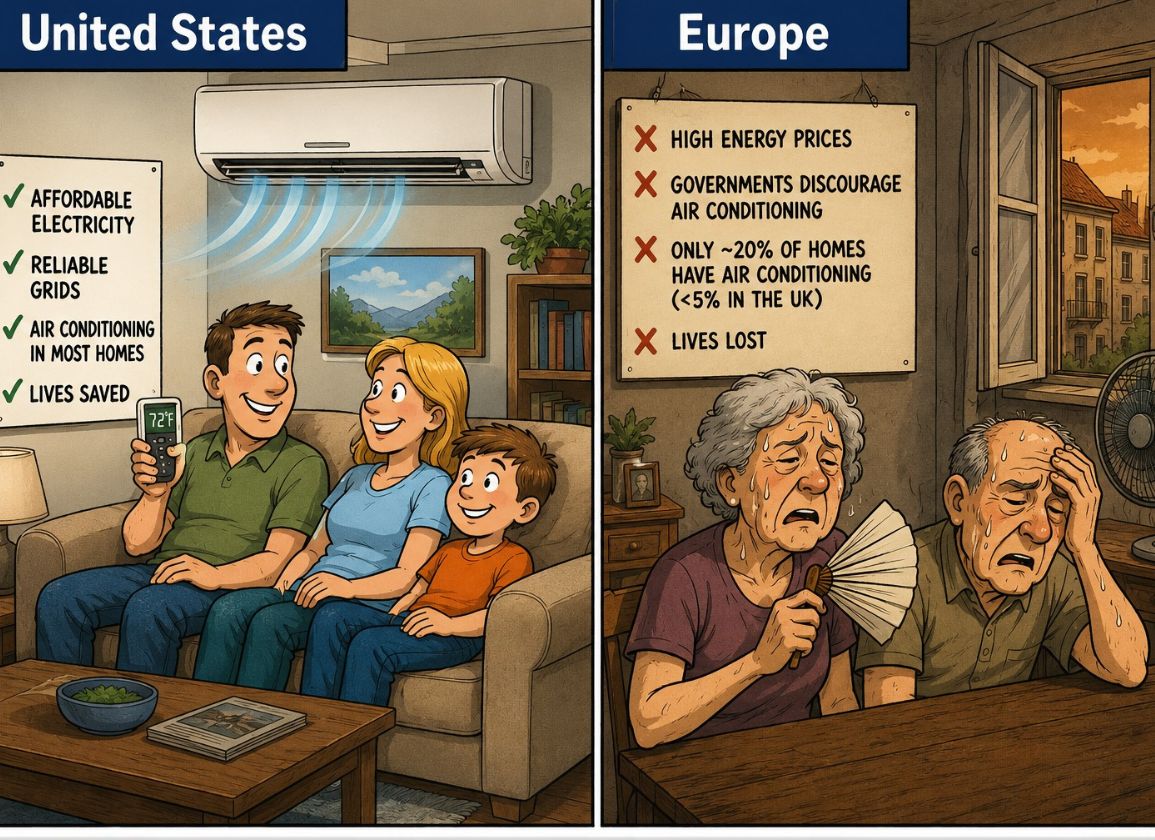
As Europe experiences another summer heat wave, climate change is once again blamed for extreme temperatures. In this article, Vijay Jayaraj argues that the real crisis is not the heat itself, but energy poverty caused by misguided climate policies. He explains how a natural Omega Block weather pattern drove the recent heat wave and why affordable, reliable energy remains the most effective protection against extreme weather.

Comments Off on Europe’s Crisis Is Energy Poverty, not a Heat Wave

Death of Climate Alarmism Has Been Greatly Exaggerated

By |2026-07-06T10:25:37+02:00July 7, 2026|

The Climate Establishment is now pivoting from overt apocalypticism to what might be called ‘non-alarmist alarmism’, says Tilak Doshi. This is a posture that formally disowns the discredited scenario RCP8.5 while preserving every policy conclusion that scenario was used to support.

Comments Off on Death of Climate Alarmism Has Been Greatly Exaggerated

Advancing Freedom With Data: Debunking Catastrophic Greenhouse Warming

By |2026-07-06T09:51:03+02:00July 6, 2026|

CO2’s greenhouse effect is the result of its interaction with the infrared of the electromagnetic spectrum, which is now largely saturated at today’s CO2 concentration of about 420 parts per million (ppm), say William Happer and Richard Lindzen. With so little unaffected infrared radiation left to interact with CO2 molecules, adding more of the gas is having a trivial effect and will produce even less warming in the future.

Comments Off on Advancing Freedom With Data: Debunking Catastrophic Greenhouse Warming

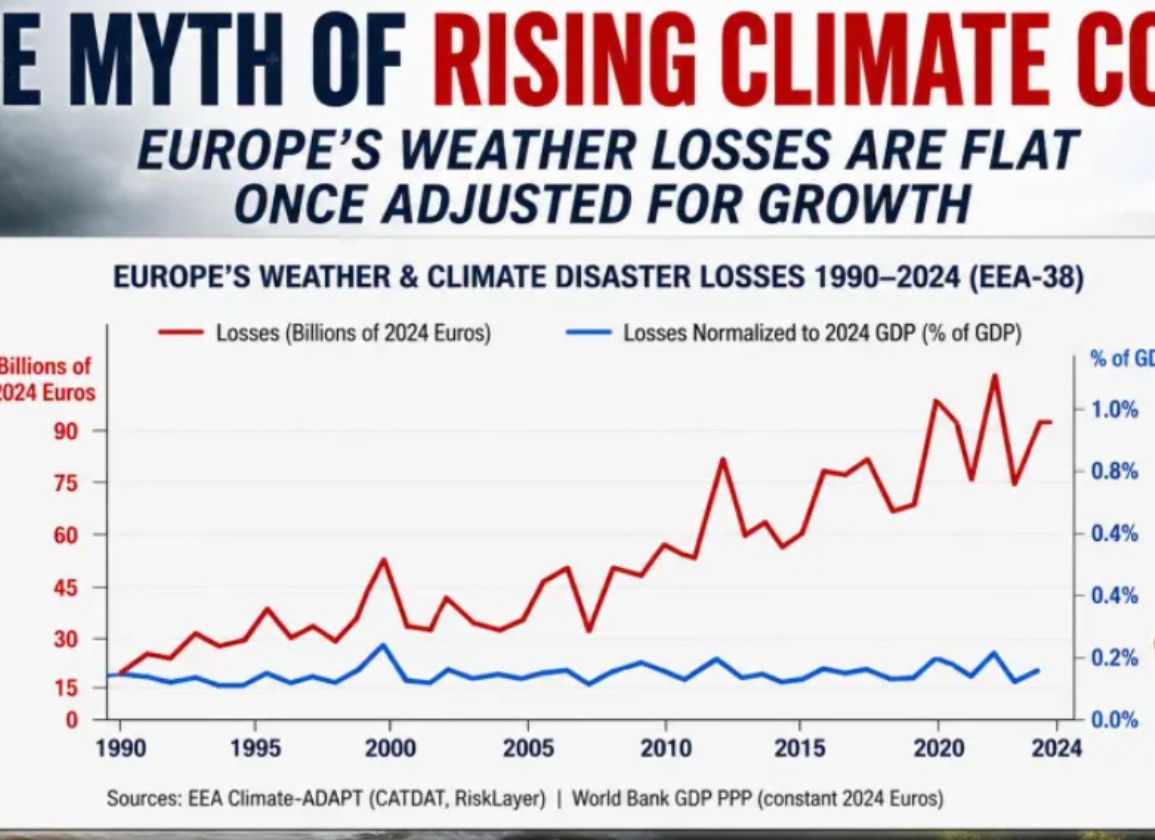
Europe’s weather losses are not rising (once adjusted for growth)

By |2026-07-04T17:12:27+02:00July 5, 2026|

One of the most persistent claims in (European) climate politics is that weather disasters are becoming increasingly expensive because climate change is making extreme weather worse. But a new analysis by Roger Pielke Jr. shows that once economic growth is properly accounted for, Europe’s weather-related disaster losses have remained essentially flat since 1990.

Comments Off on Europe’s weather losses are not rising (once adjusted for growth)

Renewables still provided only 6% of global primary energy in 2025

By |2026-07-03T19:28:33+02:00July 4, 2026|

The highly touted renewables provided only 6% of the world’s primary energy supply last year, according to the Statistical Review of World Energy, released earlier this week. Robert Lyman analyses the important overall statistical trends for the Friends of Science Society.

Comments Off on Renewables still provided only 6% of global primary energy in 2025

Britain: Time To Go Back to Coal

By |2026-07-01T09:00:17+02:00June 30, 2026|

Adding more and more wind and solar does not solve the problem of Britain’s looming ‘firm generation capacity crisis’, says Francis Menton. How about doing the unthinkable — bring back coal!

Comments Off on Britain: Time To Go Back to Coal
Go to Top