
Marc Morano: the best time for climate realism in the last 50 years
At the 16th ICCC in Washington, D.C., Marc Morano argues that the global climate agenda is weakening, calling this the most promising moment for climate realism in the past 50 years.

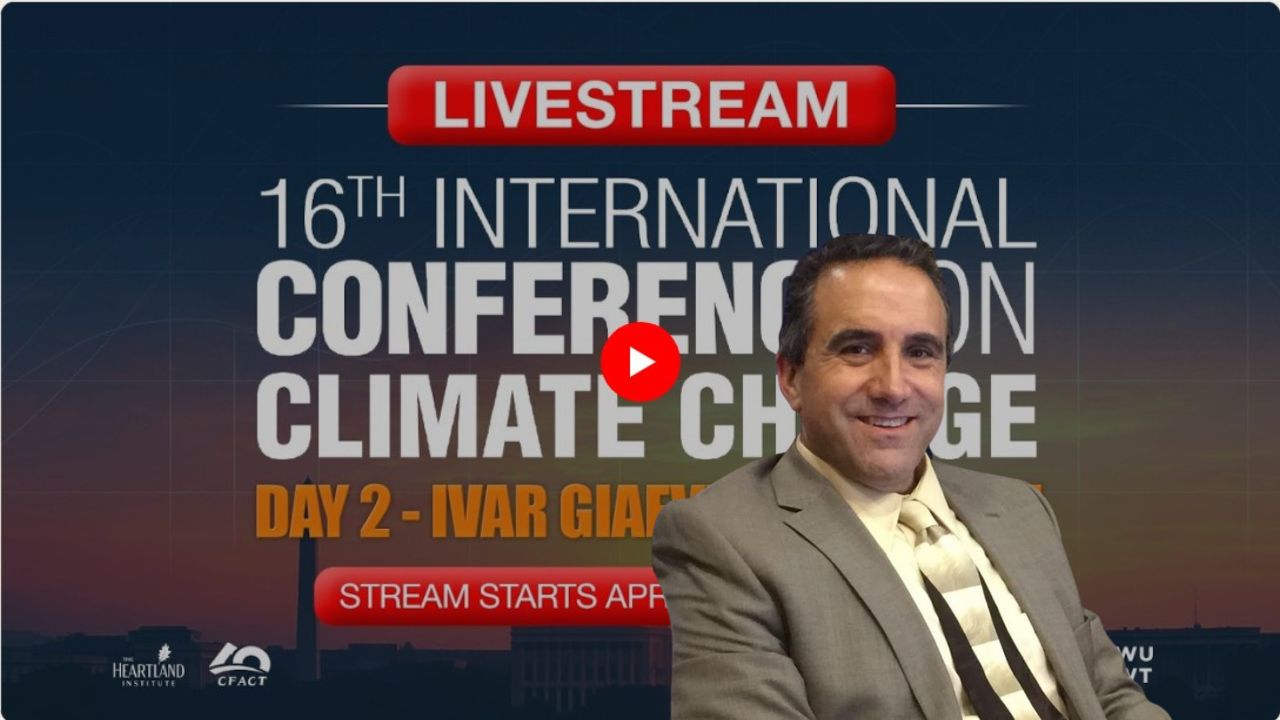
Marc Morano
Marcel Crok
Date: 12 April 2026
The final talk of the 16th International Conference on Climate Conference in Washington DC (8 and 9 April) was given by Marc Morano of the website climatedepot.com. Morano is a longtime follower of the climate agenda (he visited close to all the yearly Conference of the Parties, COP’s). He gave a fascinating overview of how the climate agenda has been crumbling down in the past year or so, not only in the US but around the globe (although Europeans maybe notice this less). He concluded with the remark that we live in the best times for climate realism in the last 50 years.
That’s all good news, but Morano also warned that we aren’t there yet and that the forces behind the climate agenda can or will pop up again, for example these days in the form of energy lockdowns because of the crisis in the Strait of Hormuz. So we have to be very vigilant. But the fact of the matter is that Trump, Chris Wright and administrator Lee Zeldin (who spoke at the Conference) are punching big holes in the climate agenda currently and that the other side is not fighting back at all. They seem to have given up, maybe because of a lack of funding (Bill Gates, Jeff Bezos, Larry Fink all moved away from the climate agenda, partly or mainly because of their interests in AI for which you need dispatchable energy).
The Conference in Washington is organised every year by the Heartland Institute. Clintel and The Heartland Institute (and maybe other organisations) have serious plans to organise next year’s conference in The Netherlands.
The complete recordings of both days (in both rooms) are available on the conference website. You can see the presentation by Clintel Director Marcel Crok: here.
Watch Marc Morano’s lecture below:


more news
Press release GWPF: Event Attribution Studies are “a blot on science”, says Ralph B. Alexander
Extreme weather attribution studies are based on flawed logic and misleading statistical practices, according to a new report by The Global Warming Policy Foundation (GWPF). Author Ralph B. Alexander argues that these studies, which link individual weather events to climate change, are driven more by political and legal agendas than by robust scientific evidence.

China’s Massive Coal-to-Liquids Expansion
In this article, Australian science writer Jo Nova examines China’s rapidly expanding coal-to-chemicals and coal-to-liquids industry. While much of the West focuses on phasing out fossil fuels, China is quietly transforming coal into fuels, plastics and fertilizers at massive scale—raising important questions about energy security and global climate policy.
New Ice Core Study Finds No Clear CO₂–Temperature Link
New research from ancient Antarctic ice cores is challenging long-held assumptions about the role of carbon dioxide in Earth’s climate history. Evidence suggests that CO₂ and methane levels remained remarkably stable over millions of years—even as the planet experienced dramatic temperature shifts. These findings raise fresh questions about the extent to which greenhouse gases alone can explain past and present climate change.

