
Unrealistic Canadian Climate Policy Bogs Down Economy
“Canadian Climate Policy – What Comes Next?” is a new report by Robert Lyman, published by Friends of Science Society. US Endangerment Finding on carbon dioxide is consequential to central bank and Canadian climate policies.


Friends of Science Society
Date: 12 September 2025
Friends of Science Society’s new report titled, “Canadian Climate Policy – What Comes Next?” offers key points on Canada’s climate commitments as published in: Canada’s First Biennial Transparency Report under the Paris Agreement and Canada’s 2035 Nationally Determined Contribution (NDC). Authored by retired energy economist, Robert Lyman, the Friends of Science Society report shows that Canada’s GHG reduction aspirations are not backed up by any means of how to achieve targets.
Friends of Science Society produced a video explainer of the “Canadian Climate Policy…” report, noting that instead of predicting future climate damages, the Canadian government reports now tie present day wildfires and extreme weather events to climate change; this conflation is not supported by the findings of the Intergovernmental Panel on Climate Change (IPCC).
Lyman writes that climate policies must be “made more realistic… At a minimum, that requires more transparency as to how the new targets will be met. Even better would be to abandon targets altogether.”
As reported by the CBC on Sept. 11, 2025, newly minted Prime Minister Mark Carney announced five Canadian “nation-building” projects, many of which may stimulate the economy, but are not “climate friendly” and do not align with Canada’s Paris Agreement climate targets, says Friends of Science Society.
“Carbon bomb”
Within two hours of the Carney major projects announcement, a group of Indigenous and Environmental Non-governmental Organizations (ENGO) rejected the approval of the expansion LNG Canada Phase 2, calling it a “carbon bomb,” as reported by the National Observer, bogging down economic development, says Friends of Science Society.
National Observer is part of the media umbrella group, “Covering Climate Now,” which is about to relaunch its “89% Project.” This is a bandwagoning media campaign to encourage the public to demand more climate action. This is advocacy, not journalism, says Friends of Science Society in this video critiquing the campaign.
The astounding “carbon bomb” claims of “climate damages” by these ENGOs in the National Observer article are based on a study by Clean Energy Canada which references Environment and Climate Change Canada as the source for its Social Cost of Carbon damages, which in turn are said to be “identical” to those adopted by the US EPA.
Endangerment finding
The US EPA’s “endangerment finding” of 2009, was a decision that carbon dioxide is harmful to human health and that greenhouse gas emissions are a pollutant. The EPA announced on July 29, 2025, the endangerment finding is about to be overturned. “If finalized, this proposal would undo the underpinning of $1 trillion in costly regulations, save more than $54 billion annually.” [in the USA]
In 2017, Ross McKitrick, one of the co-authors of the recent US DOE climate science report, wrote an article published in the New Republic, outlining how “Obama’s EPA used semantic tricks to avoid rigorous scientific evaluation.”
A new Friends of Science Society open letter to the Office of the Superintendent of Financial Institutions, challenges the “climate damage” function by the Network for Greening the Financial System (NGFS), drawn from the paper by Kotz et al (2024), saying that it is deeply flawed, not fit for purpose and appears to suffer from Conflicts of Interest.
In the letter, the NGFS exaggerated Shadow Carbon Price of $800/t for Net Zero 2050, is discussed along with the known economic damage to Canada’s economy due to 6 years of consumer-facing carbon taxes which reached a peak of $80/t before being zeroed by incoming Prime Minister Mark Carney.
Friends of Science Society’s research director, Ken Gregory, shows that carbon dioxide (CO2) emissions are a net benefit. According to Gregory’s response to the US DOE climate report, the FUND model estimates the SCC of Carbon in 2025 to be $7.25/t (USD) at 3% discount rate, and once revised for the urban heat island effect and CO2 fertilization the cost (benefit) is $-13.07/t.
The impact on “Food Prices, Farmers and Net Zero Ideology” is the focus of Friends of Science Society’s September 25, 2025, special event. More details here.
About
Friends of Science Society is an independent group of earth, atmospheric and solar scientists, engineers, and citizens that is celebrating its 23rd year of offering climate science insights. After a thorough review of a broad spectrum of literature on climate change, Friends of Science Society has concluded that the sun is the main driver of climate change, not carbon dioxide (CO2).


more news
Press release GWPF: Event Attribution Studies are “a blot on science”, says Ralph B. Alexander
Extreme weather attribution studies are based on flawed logic and misleading statistical practices, according to a new report by The Global Warming Policy Foundation (GWPF). Author Ralph B. Alexander argues that these studies, which link individual weather events to climate change, are driven more by political and legal agendas than by robust scientific evidence.

China’s Massive Coal-to-Liquids Expansion
In this article, Australian science writer Jo Nova examines China’s rapidly expanding coal-to-chemicals and coal-to-liquids industry. While much of the West focuses on phasing out fossil fuels, China is quietly transforming coal into fuels, plastics and fertilizers at massive scale—raising important questions about energy security and global climate policy.
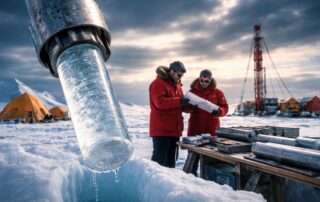
New Ice Core Study Finds No Clear CO₂–Temperature Link
New research from ancient Antarctic ice cores is challenging long-held assumptions about the role of carbon dioxide in Earth’s climate history. Evidence suggests that CO₂ and methane levels remained remarkably stable over millions of years—even as the planet experienced dramatic temperature shifts. These findings raise fresh questions about the extent to which greenhouse gases alone can explain past and present climate change.

