
Why Climate Science Is Not Settled
Claims that climate science is “settled” are frequently used to justify far-reaching policy decisions. In this article, Vijay Jayaraj examines how model uncertainties, conflicting evidence and real-world observations challenge the idea of certainty in the climate debate.


Illustration (AI-generated)
Vijay Jayaraj
Date: 11 February 2026
The repeated claim that climate science is “settled” overlooks myriad uncertainties, competing mechanisms and computer models that miss the mark when tested against reality. Declaring finality in such a field reflects political confidence – even arrogance – not scientific maturity.
The model-reality divergence
Computer models – based on faulty premises – are the bible for the modern climate movement. This despite the United Nations Intergovernmental Panel on Climate Change (IPCC) describing climate as a “coupled, non-linear, chaotic system” where long-term prediction is effectively impossible.
Policies costing trillions of dollars rely entirely on outputs of these digital simulations. But a model is only as good as its assumptions. When those assumptions fail to match the physical world, an honest scientist discards the model. The climate establishment, instead, discards the data.
The U.S. Department of Energy’s (DOE’s) July 2025 report, “Critical Review of Impacts of GHG Emissions on the US Climate,” exposed a hard truth: Fabricated scenarios supposedly representing future warming of the climate are exaggerations having little relationship to observed reality.
Dr Roy Spencer’s latest analysis in January 2026 looked at decadal temperature trends from 39 climate models compared to observations gathered from weather balloons, satellites and analyses of meteorological information. He confirmed that “all 39 climate models exhibit larger warming trends” than “observational data.”
Further, theories regarding the Global Warming Potential (GWP) of so-called greenhouse gases like carbon dioxide (CO2) ignore the reality of atmospheric saturation, says Dr. William Happer. At the current concentration of atmospheric CO2, there is only so much infrared radiation left to be influenced by additional amounts of the gas. In other words, CO2’s warming effect is limited, and increasingly so as more is added. Yet the models assume a higher warming potential than nature exhibits.
Not your father’s volcanic eruption
The effect of the January 2022 Hunga Tonga underwater eruption exemplifies the climate system’s complexity. The volcano’s net outcome was not the cooling typically expected from such an event, but rather a complex interplay of competing factors that largely offset one another, with the effect on surface temperatures being nearly zero.
This outcome stands in sharp contrast to historical volcanic eruptions. Mount Tambora in 1815 cooled the globe by as much as nearly 2 degrees Fahrenheit, producing the “Year Without a Summer.” High-latitude eruptions in the 540s, 1450s, and 1600s generated major global coolings through their injection of sulfates into the stratosphere.
The climate system has feedback loops and other interactions so intricate that even a single volcanic event exposes the limits of our predictive capacity. Yet climate policies and so-called solutions are advanced with a certainty enjoyed only be the foolhardy and feigned by the dishonest.
What extreme weather?
Perhaps the least honest aspect of the climate crusade is the weaponization of weather. Natural disasters are blamed on climate change and, by extension, on the industries that emit the carbon dioxide purported to be the ultimate bogeyman.
But the 2025 DOE report confirmed other findings that most extreme weather events in the United States show no long-term trend. Claims that hurricanes, tornadoes and floods are increasing in frequency or intensity collapse upon observation of the historical record.
Hurricane landfalls exhibit no significant upward trend. Despite predictions of coastal flooding, global sea level has risen only about 8 inches since 1900. Acceleration in the rate of rise beyond historical averages is not apparent in U.S. tide gauge measurements.
Even more telling is the measure that matters most: human survival. Data show that death rates from nature’s catastrophes have plummeted over the last century. We are safer from assaults of the elements than at any point in human history.
Global Greening
The irony is that global greening of the past four decades – an expansion of vegetative cover by 11 million square miles – has been driven substantially by rising atmospheric CO₂. The villain in the climate alarmists’ narrative has proven partly responsible for measurable improvements in ecosystems.
There is no question that the climate changes over time or that CO2 influences temperatures, although, as noted, to a diminishing degree as its atmospheric concentration increases. However, the overwhelming evidence is that carbon dioxide is an immensely beneficial molecule – and, as a trace gas in the atmosphere feeding plants and ultimately all life, the more the better.
Highly questionable is whether computer models can dissect climatic complexities – like feedback mechanisms – to justify the wholesale restructuring of the global energy infrastructure.
Viewing the climate issue as unsettled is not to deny science, but rather to respect it. Empirical inquiry thrives on skepticism, on a willingness to question assumptions, on the refusal to treat model outputs as conclusive. To dismiss this centuries-old process is to put at risk the lifestyles and lives of billions.

This commentary was first published at RealClear Markets February 6.

Vijay Jayaraj
Vijay Jayaraj is a Science and Research Associate at the CO2 Coalition, Fairfax, Virginia. He holds an M.S. in environmental sciences from the University of East Anglia and a postgraduate degree in energy management from Robert Gordon University, both in the U.K., and a bachelor’s in engineering from Anna University, India. He served as a research associate with the Changing Oceans Research Unit at University of British Columbia, Canada.

more news
Clintel at Heartland Conference: new terminology in climate debate needed
At the Heartland Conference in Washington, D.C., Clintel highlighted new perspectives on climate science, including the benefits of CO₂-driven global greening and the need for a renewed vocabulary in the climate debate, as presented by Marcel Crok.
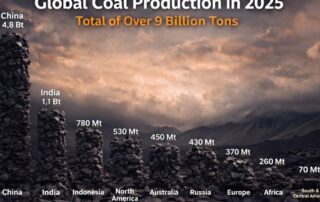
Coal, The Fuel We Ignore But Cannot Replace
If you think coal is a thing of the past…then you are missing the big picture, which is far more complex and far more relevant than most headlines suggest, says energy expert Lars Schernikau.
The ‘green’ transition is running red with the blood of animals
We must stop the reckless expansion of low-density energy projects (wind and solar) in valuable ecosystems, says Vijay Jayaray. The ‘green’ transition is running red with the blood of the creatures we are supposed to protect.

