
Women are now also speaking out against the climate agenda
In the climate debate, it is mainly older, often retired male scientists who are challenging the prevailing paradigm. Female skeptics are few and far between. However, this has been changing recently. Both in science and the media, women are increasingly speaking out against what they see as a frightening and socially disruptive agenda. This is a positive development.

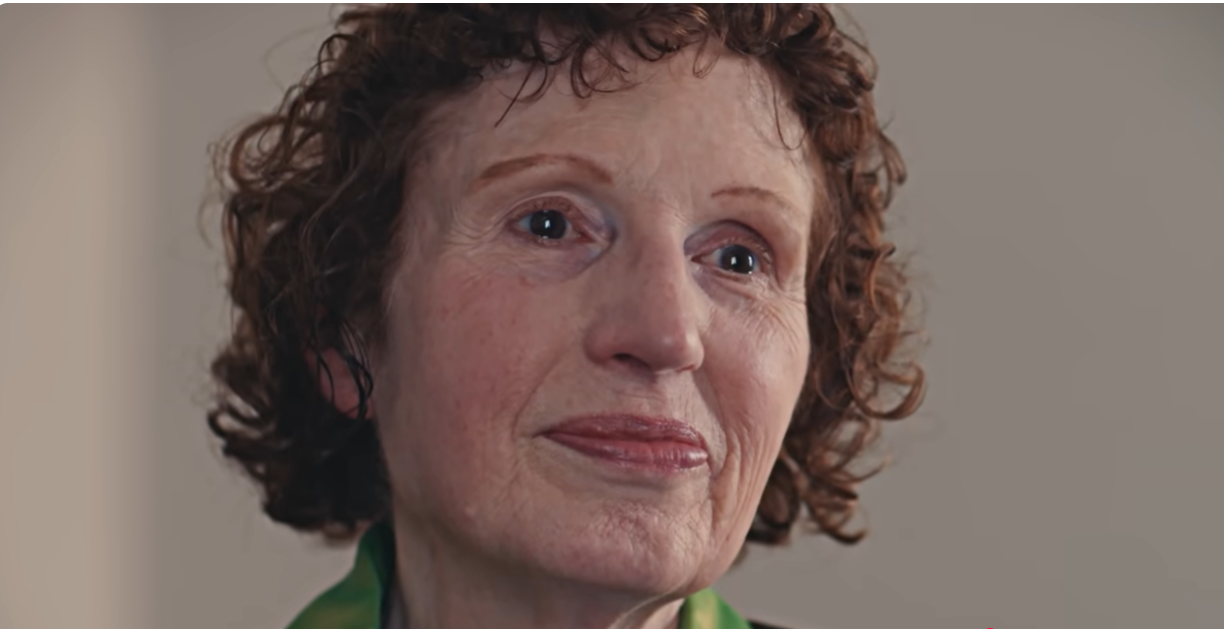
Sallie Baliunas (Climate – The Movie)
Marcel Crok
Date: 6 March 2026
The climate debate is truly a man’s world. Or rather, a proverbial ‘angry old white man’s world’. The most hilarious example of this that I can remember in my home country The Netherlands, was a 2010 conference in Utrecht organized by the skeptical think tank De Groene Rekenkamer (the Green Audit Office). A reporter came by to do a report and zoomed in on the only ‘pretty girl’ in the room. She turned out – of course – not to be a sympathizer of the ideology, but a student who had to record how climate skeptics think for a school assignment.
Sallie Baliunas
This image was the same internationally. I attended the first two climate conferences organized by the conservative Heartland Institute in 2007 and 2008. It was the same story. Mostly retired men, hardly any women in the audience, let alone behind the lectern. There are always exceptions, of course. In 2003, Sallie Baliunas and the well-known climate skeptic Willy Soon, published a critique of Michael Mann’s infamous hockey stick graph. In the documentary Climate: The Movie (Seen it yet? If not, do!), Baliunas says that the attacks on them began immediately afterwards: funding dried up, projects were halted. The reason: Soon and Baliunas were investigating the role of natural climate change and, in particular, the role of the Sun. Questioning the dominant role of CO2 was unacceptable. At a certain point, Baliunas couldn’t take it anymore. “I retired early. And my family said I should have retired even sooner, years sooner. So they noticed the toll. It took a toll on them…and me”, she says in the film.
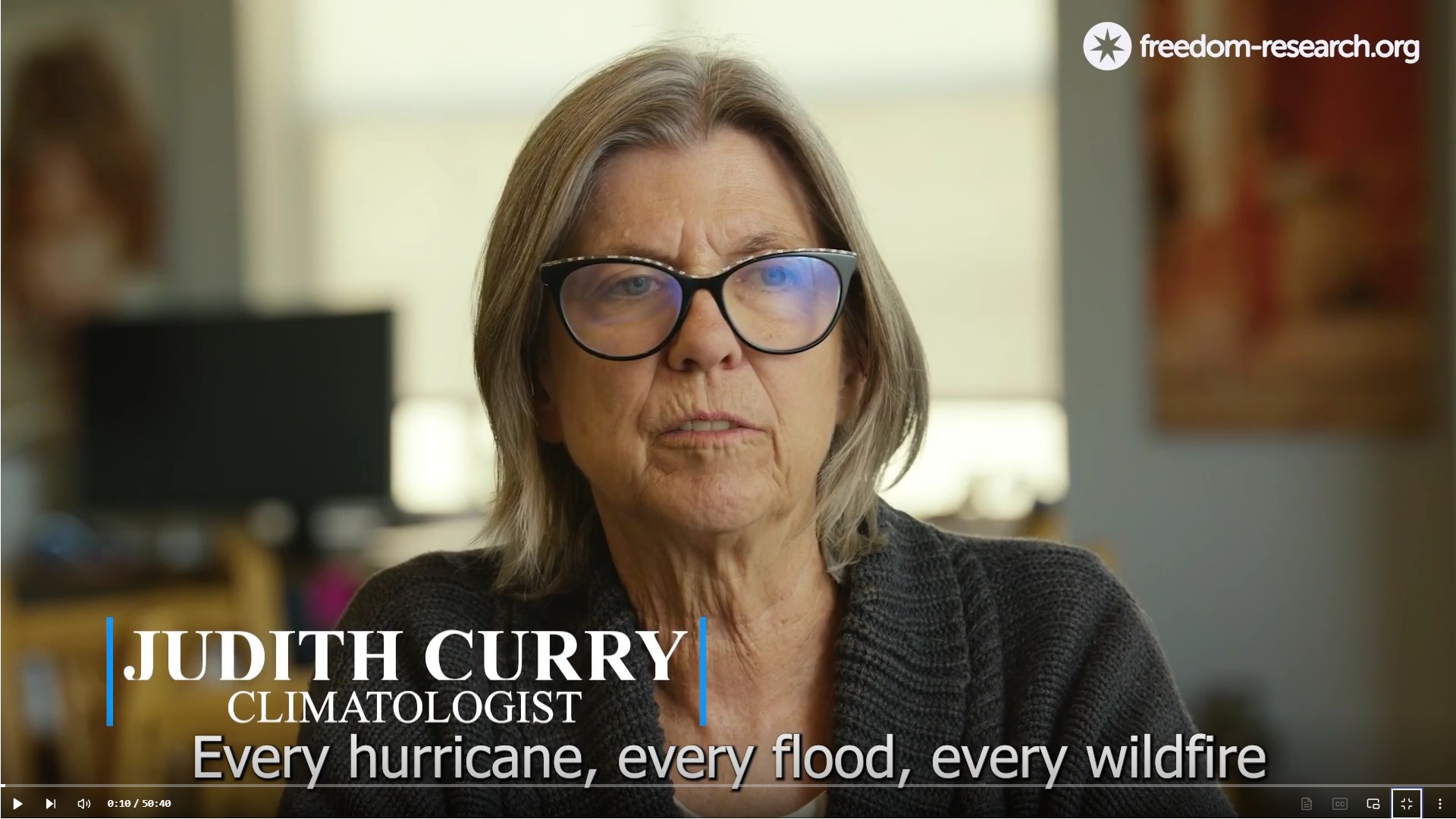
Judith Curry
One of the few prominent women still active in the international climate debate is Judith Curry. She was initially in the ‘camp’ of Michael Mann and other more activist American climate scientists (because of an alarmist paper on increased hurricane activity), but the Climategate affair in 2009, in which thousands of emails from prominent climate scientists associated with the IPCC, were hacked and posted online, opened her eyes. She found her colleagues’ behaviour unprofessional. She started a blog and also paid attention to ‘reasonable’ skeptics such as Stephen McIntyre, the Canadian who had exposed Mann’s hockey stick graph as a statistical artifact (which led to my entrance into the climate debate).
A scientist who ‘defects’ to the other side is, of course, the worst thing you can have. So Curry was regularly dismissed in the media as a ‘climate denier’, particularly by Michael Mann. In 2017, Mann said nasty things about her in an article in The Huffington Post, just as Curry was applying for a job at her university, Georgia Tech. The article was widely circulated among her colleagues and it was game over, according to Curry. In a lawsuit Mann filed against two columnists for libel and slander, it emerged that Mann had even insinuated in emails to colleagues that Curry had slept her way to the top. Curry and her partner Peter Webster met at university when she was still a student and he was still married. In January 2017, Curry decided she had had enough and resigned from her tenured position at Georgia Tech. On her blog, she wrote: “The deeper reasons have to do with my growing disenchantment with universities, the academic field of climate science and scientists”. She has not stopped working, however. She runs a company with Webster and last year she was one of five co-authors who published a groundbreaking climate report commissioned by the Department of Energy. Next April in Washington, Curry will speak at Heartland’s next climate conference and, as I am also a speaker there, I hope to finally meet her in person (after many emails).

Jo Nova
Jo Nova and Jennifer Marohasy
Australia scores very well in this regard due to the prominent presence in the debate of Joanne Nova and Jennifer Marohasy. Joanne is primarily a blogger with a outspoken skeptical opinion on climate policy. Her blog is likely the most visited climate blog in Australia. Jennifer is, in addition to being a blogger, also a scientist and has published various peer-reviewed articles. She also conducts research into the state of the Great Barrier Reef.

Linnea Lueken
Male speakers still dominate that conference, but a certain shift is taking place. Linnea Lueken, a young woman in her late twenties, who gradually became skeptical during her studies, has been working at The Heartland Institute for several years.
She published an article about this in 2017 on the skeptical website Watts Up With That?, at the time under a pseudonym. She worked as an engineer on an oil rig for a while, but ultimately chose to devote herself full-time to the climate debate. She writes, gives lectures, and regularly appears on the Heartland podcast. This is unique: a young woman choosing a ‘career’ as a climate critic.
Lucy Biggers
An even more remarkable appearance on Heartland’s list of speakers is Lucy Biggers. Until a few years ago, Lucy was deeply involved in the climate movement. She even hung out with Greta Thunberg and worked with the pro climate Democratic congresswoman Alexandria Ocasio-Cortez (better known as AOC).
Her coming out took place in May 2024 with an extensive article in The Free Press, where she works and is head of social media. She has also given several interviews on Tom Nelson’s climate podcast, and recently gave a very interesting interview to The Free Press in which she discusses the psychology of the climate movement. She emphasizes the social role that the climate movement played in her life. That she was a ‘good person’ by being part of that movement. That no one questioned anything.
The turning point for her came during the first Covid lockdown. Emissions temporarily dropped by 17 percent, but Lucy became depressed by the misery and thought: we in the climate movement are advocating for a 100 percent reduction. What kind of society will we be left with? She had also fought against the use of plastic for years, and now she was suddenly confronted with an abundance of plastic face masks and protective screens. She quietly left the climate movement, but a few years later she decided to talk publicly about her change of heart. She has many followers on TikTok and Instagram and logically reaches a very different audience than Will Happer or Richard Lindzen, two of the best-known climate skeptics, both still very active but now well into their eighties.
Danielle Carl
Danielle Carl, a woman who until recently worked in Netflix’s sustainability department, recently spoke at an online event organized by Heartland in Zurich. Sustainability at Netflix? But they mainly make movies and series, you might say. Yes, but you can also spread the desired narrative in films and, of course, in documentaries. In her lecture, she said that during the climate conference in Dubai, she had a breakfast meeting with James Taylor, the director of The Heartland Institute. A colleague saw it, and that was the beginning of the end. Here too, thinking for yourself and asking questions was not appreciated, according to Carl.
Desiree Fixler
The last woman I would like to mention in this context is British banker Desiree Fixler. She worked for years on Environmental Social Governance (ESG). Wonderful, she thought, earning money and also doing something good for the planet. She regularly attended the World Economic Forum in Davos and rose to become head of ESG at Deutsche Bank. There, she discovered, in her own words, that their ESG policy was a scam. She raised the issue internally but was subsequently fired. In recent months, she has given several extensive interviews (check out this one in particular) and has been very active and outspoken on 𝕏 and LinkedIn. In a post op 𝕏 on February 25, 2026, she writes, among other things: “Net Zero is dead – but the devastation it caused is all around us. Not only was it likely the biggest financial scam in modern history, it radically reshaped geopolitics.”
Fear
Women from various disciplines can no longer stand by and watch the damage caused by the climate debate (Biggers: fear among young people, who no longer dare to have children) and climate policy (Fixler: trillions in taxpayer and shareholder money wasted on projects that were never viable). We desperately need them because experience has shown that older male scientists, however courageously they take up the fight, are only able to reach a small section of society.

This article was previously published on March 1 in Dutch in a slightly different version on the platform indepen.eu.

more news

Is Canada Really Warming?
Is Canada really warming at double the global average rate, as the Canadian government says it is? A new scientific report suggests the answer is no, arguing that Canada’s reported warming is largely the result of serious errors in official temperature data.

The Real Environmental Crisis Is Not Climate Change
While governments spend billions on CO₂ reduction, real environmental problems remain unresolved. The real environmental crisis is not climate change, but waste, polluted water and failing governance.

Germany’s Gas Crisis Escalates: Storage Sites Nearly Empty in Mid-Winter
Germany is heading toward a serious gas crisis as storage levels plunge in the middle of winter, with some facilities nearly empty. While households are still protected, industry faces growing risks as the government remains largely silent.

