
Climate Lockdowns
COVID was the rehearsal… Climate is the show.

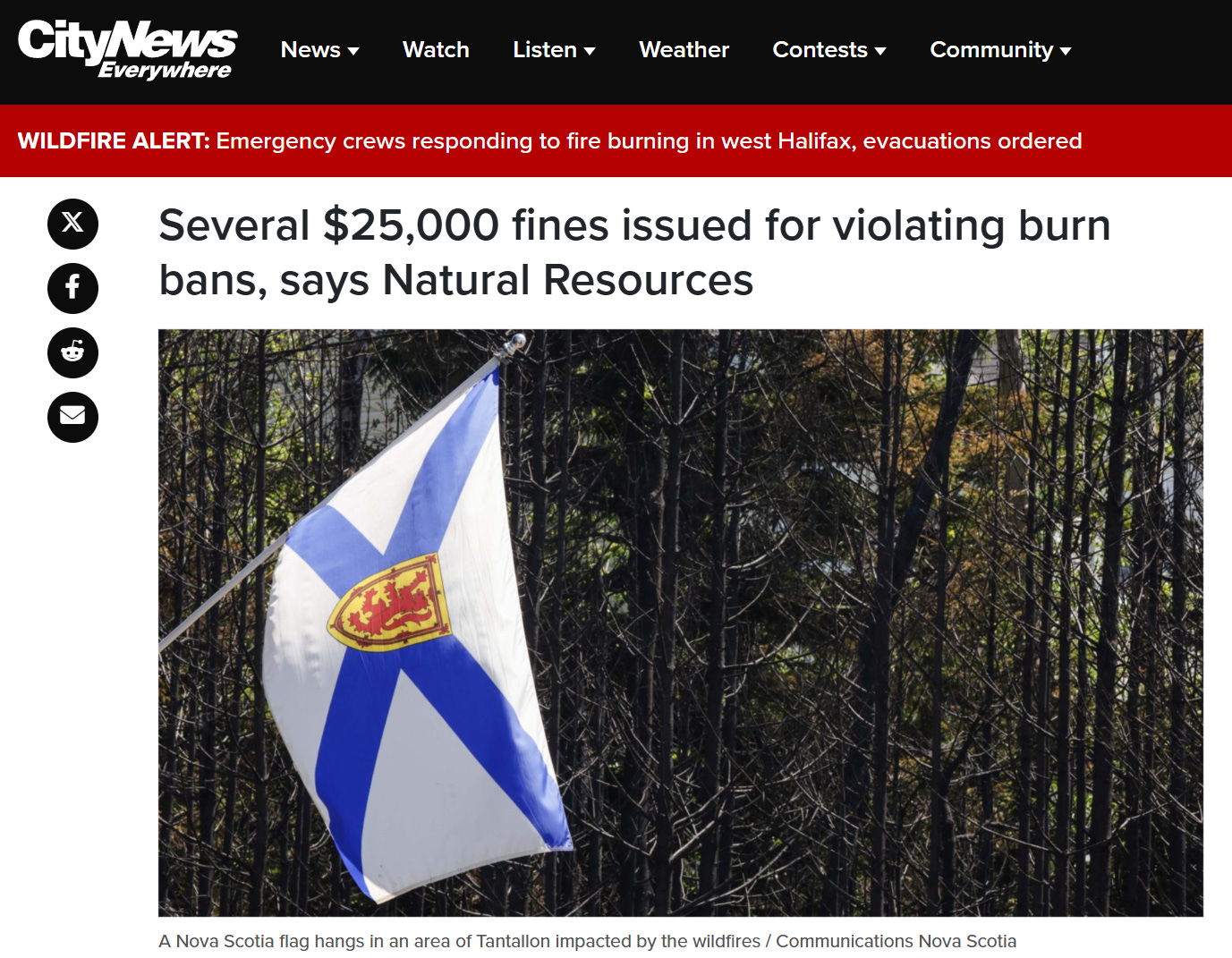
This month, Canadians learned that a walk in the woods could cost more than a speeding ticket. Nova Scotia barred hiking, biking, fishing, and even picnics on forested land and advertised fines up to $25,000 for violators.
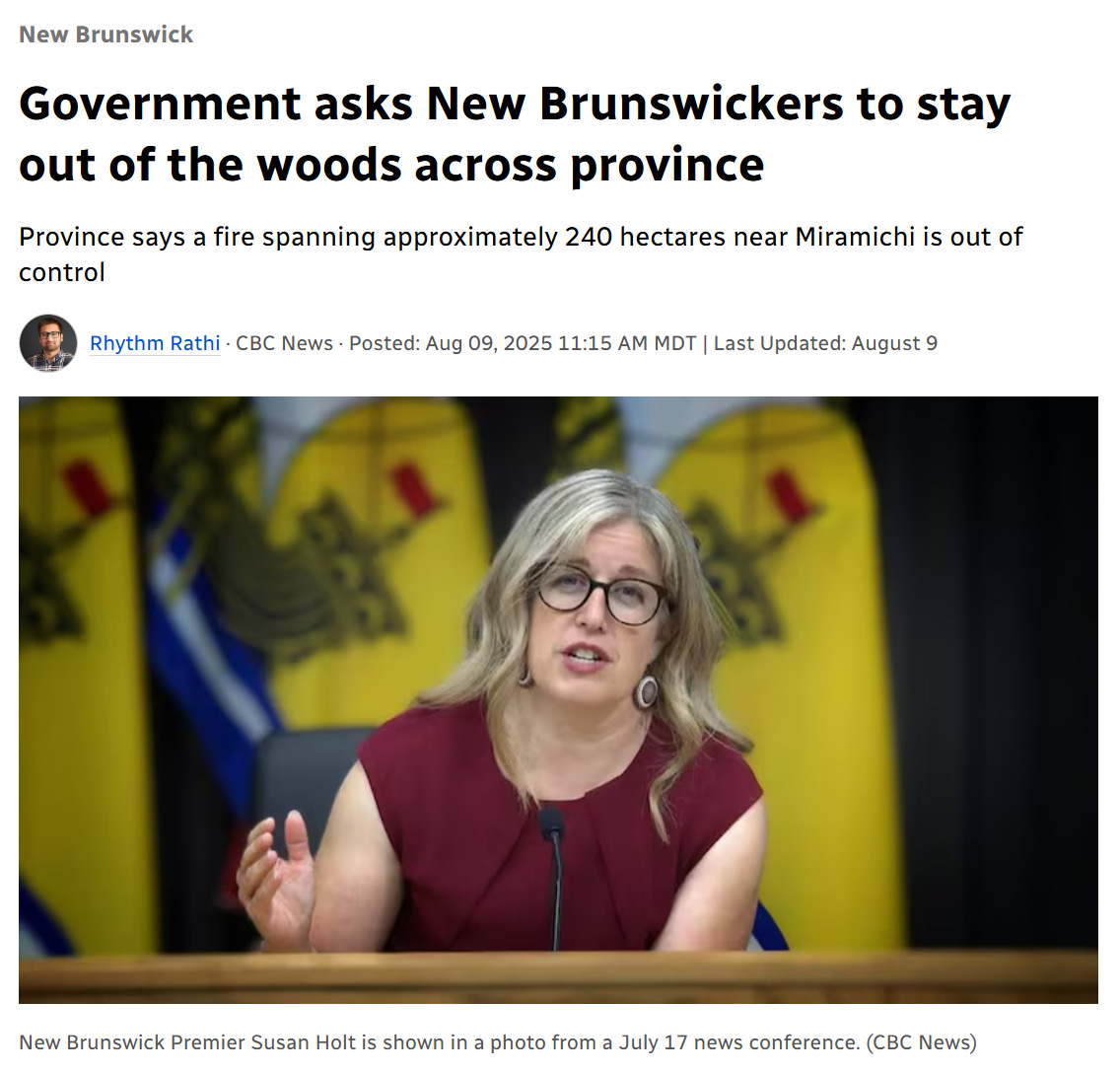
New Brunswick shut the public out of Crown land for “safety.” Newfoundland and Labrador warned of steep penalties and even possible jail time for fire rule violations.
One viral case even showed a protester being hit with a five-figure fine for stepping into the woods, reported here.
The sweeping controls are sold as science, yet the long-term wildfire data do not show a national, CO₂-driven escalation. Canada’s own databases show big swings year to year, a record spike in 2023, and very quiet seasons… including an exceptionally low 2020. That is not a steady climate signal; it is variability.
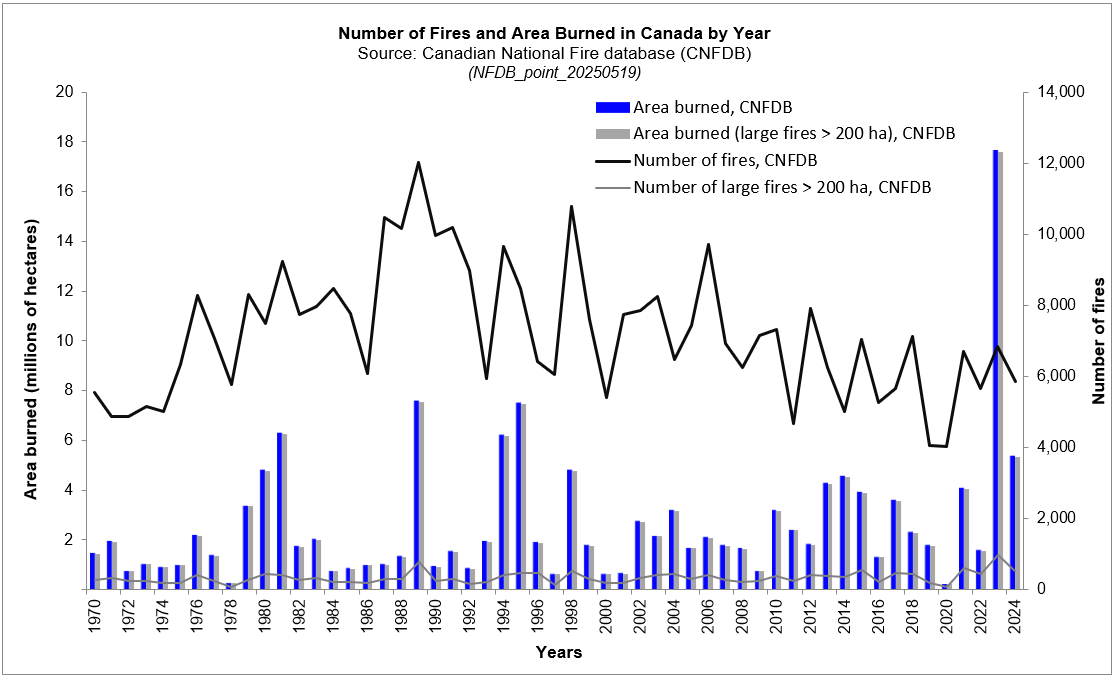
The figure above shows statistics extracted from the CNFDB, and provides a comparison with those numbers
reported annually to the National Forestry Database (NFD). This chart shows the high variability in both
number of fires and area burned in Canada per year. Source: https://cwfis.cfs.nrcan.gc.ca/ha/nfdb
The playbook, reused

Now the same reflex is being applied to forests. Banning hiking and picnics does not thin fuels, harden towns, or fix power line ignitions. It manages people, not risk. The result is months of restrictions on ordinary life, justified by a storyline that collapses the complexity of wildfire into a single variable, atmospheric CO₂.
The provincial reality, Nova Scotia and New Brunswick
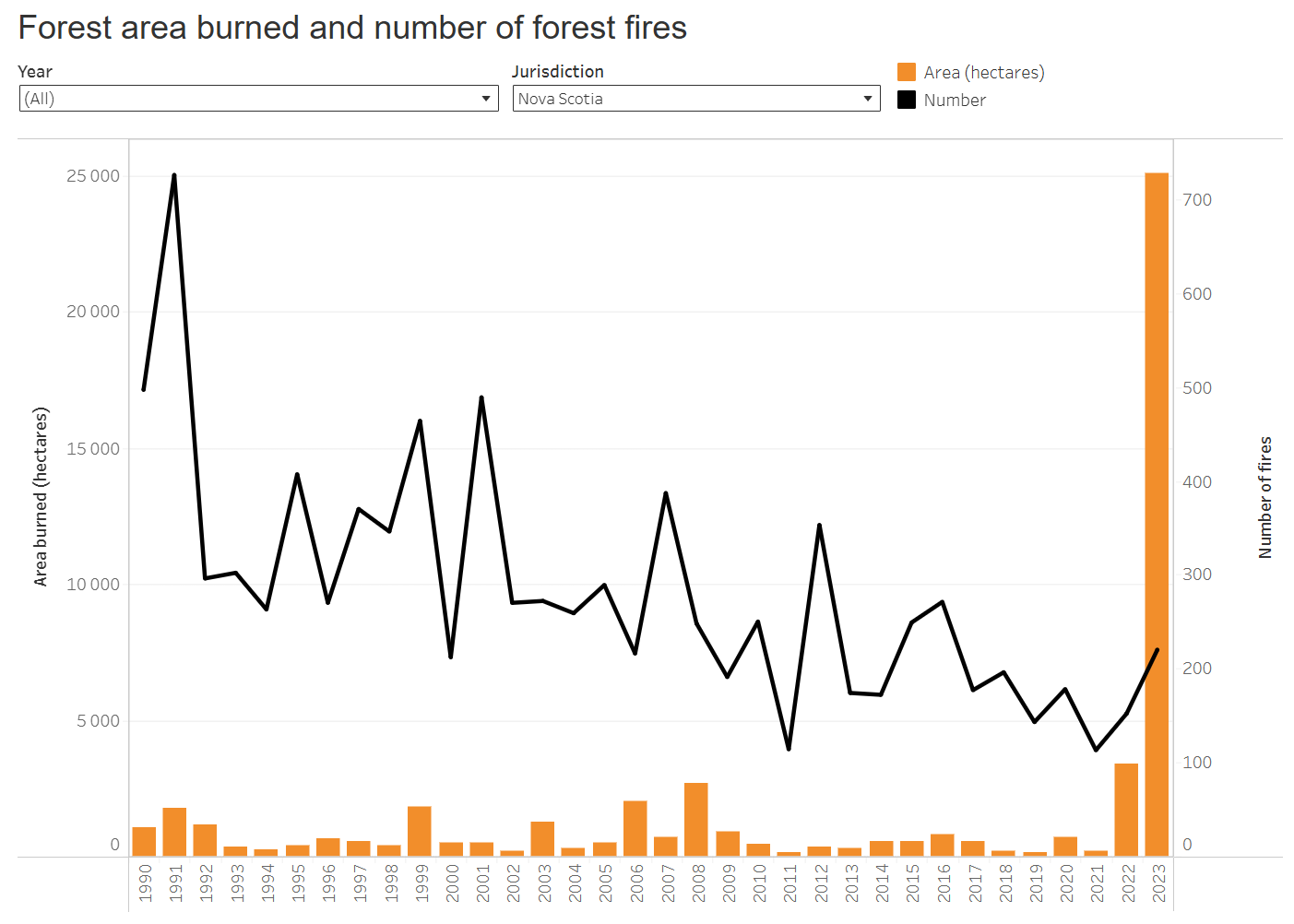
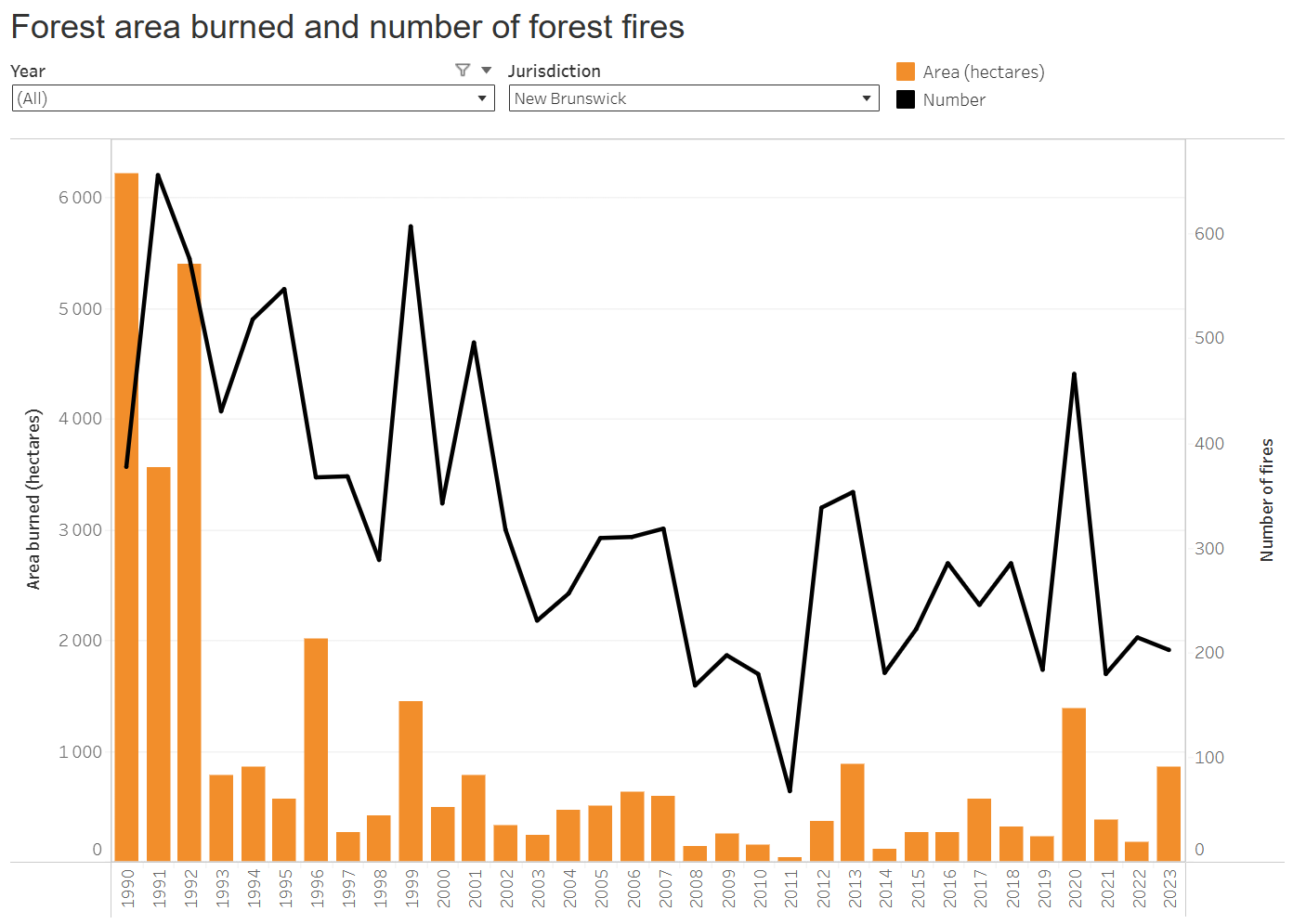
New Brunswick. The picture is even clearer. The number of fires has fallen sharply since the early 1990s, from several hundred per year to roughly a third of that level in recent years. Area burned is typically small, with occasional bumps that come and go. No steady climb, no march toward crisis.
What this means. These are not the signatures of a climate engine that is turning up the dial every year. They are the signatures of a complex fire regime where weather windows, fuels, ignitions, suppression capacity, and land use drive outcomes. When officials close trails for months and call it climate safety, they are managing people, not risk. The data from Nova Scotia and New Brunswick say so.
The peer-reviewed record the media ignores
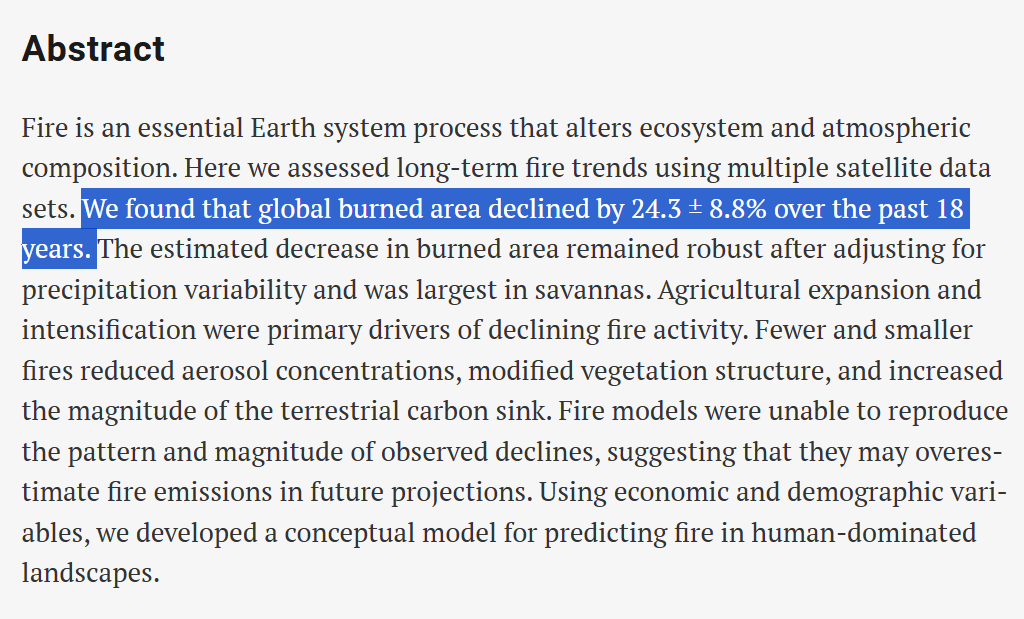
Two more pictures tell the same story. In the regional series, Africa—the engine of global burned area—eases from about eight to nine percent of land burned each year to nearer seven since 2012, Asia, Europe, and North America sit well below one percent with no upward march, South America wobbles around a few percent without a climb, and Oceania is noisy with occasional spikes but no clear trend; see the regional panels here.
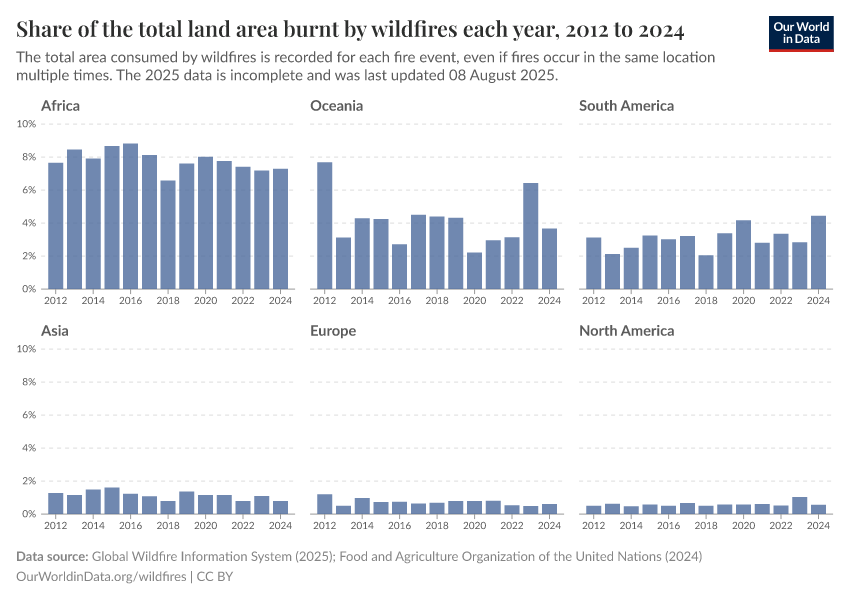
By land cover, the decline is concentrated in shrublands and grasslands and in savannas, both down markedly since the early 2000s, while forests and croplands are flat at low levels; see the land-cover panels here. The pattern is exactly what you would expect when grazing, cropping, roads, settlements, and targeted suppression break up fuels and shape when and where fire runs. Translation… ignition sources, fuels, land use, and management dominate fire outcomes, not a single atmospheric variable.
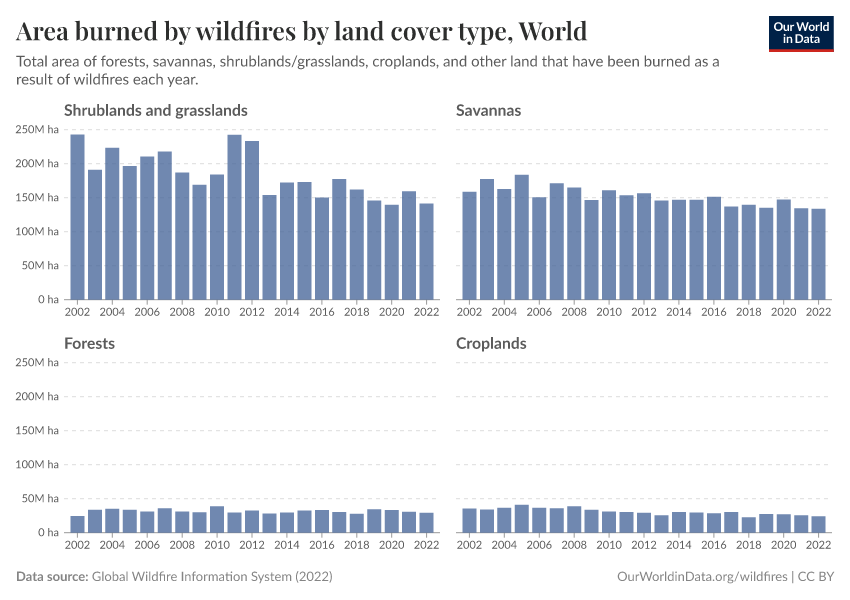
This is the climate crisis in a nutshell
I refuse that trade. If we care about forests and towns, do the practical work that actually lowers risk. If we care about freedom, say no to open-ended “climate lockdowns,” whatever the branding.

Dr. Matthew Wielicki
This article was published on 12 August 2025 by Dr. Matthew Wielicki on his substack Irrational Fear. Wielicki is offering this article for free because he believes these facts should be public. By subscribing to Irrational Fear, you will gain access to 380+ unique articles that dismantle the climate-crisis narrative with data, figures, and receipts… and you will help keep his work independent.


more news
Prince William is Wrong: Sweeping Climate Action Will Only Harm People
Prince William is behind the curve when it comes to climate change. He is also very misinformed about the history of European and global wildfire occurrences, says Linnea Lueken.

OECD and Brussels Still Want Banks to Pick ‘Climate Winners’
The OECD is risking US wrath by pushing ahead with green finance initiatives despite Washington calling time on Net Zero, says Tilak Doshi. Its new report on climate regulation has Brussels's fingerprints all over it.

Trump tells US power plants to emit as much CO2 as they want
The EPA (Environmental Protection Agency) has announced that they will scrap the limits set for ‘climate pollution’ from US power plants. Jo Nova thinks that the mission creep of bureaucrats may finally be coming to an end: Slaying the Bureaucratic Blob.

