
Clintel at Heartland Conference: new terminology in climate debate needed
At the Heartland Conference in Washington, D.C., Clintel highlighted new perspectives on climate science, including the benefits of CO₂-driven global greening and the need for a renewed vocabulary in the climate debate, as presented by Marcel Crok.

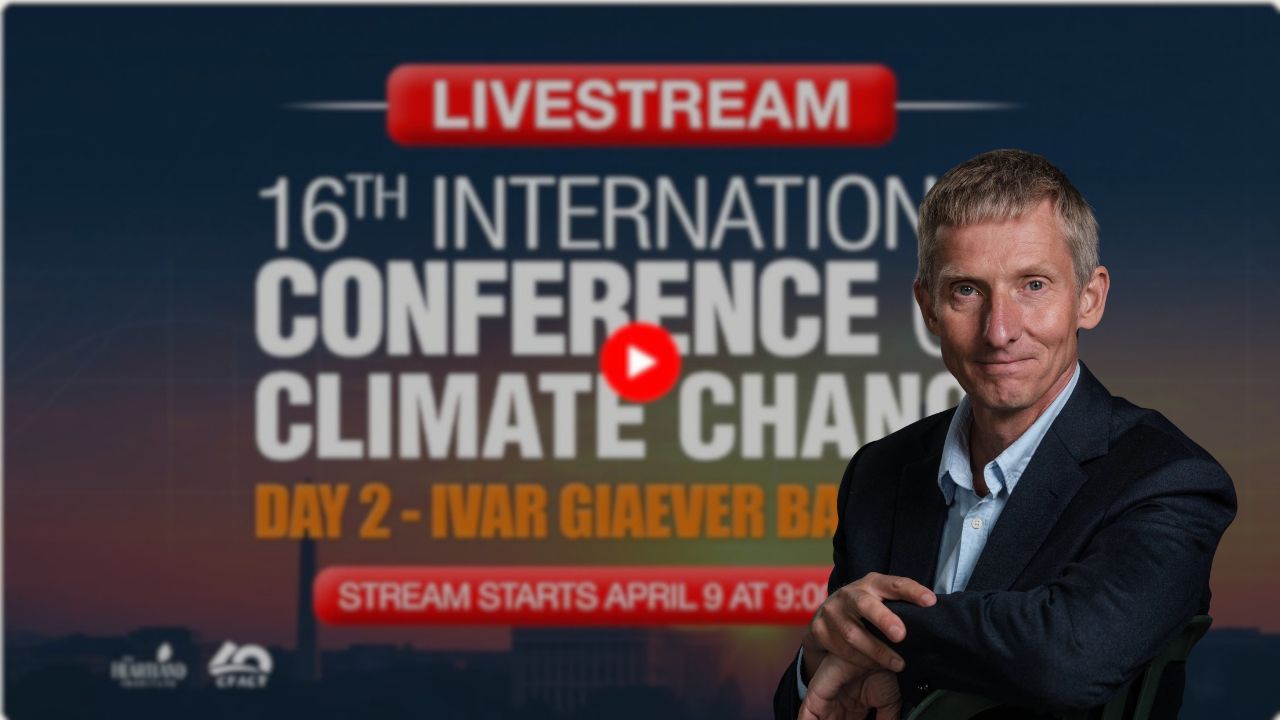
Marcel Crok
Peter Baeten
Date: 11 April 2026
Last week (April 8 and 9), Clintel attended the 16th International Conference on Climate Change in Washington, D.C., organized by the Heartland Institute. Clintel Director Marcel Crok was one of the speakers at this important annual climate-realist conference. The focus of his presentation was on the significant (positive impact of the) greening of the Earth due to the increased concentration of CO2 in the atmosphere. This greening effect is now undeniable and also has a positive impact on global agricultural yields.
New language and vocabulary are needed
Clintel’s American branch, Climate Intel, led by researcher Forrest Frantz, is also closely monitoring this greening effect and contributed to the data presented. Frantz has also put forward striking suggestions regarding the language used in the climate debate, a topic Marcel also addressed in his presentation. Language plays an enormous role in how people experience the climate debate. Climate alarmists have been using this to their advantage since the beginning of the discussion. Crok and Frantz therefore advocate that the climate-realist side also start using new, more positive terms. As a start, Crok offered six concrete suggestions:
Emissions is replaced by: Restoration of CO2 to the air
Fossil fuels becomes: Natural Organic Energy
Carbon dioxide changes into: CO2, Earth’s Oxygen-of-Life
Climate change becomes: climate (because the climate is always changing anyway)
Greenhouse gas is replaced by: Active IR-effect of CO2
H2O and CO2 emissions from power plants becomes: Atmospheric rivers of life
Watch Marcel Crok’s lecture below:


more news
A review of The Frozen Climate Views of the IPCC, part 1
Clintel has analyzed IPCC’s Assessment Report 6 (AR6) and has published an important report on it, entitled: The Frozen Climate Views of the IPCC. It’s a report that provides many serious criticisms of the work carried out by the IPCC. Here you find part 1 (of 2) of a review of this important work by Clintel recently published by the French website: Climat et Vérité.

Yet more proof that Mother Nature is far worse than man-made climate change
New research suggests that prolonged natural drought — not ecological self-destruction — played a decisive role in the cultural transformation of Easter Island. Using hydrogen isotopes preserved in leaf wax, scientists reconstructed centuries of rainfall data, revealing a severe 16th-century drought that challenges the popular narrative of human-driven collapse.
Clearing up some misconceptions about the DoE report
After environmental groups sued to halt a critical Department of Energy climate report, accusations of secrecy and political bias quickly followed. Ross McKitrick responds by challenging what he calls widespread misconceptions about the project, defending its transparency, scientific grounding and editorial independence.

