
Decline in total energy production key factor in German CO2 reduction, not renewables
The reduction of CO2 emissions in Germany by approximately 46% in the years 2007–2023 was not the result of a simple substitution of coal with renewable energy sources (RES). It was primarily conditioned by a drastic drop in the total amount of energy produced.

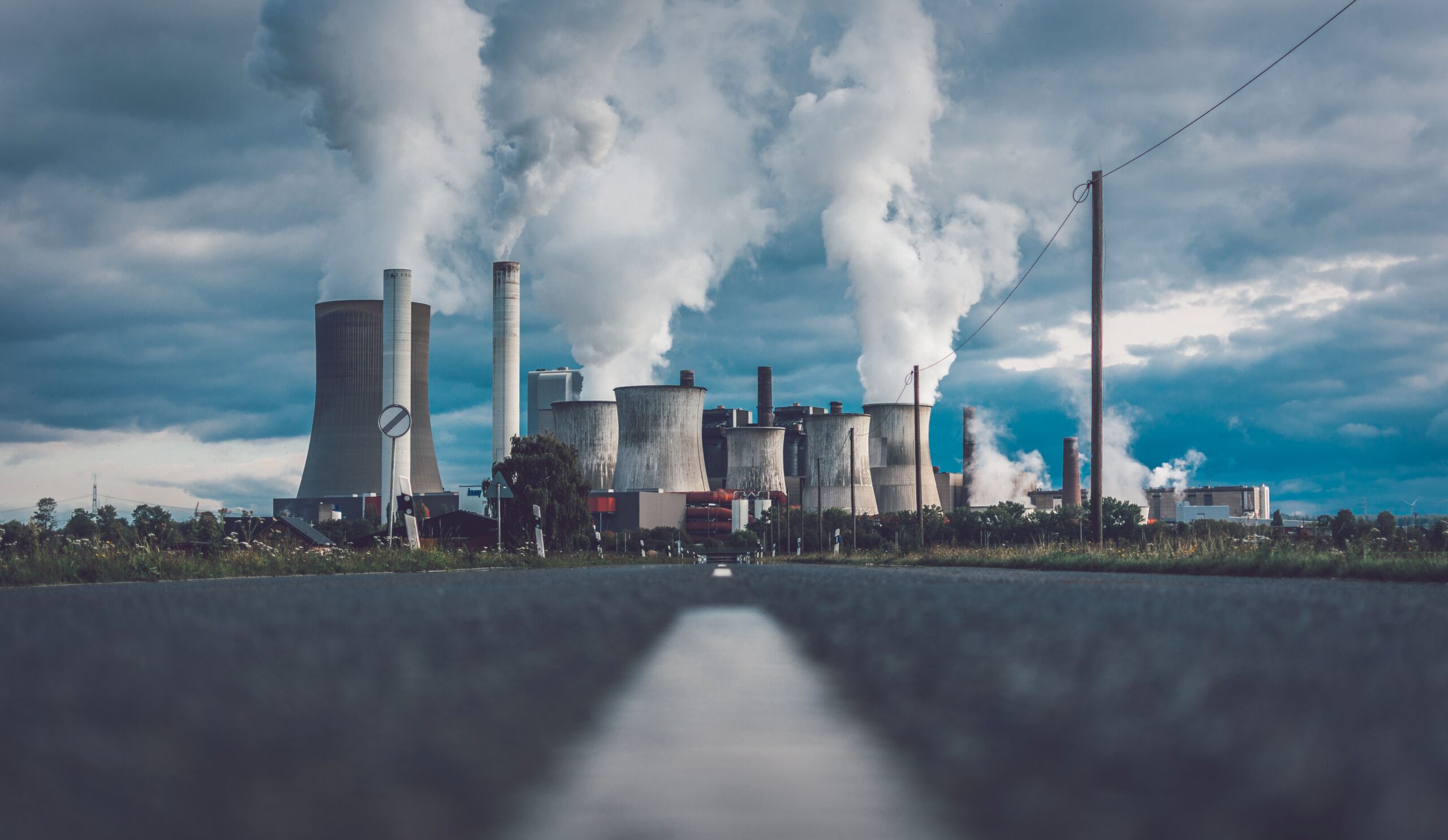
German lignite power plant. (Source: Shutterstock)
Prof. Ziemowit Miłosz Malecha
Date: 2 May 2026
Analysis of data regarding energy production in Germany between 2000 and 2023 leads to surprising conclusions. While it is commonly believed that the development of wind and solar energy is primarily responsible for the decrease in CO2 emissions, statistical data show that the key factor was the decline in total energy production. The addition of new generation capacities in weather-dependent renewable energy sources (VRE) merely allowed for balancing the effects of phasing out nuclear power.
Analysis of CO2 Emission Dynamics and Energy Mix Structure
Figure 1 illustrates the dynamics of changes in electricity and heat production from fossil fuels (coal, oil, natural gas – hereinafter: CGO) in relation to the volume of CO2 emissions generated by this sector. Analysis of empirical data demonstrates a near-total quantitative and qualitative correlation between the reduction in fossil fuel generation and the drop in carbon dioxide emissions. Simultaneously, a strong convergence of these trends with the decline in total energy production (Total), which also includes renewable sources (wind, solar, hydro, bioenergy) and nuclear power, should be noted.
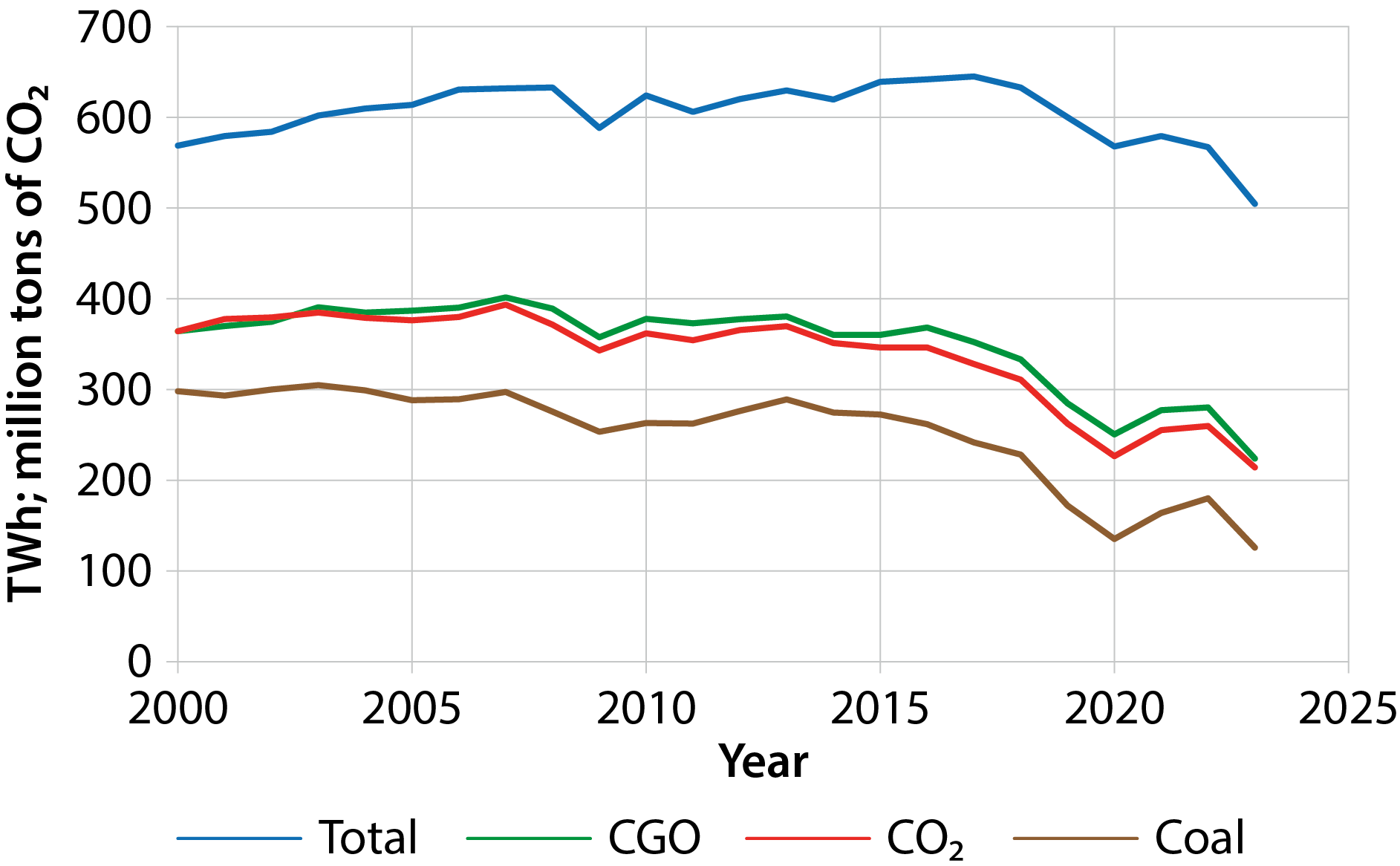
Fig. 1. Correlation between fossil fuel energy production (CGO), total production (Total), and CO2 emissions from fossil fuel energy production in Germany from 2000–2023. The graph illustrates the near-total convergence between the volume of CGO generation and greenhouse gas emissions, alongside a close correlation with the decline in total production (Data from Our World in Data)
It is worth emphasizing that despite a significant reduction in total emissions, the unit emission intensity (emission intensity) of the energy sector remains at a relatively constant level, oscillating around an average value of 0.96 kg CO2/kWh. This phenomenon occurs despite the successive reduction of coal’s share in the energy mix (a drop from 296.68 TWh in 2000 to 124.78 TWh in 2023). Figure 2 presents these relationships in the broader context of structural transformation, highlighting the parallel process of phasing out nuclear power (a drop of approx. 162.4 TWh between 2000–2023) and the dynamic growth of weather-dependent sources (VRE – wind and solar), whose production increased by approx. 192 TWh in the same period.
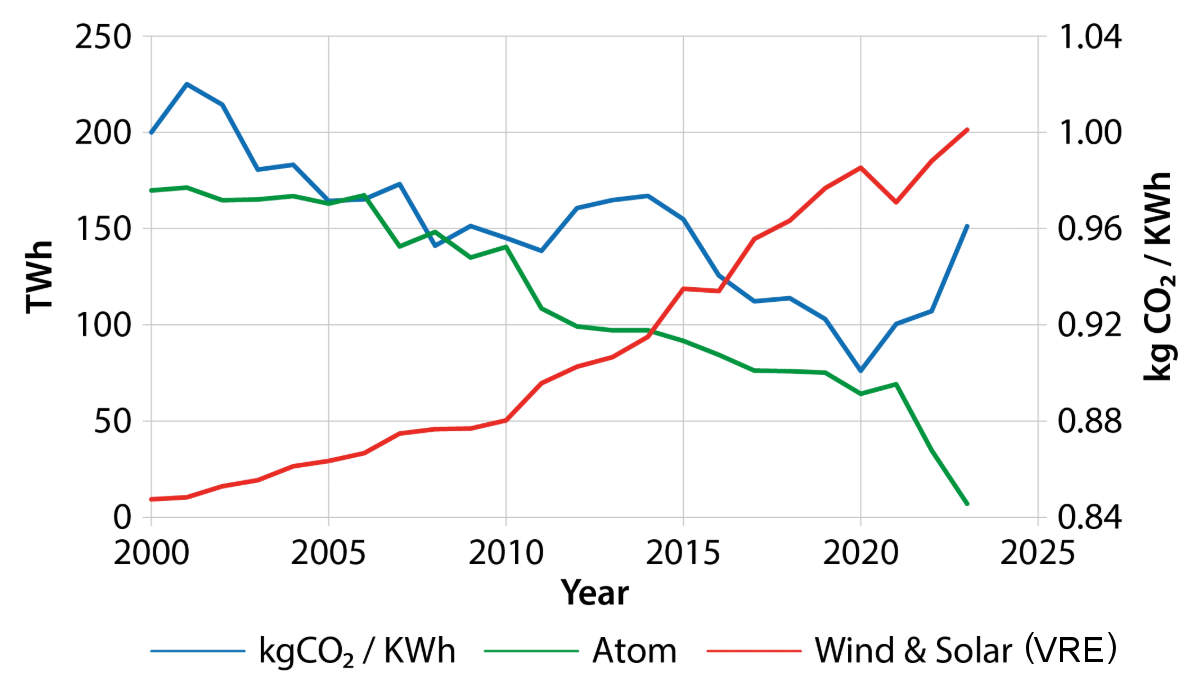
Fig. 2. Structural transformation of the German energy mix: a comparison of the dynamics of the nuclear phase-out (Atom) and the growth of weather-dependent sources (VRE – wind+solar) against the background of stable unit emission intensity. Data from Our World in Data.
The sustained stability of unit emission intensity suggests that there was no radical improvement in the average thermal efficiency of fossil fuel-based generation units during the studied period. Furthermore, the above balance indicates that the capacity increase in the VRE sector largely served to compensate for decommissioned nuclear units, and the real reduction in emissions was largely conditioned by the decline in the total energy supply in the system.
It can be observed that the emission intensity from fossil fuel power plants for selected years was as follows:
- Year 2000: 364.01 / 363.93 = 1.00 kg CO2/kWh
- Year 2010: 361.68 / 378.24 = 0.96 kg CO2/kWh
- Year 2023: 213.71 / 222.40 = 0.96 kg CO2/kWh
Almost constant
Thus, the average emissivity of the German fossil fuel mix has remained almost constant for 23 years. Table 1 presents the detailed dynamics of changes in energy production from the peak production of CGO sources in 2007 (401.13 TWh) to the last full year of data (2023). The year 2007 was also characterized by the highest CO2 emissions, amounting to 392.57 million tons.
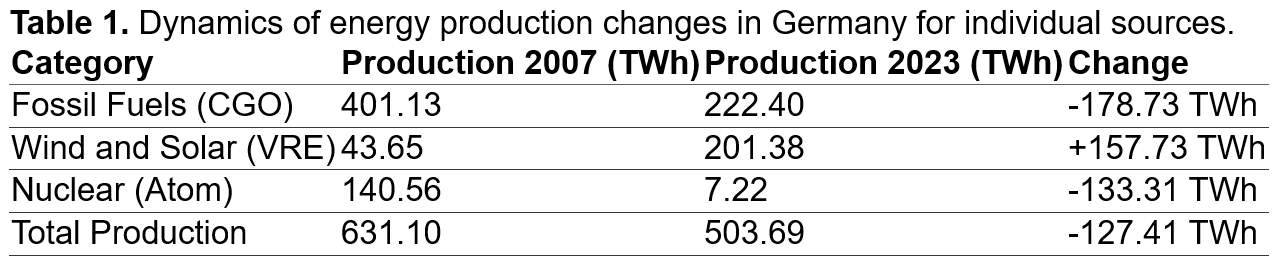
The comparison of the above data reveals a phenomenon that can be called the paradox of structural transformation. Although the common narrative attributes emission reductions to the growth of weather-dependent renewable energy sources (VRE), the detailed energy balance points to a different mechanism.
In the period under review, the increase in production from wind and solar by 157.73 TWh was almost entirely offset by the simultaneous phasing out of emission-free nuclear capacities, whose production fell by 133.31 TWh. As a result, the actual net gain of new low-emission energy in the system was only 24.42 TWh. This means that as much as 85% of the decarbonization potential of RES was consumed by the process of withdrawing nuclear power, instead of directly replacing emission-heavy fossil fuel combustion.
Given that fossil fuel production fell by 178.73 TWh in the period considered, and the net gain from new emission-free sources was only 24.42 TWh, a deficit of 154.31 TWh appears. This value shows high convergence with the decline in total energy production (Total), which amounted to 127.41 TWh in the discussed period.
It is therefore possible to formulate the thesis that over 71% (127.41 out of 178.73 TWh) of the reduction in fossil fuel combustion – and consequently the drop in CO2 emissions – is due not to the increase in the share of RES, but to the limitation of the total energy supply in the German electricity system.
Summary
The conducted analysis proves that the reduction of CO2 emissions in Germany by approximately 46% in the years 2007–2023 was not the result of a simple substitution of coal with renewable sources. It was primarily conditioned by a drastic drop in the total amount of energy produced.
If energy demand had remained at the 2007 level, the current level of wind and solar energy development would have proven insufficient for a significant reduction in emissions, as it would have first had to compensate for the gap left by the withdrawn nuclear power. The German energy transition in the discussed period was therefore based on two interdependent pillars:
- RES expansion, which primarily served to replace emission-free nuclear energy.
- Reduction of total production, which enabled the real withdrawal of high-emission units from the energy mix.
These results indicate that without a systemic drop in energy production (resulting, among others, from structural changes in industry and the balance of foreign trade in energy), climate goals would have been impossible to achieve at the current rate of RES development and the simultaneous departure from nuclear power.
Prof. dr hab. inż. Ziemowit Miłosz Malecha is professor at the Faculty of Mechanical and Power Engineering, Wrocław University of Science and Technology.

more news

Cliff Mass: “Global Warming not an Existential Threat”
Human-caused global warming is a modest problem. It is not an existential threat to humanity, says popular American meteorologist Cliff Mass.

Tree from Morteratsch Glacier shows climate narrative is wrong
A larch trunk that began to grow over 10,000 years ago, was subsequently buried by a Swiss glacier and uncovered again in 2025. It shows that the official climate narrative is simply wrong.

Let the Climate Canaries speak
The book Canary in a Climate World brings together 38 contemporary thought leaders from across science and other critical disciplines. Together, they present a body of work that challenges the Net Zero narrative and many of the assumptions driving modern climate policy.

