
Interview with Andreas N. Angelakis
Greek scientist Andreas Angelakis recently signed the Clintel World Climate Declaration. In this interview he shares his views about climate change and policies.
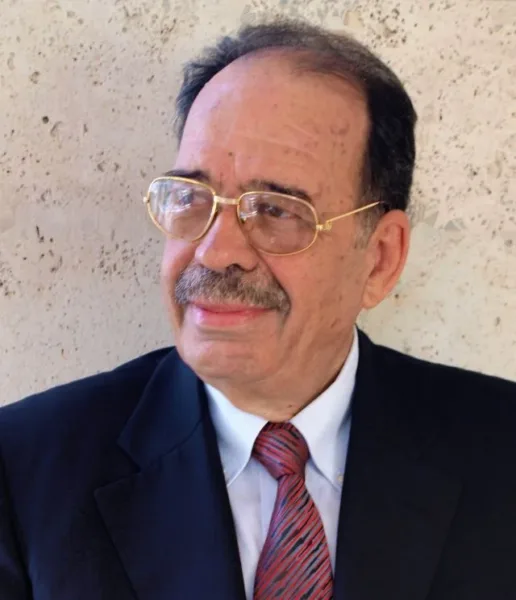
Name: Andreas N. Angelakis
Country: Greece
What is your background?I hold a Bachelor of Agricultural Science from the Agricultural University of Athens (1962) and a Bachelor of Science in Civil Engineering from the University of California, Davis (1976). I also have a Master of Science in Soil Science from the University of California, Riverside (1975) and an Master of Science in Water Resources from the University of California, Davis (1977). I was awarded the title of Doctor of Philosophy (PhD) in Soil Physics (1981) by the same University.
I served at the Extension Services of the Ministry of the Agriculture (1964-1966) and thereafter as Director at the Agricultural School of Messara, Crete (1967-1978), Water Resources Engineer in the Land Improvement Service of the Ministry of Agriculture (1979-1980) and Researcher-Water Resources Engineer at the National Foundation for Agricultural Research (N.AG.RE.F.), Institute of Crete (1993-2008). I was elected member of the Administrative Board of N.AG.RE.F (1993-1997). I was also an Adjunct Professor at the Technical University of Crete, Chania (1989-2008), Technical Consultant of the Hellenic Association of Municipal Water and Sewerage Companies (EDEYA) (1991-2018), and Water Reuse Consultant at the FAO of the UN (1996-2018).
My research interests include among others, small and decentralized water management systems, desalinated water, wastewater treatment and waste reuse, and water resources technologies in ancient civilizations (water history). Also see: https://www.a-angelakis.gr/index.php
Since when and why are you interested in climate change?
Since September of 1974 when I was in California. Henry Kissinger, the then all-powerful Secretary of State and National Security Advisor of the United States, then launched the climate agenda at the United Nations General Assembly. The World Meteorological Organization (WMO) responded within a month. However, I live on the island of Crete in the Eastern Mediterranean, where the Minoan civilization, the first European civilization, was grown. After studying the water history, the Cretan climate appears to be variable, but without permanent changes (Markonis et al., 2016). I think that climate variability was translated to climate change.
How did your views on climate change evolve?
My views are stable. There was not any change in my views since 1974. Crete has a long and glorious history, which is very instructive. It is an interesting example.
Is climate change a big issue in your country and how do you notice this?
I think that it is a big issue for politicians. Most of the scientists are not so much involved. However, the number on the Clintel list should be increased. I have begun to discuss Clintel with them.
What would climate policy ideally look like in your view?
Your attempt with the World Climate Declaration is interesting. However, the number of participants should increase strongly and they should undertake responsibilities in writing relevant papers in scientific journals and in articles in the local media.
What is your motivation to sign the CLINTEL World Climate Declaration?
The reality and the truth, e.g. variability of climate, must be advertised worldwide. I think that the variability has been translated especially by politicians into permanent change.
Reference
Markonis, Y, Angelakis, A.N., Christy, J, and Koutsoyiannis, D. (2016). Climatic variability and the evolution of water technologies in Crete, Greece, Water History, 8 (2), 137–157, doi:10.1007/s12685-016-0159-9.
more news
The EU’s Nuclear Phase-Out Was a Blunder
Following Friedrich Merz in January, Ursula von der Leyen has now also admitted that the phase-out of nuclear energy was a major ‘strategic mistake’, not only for Germany but for the EU as well. American researcher Roger Pielke Jr. uses some simple calculations to demonstrate the magnitude of the EU’s strategic blunder.
Paul Ehrlich (1932-2026): Farewell to the Long-Lived Failed Prophet of Miserablism – The Population Bomb author lived a long, wealthy, healthy life, an opportunity his work denied to countless others
Paul Ehrlich, author of The Population Bomb, became one of the most influential voices behind modern environmental pessimism. His warnings of inevitable resource depletion and societal collapse shaped decades of policy and public thinking. Yet, as history unfolded, many of his most prominent predictions failed to materialize—raising enduring questions about the consequences of alarmist narratives in science and policy.
US Energy Realism Pays Off in Iran Crisis
The stark contrast between American resilience and European collapse is a permanent lesson. National security should not be subject to the whims of the weather or the approval of climate activists in European capitals.

