Interview with Dr. Guus Berkhout: A Different Perspective on Climate Science and Energy Policy
The big problem today is that climate models are not fit-for-purpose, says Clintel co-founder dr. Guus Berkhout. They do not reflect the real world. That is the reason why the Net Zero policy does not work. We need fundamental changes in climate science and climate policies. We now see that this message gets more and more support.

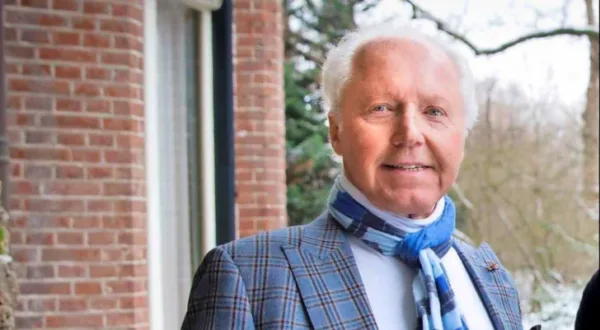
Dr. Guus Berkhout, geophysicist and co-founder of the Clintel Foundation.
Manish Koirala
Date: 24 februari 2026
Dr. Guus Berkhout is a Dutch engineer and emeritus professor known for his work in geophysics, acoustical control, and innovation management. He earned a Master’s degree in electrical engineering in 1963 and a PhD in Physics (cum laude) in 1970 from Delft University of Technology (TU Delft). He began his professional career at Royal Dutch Shell in 1964, where he worked in research and development, and technology transfer across international roles before returning to academia.
At TU Delft, Berkhout held professorships in geophysical and acoustical imaging and served on the university’s board. His technical contributions include the development of the multi-scattering WRW model for seismic wave propagation and advancements in variable acoustics for concert halls. In 1982, he founded the Delphi Consortium, an industry-backed research initiative focused on seismic imaging for the oil and gas industry. He also established Jason Geosystems and the Center for Global Socio-Economic Change (CFGSEC).
In more recent years, Berkhout has been active in climate policy discussions. He co-founded the Climate Intelligence Foundation (Clintel) in 2019 and is the lead author of the World Climate Declaration, which argues that there is no climate emergency. He maintains that climate change is largely natural, questions the reliability of current climate models for policymaking, and characterizes CO₂ as beneficial for plant growth. He favours data-driven climate science and adaptation-focused climate policies over rapid mitigation strategies promoted in many international agreements.
Contrary to its original motives, the Delphi Consortium, which you found, now actively supports the transition to green energy, such as geothermal power.
Yes, let me make clear that in 2016 I resigned from the Delphi Consortium. That means that from 2016 onward, there has been another leader of the Delphi Consortium. That means what the Delphi Consortium has done in the last 10 years is out of my scope.
So, you are not liable for any decisions made by the Delphi Consortium; is that what you mean?
Yes, that is what I mean. After I left, political ideologists influenced the Delphi Consortium programme, pushing it in the direction of what I call green energy, and that is not the way I think things should have been done.
You founded the Delphi Consortium. How did things go wrong, and don’t you want the Delphi Consortium to return to its original motives?
If you look at the Delphi program prior to 2016, it was driven by progressing imaging science, whereas the green energy research is driven by politics. I think a true scientific organization should never get involved in green energy ambitions because, as it has been pursued in the last few years, it has little future. Green energy has brought mankind into poverty rather than into prosperity, being the aim of integer science and technology.
Since the Delphi Consortium has diverged from its original motives, do you have any suggestions or recommendations for its current leaders?
Well, I have a clear message, and that message is this: please look at the capability of the Delphi research team. With its large imaging knowledge it makes the complex geological patterns of the Earth visible. You can imagine why that is important in practice. If you know the complex geological system, then mining companies use that information to drill for new reserves in the right place. For example, without this information the world’s current oil & gas reserves would be a lot smaller and the prices would be a lot higher. That is the reason that under my leadership the Delphi Consortium had more 30 members, from all over the world.
In summary, high resolution geophysical imaging allows organizations to gather a lot of detailed information about the Earth’s geology. This information comes from thousands and millions of years ago, so we are talking about indirect remote searching the Earth’s geological archive. That archive contains a huge amount of information on the rich climate history of our planet. Today, that is invaluable information, and therefore I already started on this extension just before 2016. When I resigned, that extension was abandoned.
Keep in mind, in imaging the geological system we do not rely on all kinds of geological models. Instead, we collect data through seismic methods, and the acquired seismic measurements contain information about the geological structure.
The same capability can be applied to climate imaging. Today, we receive a lot of data from satellites about the climate. Using that data, again not models, we can extract information of the complex climate system that we currently lack.
If we look at current climate models, they are not correct. When we compare them to measurements, a process we call model validation, you see that the models developed over the last 30 years do not reflect reality. They significantly overestimate warming, what we call ‘running hot’. It is very clear that these models are not fit-for-purpose.
It can be easily made clear that it is not surprising that today’s climate models are still not fit for purpose. The fundamental reason is that the Earth’s climate is very complex. We know a lot more than 30 years ago, but there is still much that we do not know. That means that if models are constructed, it would be a miracle for them to be correct, because there is so much we do not know.
I come from the imaging world, and it is the imaging world that can really bring us to a better understanding of the Earth’s climate. My new book, is called Climate Science: Let the Data Speak. This means that in the imaging approach we do not put all kinds of assumptions into a theoretical model and compare it with measurements. Instead, we go to the measurements first. With proper measurements, nowadays with satellites, we get great information about the climate. If we use that, we go from surprise to surprise. That is the new climate science, and that is what Delphi should have worked on. Not on green energy.
What is the motive behind establishing the Clintel Foundation?
If you look back, we see that the story about the climate was very one-sided. The IPCC had constructed a theoretical model, and that model was completely focused on CO2. What they were doing was trying to prove that CO2 was the primary cause of climate warming. If you make a model to confirm what you already think, that is the worst thing you can do in science. It is nothing less than a mortal sin.
The IPCC uses basically a one-factor model, and that factor is CO2. Their objective is to try to prove that CO2 is the main cause of climate warming. Again, that is fake science. In objective science, you keep all options open. You do not look for measurements to confirm what you think; you look for measurements that could prove you wrong. Looking to be right is scientifically wrong. You should look for data that challenges your assumptions. We call that validating models. Einstein said: “One experiment may prove me wrong”.
Is the Clintel Foundation trying to prove that CO2 is not the primary driver of warming?
No, the Clintel Foundation is saying that CO2 is just one side of the story. We are very clear that we do not know enough about the very complex climate system to say definitively that IPCC is wrong. We only say that the mainstream story is one-sided and that the fearmongering stories about the Earth’s future are unjustified. There is a lot of data showing that the mainstream climate models are not correct, and we want to tell the other side of the story. That is one of our goals.
Secondly, we want to address the zero CO2 policy that comes from these CO2-based models. We argue that there is not enough certainty to justify the extremely high costs of such climate policies, especially when it is unclear whether there are any the benefits at all. Therefore, we say that climate policy in the coming years should focus not on mitigation, meaning zero CO2 policies, but on adaptation. If you look at the past 10 years, mitigation through zero CO2 policies has not saved a single climate victim, whereas climate adaptation has led to a spectacular decrease in the number of climate victims and extreme weather impacts. So, the policy should shift from mitigation to adaptation.
The second point is that we need a new way of doing climate science. The system is too complex to rely on theoretical models, so we should focus on climate imaging. There is an astronomical amount of data available, and we need to investigate all of it thoroughly. Climate science should start with data science: “Let the data speak”.
It is extremely interesting to see that much of what we did not know, we now understand better after applying our imaging knowledge to the climate system. You will see more about this in my upcoming book, which will be released this summer, showing that the mainstream climate science needs to go in a completely different direction. Working in at least three dimensions is a must.
One other important point here is artificial intelligence. AI allows us to search through huge volumes of data, something that is impossible for humans to do manually. This is the principle of the new climate science I am talking about. Instead of relying on models built from limited knowledge, we go directly to measurements first, particularly satellite data, which are full of information without approximations. The task is to extract the true information from this data to understand how the climate system behaves.
I predict that in the future, climate science will increasingly rely on artificial intelligence – not for predictions or model-making, but to get access to measurements we are not aware of. I call AI-software a sophisticated search machine that collects and combines unknown data files. In addition, with the aid of learning datasets AI can suggest solutions.
Having spent your career at Shell and the Delft University, how do you respond to the view that your skepticism is a direct extension of fossil fuel industry interests rather than purely objective science?
Yeah, well, to answer your last remark, I can tell you that the era of fossil fuels is ending. There is no doubt about it, even if oil companies would not like it. We know very well what the new world of energy will be, and that is nuclear energy – the modern safe and efficient versions of course. This includes all scales of reactors, from container-sized units close to large users like data centers, to very large reactors in central networks.
I have never tried to defend fossil fuels for their own sake. I say this for many years: if we want a prosperous future for everyone on our planet, energy is vital. Expensive energy makes people poor. Affordable, abundant energy benefits everyone. Today that is oil and gas, and the future it will be nuclear!
The green energy movement and its development, however, is a social and economic disaster. If politicians think that wind turbines and solar panels can provide the world, not just today but especially in the future, with enough affordable energy, these politicians have no idea what they’re talking about. That is why I am so disappointed that a flourishing Delphi went down the green energy route. Many partners left.
When Clintel started seven years ago, we were excommunicated for our ideas. Now, seven years later, our ideas are being embraced. The private sector will not invest in wind parks or solar panels on its own anymore because it leads to severe losses. The only reason these projects happen is government subsidies, meaning ordinary citizens pay the difference.
This change over the last few years shows how Clintel is increasing its influence – not only in energy policy and adaptation, but also in promoting our new ideas about climate science: no models, look at the data, let the data speak.
Can you disclose who or which organizations fund the Clintel Foundation?
The funding comes primarily from a property manager who believed things were going wrong in our country and that we needed another perspective on the climate. He gave us a start amount of 100,000 euros, and the rest comes from crowdfunding.
Critics note that many of your 2,000 signatories are engineers or geologists rather than atmospheric physicists. Why should a professional in a non-atmospheric field have their view on radiative transfer carry the same weight as a scientist who specializes in the troposphere?
No, many signatories are physicists and senior scientists. And keep in mind that most of the people who call themselves climatologists are actually meteorologists and environmentalists. Meteorology is very different—the weather is a very different phenomenon from the climate. And environmental pollution should not be mixed up with climate change.
What is needed is integer science, particularly we need physicists and engineers that stay away from politics. If you look at the last 30, 40, or 50 years of mainstream climate science, it has brought us nowhere. It has not solved anything, and it has resulted in more poverty because of the green solutions.
The models currently being used come from political ideologists out of the meteorologic and environmental world. I’m not saying these scientists should be excluded, but political ideologists will never solve the problem. Weather is very different from climate. To understand climate properly, you need to study geological history, the geological archives, and see how the climate has behaved over millions of years. In addition, most big climate forces act from outside the Earth’s atmosphere.
If CO2 isn’t the primary ‘thermostat’, what specific physical mechanism (e.g., solar cycles or cloud feedback) do you believe is currently overriding the greenhouse effect?
Keep in mind that the CO2 model—the climate model that tells us CO2 is the main factor—is actually a single-factor explanation for climate. That’s why there is only one particular way being considered to control the climate, and that is by controlling CO2. Climate policy, in effect, has become CO2 policy. The argument is that if we can control CO2—which we can’t and probably shouldn’t—we can control the climate. After all these years, we now know that this is not true.
If you look at the real factors, the number one factor is the sun. You can see its influence in the temperature difference between day and night, because during the day we have the sun, and at night we don’t. You also see it between summer and winter. On much larger timescales, like the ice ages and interglacial periods, temperatures were extremely low or high, driven by the Milankovitch cycles, which describe the Earth’s distance relative to the sun over about 100.00 years.
So the sun is the primary factor, but the heat from the sun has to reach the Earth’s surface, where we live, passing through the atmosphere. Some of the heat is absorbed, some is reflected back, and only part reaches the surface. That is another layer of influence. Once the heat reaches the surface, it interacts with the land, oceans, and ecosystems in a complex way. If the outgoing energy, leaving the surface, is larger than the incoming energy, entering the surface, the surface temperature increases. If we look at trend data, this is in a nutshell how climate warming really works.
Geologic warming usually occurs over millennia, but current warming is occurring over decades. Does your ‘natural variability’ argument account for this unprecedented rate of change?
If we look at the past 40 years, the past thousand years, the past million years, and even the past hundred million years, we see the same pattern: up and down, up and down, at different scales.
About a thousand years ago, we were in a warm period. About 500 years ago, we were in the Little Ice Age. Now, we are moving up again into a warmer period. At a certain point, nobody knows exactly when, we will reach a maximum, and then temperatures will go down again. This has happened throughout history because the climate system is a feedback system. Feedback systems naturally go up and down.
You have Ice Ages followed by interglacial warm periods, then back down again. People should not focus only on the past 30 years with limited models. They need to look at climate history. If you do, the first thing you notice is the constant up-and-down pattern.
The forces driving these changes are natural and huge. There is no way humanity can significantly influence the climate. Small effects might be achievable, but any claim that humans can control climate warming or cooling is naive or even arrogant.
I repeat, climate works at multiple scales. The Milankovitch cycles operate over roughly 100,000-year periods, controlling Ice Ages and hot periods. From the Little Ice Age to today, we are looking at a few hundred years. At smaller scales, you see weather changes day to day. That is the reality.
The IPCC has actually lowered its confidence in linking certain extreme weather events to climate change in specific regions. Doesn’t this scientific nuance contradict your claim that they are purely ‘alarmist’?
I don’t say that the IPCC are alarmists. I say they have the wrong model. They have led us into this CO2-focused approach and caused us to spend trillions of dollars trying to stop climate change, something that cannot be done and has proven to be a big failure. All those trillions could have been used to help poor and sick people, but sadly, instead the effort went in the wrong direction.
Once again, don’t confuse weather with climate. Weather is a small-scale phenomenon, while climate is a large-scale system. Meteorology and climate operate on very different scales and are driven by different physical causes. They should not be mixed.
You advocate for thorium nuclear power, which is still decades from commercial scale. Why use a future technology as a justification to block the renewable energy transitions that are available and cost-effective today?
Good question. Let me be very clear: green energy—meaning windmills, solar panels, and other bioenergy solutions—will always be marginal. It will always make a very small contribution, and it is unreliable because we cannot control the wind or the solar energy reaching our planet. These sources will always underperform. I’m not saying they can’t be used, but on a large scale, they will always be insufficient.
Nuclear energy, on the other hand, is the future—there is no doubt about it. Consider the huge amount of energy we will need, especially for data centers and the future of artificial intelligence. This means we should shift all investments away from wind and solar and focus on nuclear energy. Already today, nuclear reactors are far more effective than wind or solar, and they will continue to improve. There is no alternative.
You argue that Net Zero policies make nations too poor to adapt. How should the world’s most vulnerable nations fund their adaptation without the mitigation commitments and climate finance from wealthy nations?
Net Zero policies are not only unaffordable but their influence on climate warming is marginal. It is immoral to advice poor countries to apply the Net Zero policy. To get out of poverty they need an affordable and reliable energy system. Only if they do, they deserve financial support from rich countries. Keep in mind, persons who are still worried about CO2—which they shouldn’t be, because CO2 is the molecule of life—should be aware that more CO2 means a greener Earth and more productive agriculture. But even if they do consider CO2 a problem, nuclear energy produces no CO2 emissions at all. So, what are we waiting for?
I am done with my questions. If you would like to add anything, please feel free to go ahead.
Yes, I would like to make a final statement. As President of Clintel, I have asked the IPCC, the United Nations, and the Academies of Sciences—all these organizations—to start an open climate debate. Let us discuss openly, with each side presenting its perspective. But they refused.
The principle of science is debate. If they refuse to debate a scientific issue, then that already shows that they are not real scientists.
To give an example, exactly 100 years ago, there was a major meeting in the Netherlands, where I live, with great scientists like Niels Bohr and Einstein. They discussed the differences in the atomic model respectfully, and that led to the impressive advances in atomic science. I use that example over and over again. to show the IPCC: let’s have the same kind of open debate, respectfully discussing pros and cons.
Finally, the big problem today is that climate models are not fit-for-purpose. They do not reflect the real world. That is the reason why the Net Zero policy does not work. We need fundamental changes in climate science and climate policies. We now see that this message gets more and more support.

more news

“There Should Be No Climate Policy”: Interview with WCD Signatory Tomáš Elbert
Tomáš Elbert, an organic chemist from the Czech Republic, is among the latest signatories of CLINTEL’s World Climate Declaration. In this interview, he explains his scientific background, his views on climate change, and why he believes open debate is essential.

Poor Nations Won’t Follow Europe’s Climate Agenda into Economic Decline
While Europe and the United Nations pursue aggressive climate policies, developing nations are choosing a different path. For billions of people, affordable and reliable energy — not climate targets — remains the overriding priority.

Democratic Governors Ignore Energy Realities and Cling to Costly Green Policies
As governments and corporations worldwide pivot toward pragmatic energy strategies, Democratic governors in the U.S. Northeast continue to pursue green energy policies that raise costs and undermine energy reliability. The disconnect is becoming increasingly difficult to ignore.