
My Twenty Years of Watching the Thermometer—and the Narrative
As Watts Up With That? approaches its twentieth year, Anthony Watts reflects on nearly two decades of observing thermometers and climate discourse.

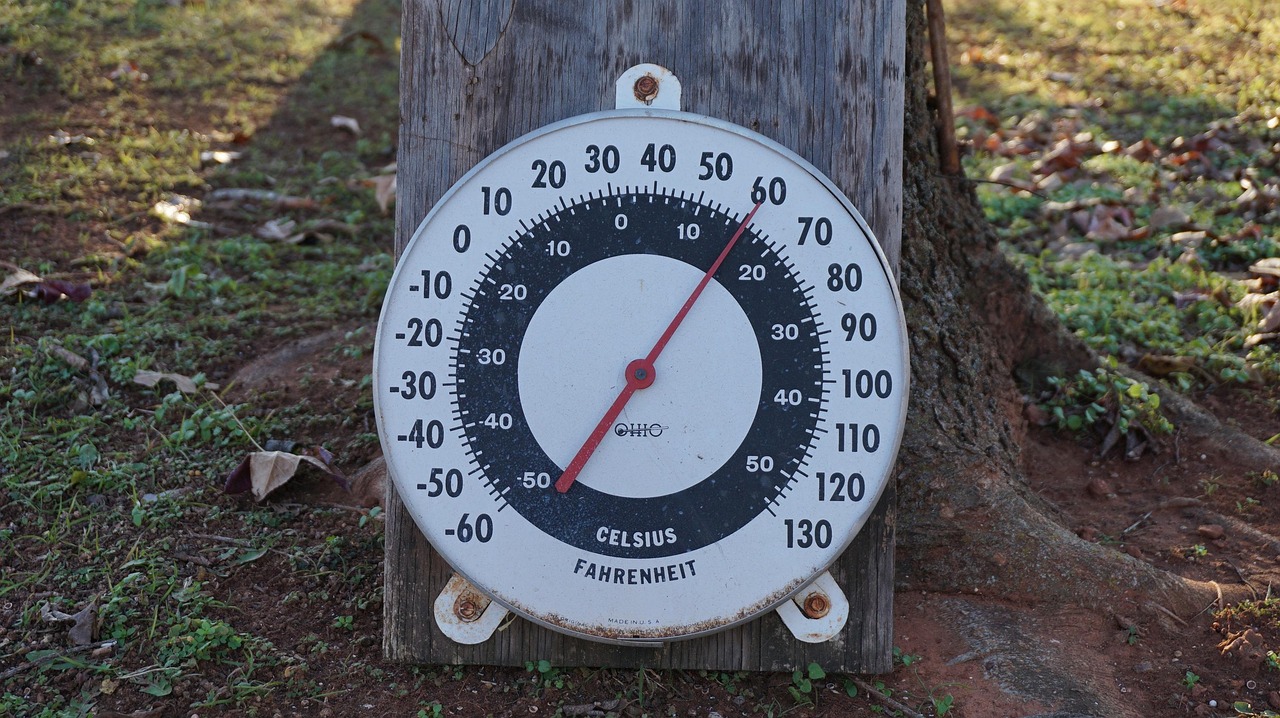
In November 2006, when I launched Watts Up With That?, the idea was simple enough: look at the data, check the instruments, and ask whether the conclusions being drawn actually followed from the evidence. It was never intended as a career in heresy. It was, at the time, a fairly normal scientific impulse steeped in curiosity.
Nearly twenty years later, that impulse requires a helmet.
As WUWT approaches its twentieth anniversary in 2026, it’s worth reflecting on how climate change went from being a hypothesis—one among many competing explanations for observed changes—to a full-fledged belief system, complete with sacred texts (IPCC reports), approved language, and the occasional excommunication.
The climate, meanwhile, has been far less dramatic.
2006–2008: When Thermometers Were Still Just Thermometers
Back in the mid-2000s, climate science still resembled…well, science. There were disagreements. There were debates. People argued about cloud feedbacks, solar influences, ocean cycles, and the reliability of historical temperature records without being accused of crimes against humanity.
Al Gore’s An Inconvenient Truth arrived in 2006 like a traveling roadshow of impending doom. Polar bears were stranded, seas were rising, and hurricanes were apparently lining up in formation. It was slick, emotional, and heavy on graphs that only went in one direction.
At the same time, a curious thing was happening on the ground. Actual thermometers—those stubbornly analog devices—were being placed next to heat sources, asphalt, and buildings. So WUWT did something radical: we took pictures.
This turned out to be surprisingly controversial, heretical even.
Apparently, photographing a thermometer next to an air conditioning exhaust was not “constructive engagement.” Who knew?
2009: Climategate—The Sound of Trust Hitting the Floor
Then came Climategate.
The emails were not hacked in the Hollywood sense; they were released, read, and promptly explained away. What they showed was not a grand conspiracy, but something far more human: groupthink, defensiveness, and an alarming willingness to manage perception instead of data.
“Hide the decline” entered the public lexicon, and suddenly climate scientists were explaining that it didn’t mean what it sounded like it meant. Which, coincidentally, is almost never a good sign.
For a brief moment, it looked like climate science might undergo a badly needed course correction. Transparency! Open data! Robust debate!
Instead, we got faux inquiries that investigated themselves and found themselves innocent.
Lesson learned: the problem was not the behavior—it was that outsiders noticed.
2010–2014: The Pause That Wasn’t There (Until It Was)
The next few years delivered an unexpected plot twist: the planet declined to follow the script.
Global temperatures flattened. Models predicted steady warming; observations did not comply. This became known as the “pause,” then the “hiatus,” then—after enough editorials—the “thing that never happened and you’re not allowed to mention.”
This was a golden age for climate creativity. Heat was hiding in the deep oceans, where it could not be measured but could still be blamed. Aerosols became the Swiss Army knife of explanations. Data adjustments proliferated.
When observations disagreed with models, the models were not questioned. The observations were “corrected.”
It was around this time that many of us realized the hierarchy had flipped. Models were now reality. Reality was negotiable.
2015: Paris—Promises, Promises
The Paris Agreement was hailed as a turning point. World leaders gathered to save the planet using pledges that were voluntary, unenforceable, and carefully worded to sound impressive while committing to very little.
It was a triumph of political theater.
No one asked how intermittent energy would power industrial societies. No one discussed grid stability. No one mentioned energy poverty. Those details were, apparently, unhelpful.
From this point on, climate policy became less about outcomes and more about optics. If emissions went up, the solution was more ambition. If costs rose, the solution was more commitment. Failure was proof that we simply hadn’t believed hard enough.
2018–2019: The Emergency Button Gets Stuck
Somewhere around 2018, the word “emergency” became mandatory.
We were told we had twelve years to save the planet. Then ten. Then five. The deadline kept moving, but always closer—like a cosmic treadmill.
Children were encouraged to panic. Adults were scolded for driving cars. Weather was promoted from background noise to moral indictment.
A heatwave? Climate change.
A flood? Climate change.
A cold snap? Climate change “disrupting the jet stream.”
Heads I win, tails you deny science.
2020–2022: When Everything Was an Emergency
The pandemic years revealed just how easily societies could be governed by emergency decree. Climate activism took careful notes.
Lockdowns briefly reduced emissions, proving once and for all that modern civilization could, in fact, be shut down—at great human cost—for minimal climatic benefit.
Energy policies, however, continued unabated. Reliable baseload was dismantled. Wind and solar were celebrated for theoretical capacity rather than actual performance.
When grids faltered and prices soared, we were told this was further proof of the need to double down.
It was around this time that “trust the science” quietly came to mean “do not ask questions.”
2023–2026: The Era of Unquestionable Certainty
Now, at the twenty-year mark, the climate narrative is polished, institutionalized, and remarkably immune to evidence.
Sea level rise continues at rates best appreciated with tide gauges and patience. Extreme weather remains stubbornly inconsistent with apocalyptic claims. Crop yields rise. Human adaptability refuses to cooperate with disaster models.
But none of that matters much anymore.
The climate scare no longer depends on predictions coming true—only on maintaining urgency. Models still overestimate warming, but the solution is always the same: adjust, attribute, and assert.
Dissent is not debated; it is diagnosed.
Twenty Years Later
After two decades of watching this unfold, I’ve learned that the most remarkable thing about the climate scare is not how much the climate has changed—but how much the rules of discussion have.
- In 2006, skepticism was part of science.
- In 2016, it is treated as a character flaw.
- In 2026, it seems like people might be listening to us.
WUWT has endured because it kept doing the unfashionable thing: looking at the data, pointing out inconsistencies, and occasionally raising an eyebrow when the emperor’s new model ran a little warm.
The climate will continue to change. It always has. The real question is whether society can rediscover the value of skepticism before policy built on perpetual emergency does lasting damage.
And if not—well, at least the models will still be very confident. /sarc
By the way, if you not seen it yet, check out our newly updated Failed Climate Predictions Timeline.
This opinion was previously published on wattsupwiththat.com.

Anthony Watts
Anthony Watts is a senior fellow for environment and climate at The Heartland Institute. Watts has been in the weather business both in front of, and behind the camera as an on-air television meteorologist since 1978, and currently does daily radio forecasts. He has created weather graphics presentation systems for television, specialized weather instrumentation, as well as co-authored peer-reviewed papers on climate issues. He operates the most viewed website in the world on climate, the award-winning website wattsupwiththat.com.

more news
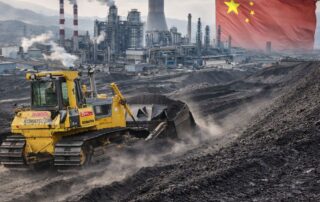
China’s Massive Coal-to-Liquids Expansion
In this article, Australian science writer Jo Nova examines China’s rapidly expanding coal-to-chemicals and coal-to-liquids industry. While much of the West focuses on phasing out fossil fuels, China is quietly transforming coal into fuels, plastics and fertilizers at massive scale—raising important questions about energy security and global climate policy.
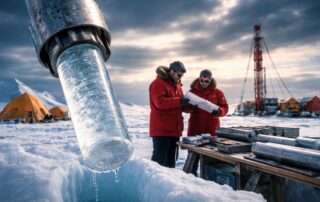
New Ice Core Study Finds No Clear CO₂–Temperature Link
New research from ancient Antarctic ice cores is challenging long-held assumptions about the role of carbon dioxide in Earth’s climate history. Evidence suggests that CO₂ and methane levels remained remarkably stable over millions of years—even as the planet experienced dramatic temperature shifts. These findings raise fresh questions about the extent to which greenhouse gases alone can explain past and present climate change.
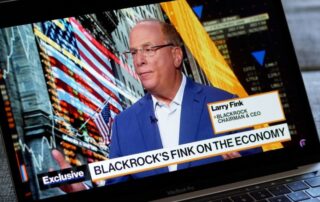
BlackRock CEO Abandons Climate Delusion for Investor Needs
BlackRock CEO Larry Fink has publicly shifted toward what he calls energy pragmatism, admitting that society now demands a balanced approach to meeting power needs rather than adherence to rigid climate agendas. This could be a pivotal moment for global energy policy, as one of the planet's most powerful financial players steps back from decades of ill-advised “green” mandates.

