
Net Zero Madness: How South Korea Is Engineering Its Own Energy Disaster
In this analysis, Vijay Jayaraj argues that South Korea’s net zero policies are undermining energy security, threatening industrial stability and risking long-term economic decline.

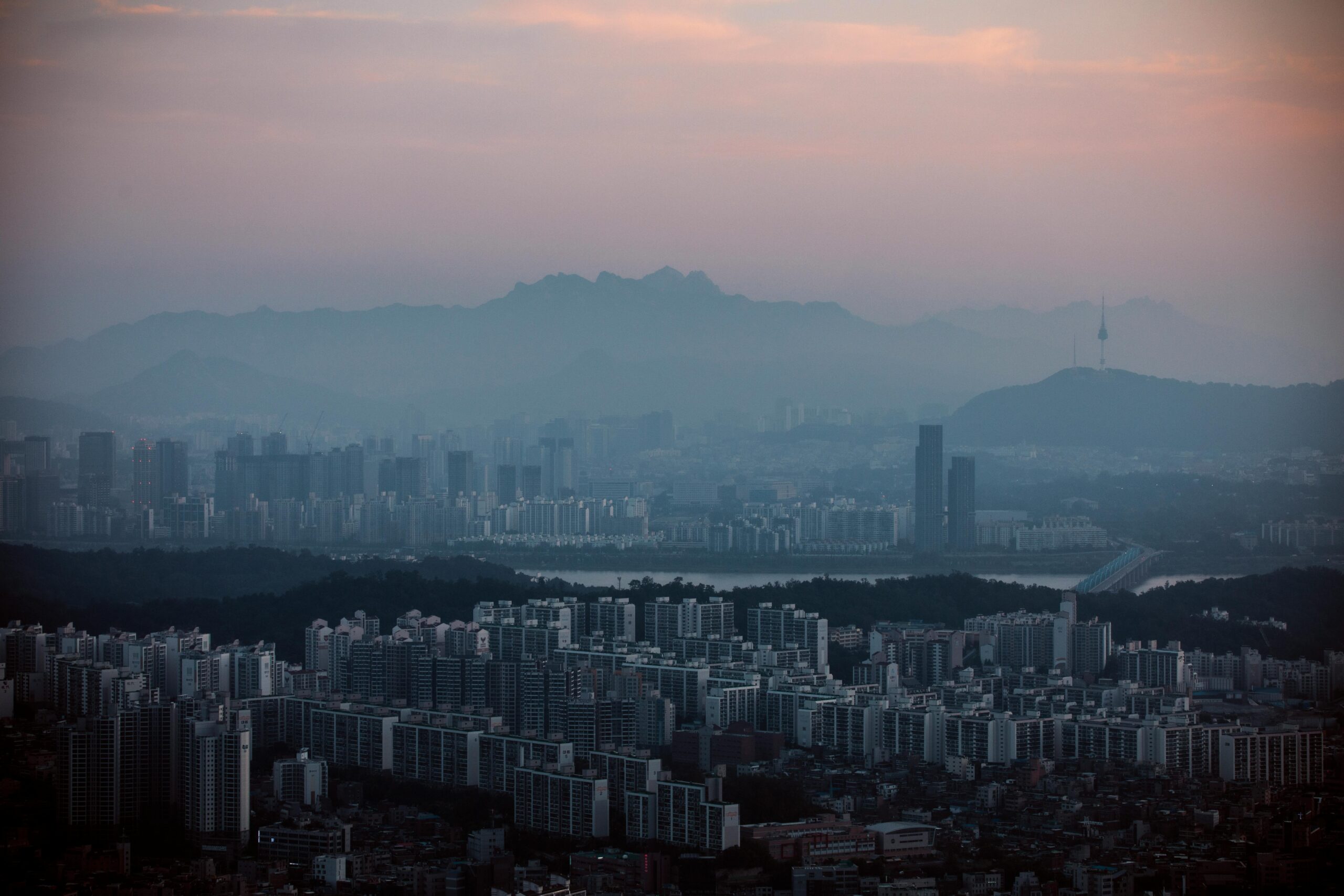
South Korea Declares War on Its Own Energy Foundations
Neglectful of the economic wreckage that net zero policies have wrought in the U.K. and Germany, economic powerhouse South Korea has declared war on coal and liquified natural gas (LNG) to pursue more aggressive reductions of greenhouse gas emissions.
Exhibiting a national masochism, Seoul is abandoning the very fuels that built its economy – and along with oil, the entire industrial world. By 2038, the country plans to slash LNG’s and coal’s combined share of power generation from 60% to 20% while boosting the share of so-called renewable sources – like wind and solar – to 33% from today’s 9%.
Until November 2025, things looked more sane as Seoul worked to secure its future. The government boosted investments in regional LNG ventures, expanded strategic petroleum reserves, and directed its energy giants – SK Innovation and KOGAS – to secure natural gas from Indonesia and Australia.
Since then, the government has replaced that playbook with objectives void of reason. The new plan demands a 40% cut in industrial emissions by 2030 (from 2018 levels) and bets the farm on unproven technologies like hydrogen, wind and solar. This is not a rational transition but rather reckless virtue signaling that puts national survival at risk.
The Hydrogen Illusion and the Global Graveyard of Failed Projects
Perhaps the most dangerous part of Seoul’s new direction is its projected replacement of LNG with hydrogen. Hydrogen and fuel cells are to contribute 7% of the power mix. This is a delusion, as demonstrated by failed projects that filled 2025’s “hydrogen graveyard.”
Australia’s Central Queensland Hydrogen Project, a $14 billion flagship meant for exports, collapsed this year after government support was pulled. British multinational BP exited the massive 26 gigawatt Australian Renewable Energy Hub in the Pilbara. Energy developer Fortescue, the loudest cheerleader for green hydrogen, walked away from projects in Arizona and its home country of Australia.
Germany’s LEAG project, touted as one of Europe’s largest green energy hubs, has been postponed indefinitely. ArcelorMittal’s green steel plants in Bremen were shelved despite offers of billion-euro subsidies.
Deindustrialization: The Real Cost of Net Zero Policies
In South Korea, the consequences of such foolishness will be lost jobs and shuttered factories. More than 30% of South Korea’s gross domestic product comes from its industrial sector, almost double that of the U.K. The making of steel, petrochemicals and semiconductors requires constant, stable power, which weather-dependent wind and solar cannot provide.
Introducing “green” energy into power grids forces industries to pay the additional costs of backup electricity sources or worse, to curtail operations at factories. We already know how this movie ends, having watched it play out in Europe.
Germany, the continent’s model of green virtue, finds itself deindustrializing – at a rate of 4.5% in 2024, on par with a multi-year downward trend. The same year, the U.K.’s industrial energy consumption fell by 1.2% from 2023 to record what the government notes was “the lowest industrial consumption for over 50 years.”
The Bank of England has warned: “Net zero policies are slowing the global economy.” The World Bank predicts that “the 2020s will be the weakest decade for global growth since its records began in the 1960s.
Whether this decline is by design or daft incompetence, the effects are predictable. In a renewables-dominated Korean grid, bulk material industries like POSCO’s steel mills and Lotte’s petrochemical plants could be the first casualties, competing as they do on razor-thin margins.
Nuclear Power Can’t Save a Reckless Transition
The approval of the Saeul-3 nuclear reactor in South Korea and the advance of small modular reactors are positive signs. Nuclear power is the only non-fossil source that offers the energy density and reliability that an industrial economy needs. But let’s be real: Nuclear plants cannot be put into operation in sufficient numbers fast enough to replace the massive hole the government is digging by slashing the use of fossil fuels.
Will South Korea Choose Economic Reality Over Ideology?
It is not too late to reverse course. South Korea became the “Miracle on the Han River” by ignoring ideological fads and focusing on ruthless economic efficiency. The question Seoul must answer is whether it will govern for its citizens or surrender its sovereignty to an international pseudo-scientific collaboration of ideologues that benefits neither workers nor manufacturers.
Nor, for that matter, the planet the cult purports to be saving.

This commentary was first published at California Globe January 21.

Vijay Jayaraj
Vijay Jayaraj is a Science and Research Associate at the CO2 Coalition, Fairfax, Virginia. He holds an M.S. in environmental sciences from the University of East Anglia and a postgraduate degree in energy management from Robert Gordon University, both in the U.K., and a bachelor’s in engineering from Anna University, India. He served as a research associate with the Changing Oceans Research Unit at University of British Columbia, Canada.

more news

Rationality Returns to Australia as Climate Scare Wanes
Australia’s green energy experiment has left millions of its citizens with a shaky power grid, serving as a case study on how blind allegiance to climate dogma leads to economic and social turmoil.
Former Czech President Václav Klaus appointed President of Clintel
Former Czech President Václav Klaus appointed President of Clintel The Climate Intelligence Group (Clintel) is honoured to announce that Professor Václav Klaus, the former President of the Czech Republic, from today on will be the new president of Clintel, succeeding the current president, Professor Guus Berkhout, who co-founded the Clintel Foundation in [...]
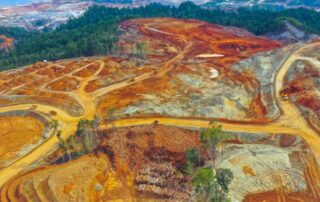
Ignoring EV Pollution for Fake Climate Crisis
The silent, gleaming chassis of an electric vehicle (EV) glides through a pristine forest or a spotless, futuristic city. The message is simple: The driver is saving the planet. It is a narrative built on a convenient, calculated omission.

