
The Narrative Breaks: IEA Redefines the Future of Energy
The end is nigh – not for the world, but for the climate industrial complex. It has been a decline brought about mainly by the sheer reality of energy economics in the developing world.

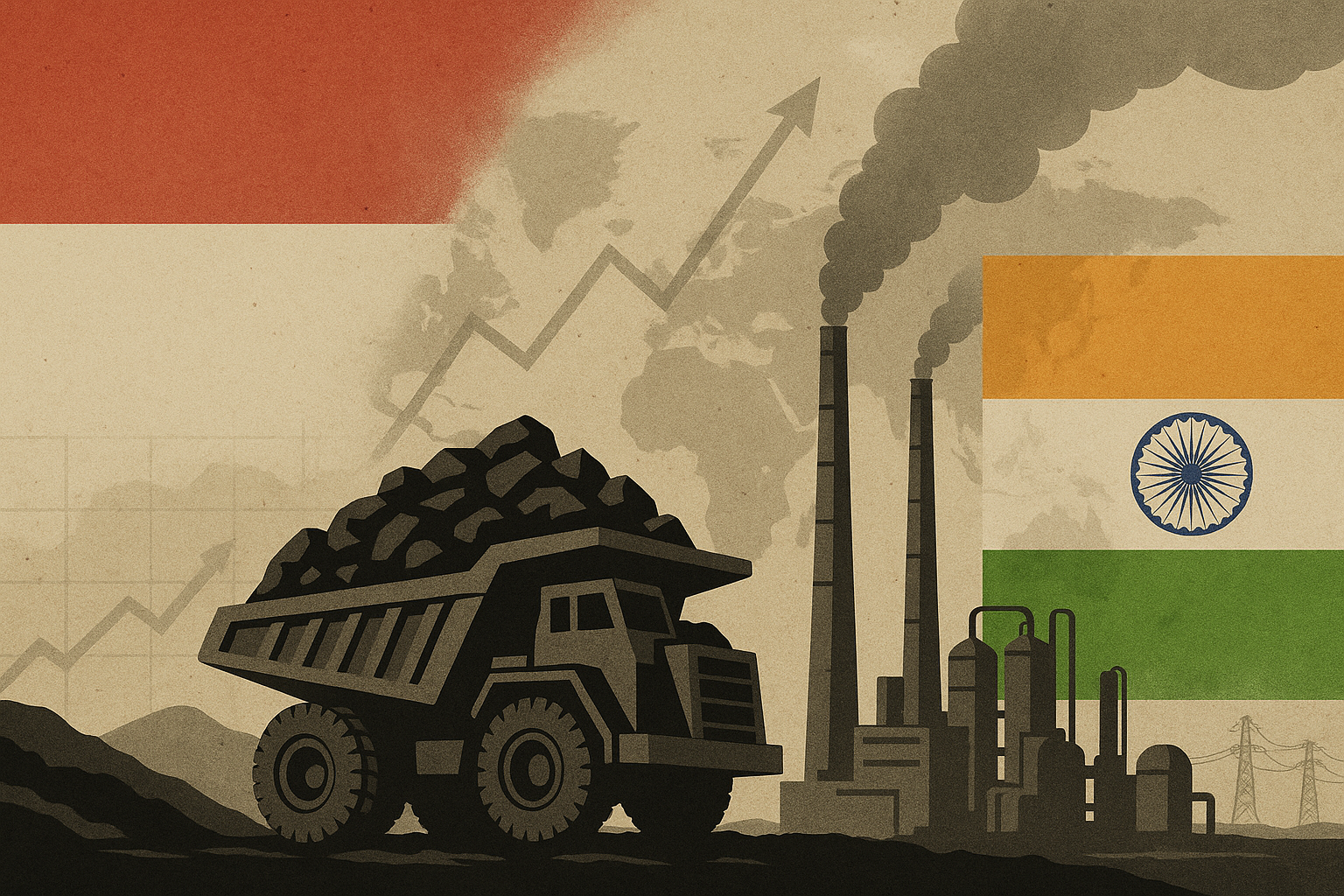
ChatGPT
Vijay Jayaraj
Date: 26 November 2025
Published by the International Energy Agency (IEA), the “World Energy Outlook 2025” reads like an obituary for the fantasy of global decarbonization, acknowledging the undeniable truth that nations prioritizing prosperity must unapologetically embrace coal, oil and natural gas.
For years, the IEA and Western think tanks insisted that hydrocarbons were in structural decline, predicting a fatal drop in demand after 2030. Yet in the very document meant to track progress toward realizing an absurd net-zero objective, the IEA concedes that demand for oil and natural gas will continue to grow well beyond 2035 and may not peak until 2050.
The key insight of the IEA report is that emerging markets, excluding China, are becoming the primary drivers of growth in global energy consumption. This is a massive, structural shift. No longer will the trajectory of energy markets be dictated by the policies of Paris, Berlin or Washington but rather by the sovereign choices of nations whose citizens are desperate for better lives.
India is projected to see the fastest average increase in energy consumption among all emerging markets, rising by a robust 3% each year on average through the middle of the century. Oil and natural gas will meet a large percentage of this. India’s oil use is projected to jump from 5.5 million barrels per day in 2024 to 8 million by 2035 to match growth in aviation, vehicle ownership and the manufacture of plastics and chemicals.
But the real deal is India’s and Indonesia’s adoption of coal – until recently treated as a relic of the past. For the next 40 years, the dynamics of this fossil fuel will be shaped in the boardrooms of New Delhi and Jakarta.
The demand for coal by India’s industrial sector is projected to skyrocket by an astounding 60% by 2035. Nearly a quarter of new steel manufacturing globally is planned for India and Southeast Asia, with production in these regions to almost double by 2035.
Indonesia’s need for industrial coal is expected to increase by more than 45% over the same period. Factories, nickel smelters and chemical plants – the backbone of its manufacturing boom – are consuming more energy every quarter.
Perhaps the IEA’s most revealing figures are for growth in per capita electricity demand. India’s and Indonesia’s are to grow by 80% and 70%, respectively, by 2035.
These surges are driven by air conditioning, appliances, urbanization and relentless population growth. Power-grid extensions in Indonesia have almost doubled, adding nearly 1 million kilometers of new lines within a decade.
The IEA notes that India hit its 2030 target for non-fossil power capacity five years ahead of schedule, yet fossil fuels continue to provide the lion’s share of flexible and dispatchable generation. Why? Because so-called renewables remain intermittent, and only fossil fuels, along with nuclear power, can hope to guarantee the kind of reliability that industry requires and modern society expects.
For India and Indonesia – and many others – coal is a guarantor of industrial ascendancy; and it very well may prove to be a key ingredient in the development of data centers in the already tech-dominated cities of India.
For developing nations, the primary threats come from energy deprivation and economic stagnation, not ideological driven forecasts of a climate apocalypse. Serious leaders will not place their bets on unreliable technologies like wind and solar in pursuit of Western elites’ fanciful “carbon-free” utopia. Way too much is at stake.

Vijay Jayaraj
Vijay Jayaraj is a Science and Research Associate at the CO2 Coalition, Fairfax, Virginia. He holds an M.S. in environmental sciences from the University of East Anglia and a postgraduate degree in energy management from Robert Gordon University, both in the U.K., and a bachelor’s in engineering from Anna University, India.
This commentary was first published at American Thinker November 25.

more news

Paul Ehrlich (1932-2026): Farewell to the Long-Lived Failed Prophet of Miserablism – The Population Bomb author lived a long, wealthy, healthy life, an opportunity his work denied to countless others
Paul Ehrlich, author of The Population Bomb, became one of the most influential voices behind modern environmental pessimism. His warnings of inevitable resource depletion and societal collapse shaped decades of policy and public thinking. Yet, as history unfolded, many of his most prominent predictions failed to materialize—raising enduring questions about the consequences of alarmist narratives in science and policy.
US Energy Realism Pays Off in Iran Crisis
The stark contrast between American resilience and European collapse is a permanent lesson. National security should not be subject to the whims of the weather or the approval of climate activists in European capitals.

AI accurately reconstructs temperatures across Antarctica
Artificial intelligence is increasingly being applied in climate science, with mixed results so far. A new study, however, suggests that deep learning can successfully reconstruct Antarctic surface temperatures despite limited observational data. By combining sparse measurements with reanalysis datasets, the researchers claim to achieve high accuracy—offering new insights into long-term temperature trends across the continent.

