
When Science Fails, They Call the Lawyers
Inside the UN’s Plan to Criminalize Climate Dissent.

A Court in Robes, Not Lab Coats
Let’s take a step back. The ICJ is the judicial branch of the United Nations, empowered to offer advisory opinions and resolve legal disputes between states. In theory, it exists to uphold international law. In practice? It’s become another platform for the global climate bureaucracy to enshrine ideology as law.
This is not the court’s first foray into climate lawfare… but it’s by far the most aggressive.
The Growing Trend of Climate Lawfare
The same activists who cry that “climate science is settled” are always the first to call in lawyers. If the science is so settled… why does it require judicial enforcement?
The answer is simple: the climate crisis narrative cannot stand on evidence alone. It must be propped up by political coercion, censorship, and legal intimidation.
Forcing Consensus at the Barrel of a Gavel
That’s right: not only can countries be sued for not reducing emissions fast enough, they may also be required to pay compensation for future climate harms. And while the ruling is advisory for now, it sets a precedent that activist courts around the world are itching to apply.
I’ve written before about the use of courts as climate weapons in Weaponizing Climate Science. What was once a fringe tactic is now mainstream UN policy.
But this isn’t just about states. It’s about people. It’s about criminalizing climate dissent. While the advisory opinion stops short of explicitly calling for jail time, its logic paves the way for individual liability, speech restrictions, and legal retaliation against anyone opposing Net Zero mandates.
The Bombshell ICJ Ruling
“However, States should also not refrain from or delay taking actions of prevention in the face of scientific uncertainty. According to Principle 15 of the Rio Declaration, where there are threats of serious or irreversible damage, lack of full scientific certainty shall not be used as a reason…”
That is not legal reasoning. That is climate ideology dressed up in legal robes.
The Court’s opinion reads more like an activist manifesto than an impartial judgment. It dismisses the complexity of global development, economic realities, and energy poverty in favor of a singular mission: enforce Net Zero at any cost.
And all of this… while ignoring the most important facts:
- EM-DAT data shows that the number of reported climate-related disasters has not increased significantly since accurate records have been kept.
- Deaths from these disasters have declined by over 95% since the 1920s.
- The global death rate from all natural disasters is now among the lowest in recorded history.
None of this was mentioned. Not one chart. Not one graph. Not one inconvenient truth.
By upgrading to paid subscriber of Irrational Fear you can read the rest of the article and dive deep into the ICJ ruling, that reveals how it disregards EM-DAT data on disaster deaths, omits certain nations and shows why the entire premise is scientifically bankrupt.

Dr. Matthew Wielicki
This article was published by Dr. Matthew Wielicki on his website on July 24, 2025. By subscribing to Irrational Fear you can unlock the full post and gain access to over 375 articles that expose the flaws, fraud, and fearmongering behind the climate narrative.


more news
CO₂ Can Cause Cooling Too? Climate Models Say Yes (Sometimes)
As Dr. Matthew Wielicki dryly put it: “Is there anything CO₂ can’t do?” The study behind that remark claims that rising CO₂ levels may even lead to regional cooling under certain conditions—highlighting just how flexible—and uncertain—climate model outcomes can be.
Press release GWPF: Event Attribution Studies are “a blot on science”, says Ralph B. Alexander
Extreme weather attribution studies are based on flawed logic and misleading statistical practices, according to a new report by The Global Warming Policy Foundation (GWPF). Author Ralph B. Alexander argues that these studies, which link individual weather events to climate change, are driven more by political and legal agendas than by robust scientific evidence.
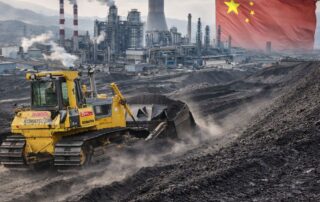
China’s Massive Coal-to-Liquids Expansion
In this article, Australian science writer Jo Nova examines China’s rapidly expanding coal-to-chemicals and coal-to-liquids industry. While much of the West focuses on phasing out fossil fuels, China is quietly transforming coal into fuels, plastics and fertilizers at massive scale—raising important questions about energy security and global climate policy.

