
Climate scientists officially declare ‘climate emergency’ at an end
Climate scientists have issued a shock declaration that the ‘climate emergency’ is over.
A two-day climate conference in Prague, organised by the Czech division of the international Climate Intelligence Group (Clintel), which took place on November 12 and 13 in the Chamber of Deputies of the Czech Republic in Prague, ‘declares and affirms that the imagined and imaginary “climate emergency” is at an end’.

Clintel international climate conference in Czech Parliament
Prague, 14 November 2024
Climate scientists have issued a shock declaration that the ‘climate emergency’ is over.
A two-day climate conference in Prague, organised by the Czech division of the international Climate Intelligence Group (Clintel), which took place on November 12 and 13 in the Chamber of Deputies of the Czech Republic in Prague, ‘declares and affirms that the imagined and imaginary “climate emergency” is at an end’.
The communiqué drafted by the eminent scientists and researchers who spoke at the conference makes clear that for several decades climate scientists have systematically exaggerated the influence of CO2 on global temperature.
The high-level scientific conference also declared:
‘The Intergovernmental Panel on Climate Change, which excludes participants and published papers disagreeing with its narrative, fails to comply with its own error-reporting protocol and draws conclusions some of which are dishonest, should be forthwith dismantled.’
This declaration supports the conclusions of the major Clintel report The Frozen Climate Views of the IPCC.
Moreover, the scientists at the conference declared that even if all nations moved straight to net zero emissions, by the 2050 target date the world would be only about 0.1 C cooler than with no emissions reduction.
So far, the attempts to mitigate climate change by international agreements such as the Paris Agreement have made no difference to our influence on climate, since nations such as Russia and China, India and Pakistan continue greatly to expand their combustion of coal, oil and gas.
The cost of achieving that 0.1 C reduction in global warming would be $2 quadrillion, equivalent to 20 years’ worldwide gross domestic product.
Finally, the conference ‘calls upon the entire scientific community to cease and desist from its persecution of scientists and researchers who disagree with the current official narrative on climate change and instead to encourage once again the long and noble tradition of free, open and uncensored scientific research, investigation, publication and discussion’.
The full communiqué can be read here.
About Clintel
The Climate Intelligence group (Clintel) was founded in 2019 by emeritus professor of geophysics Guus Berkhout and science journalist Marcel Crok. Clintel’s main objective is to generate knowledge and understanding of the causes and effects of climate change, as well as the effects of climate policy. Clintel published the World Climate Declaration, which has now been signed by more than 1950 scientists and experts around the world. Its central message is “there is no climate emergency”. Clintel published in 2023 an extensive assessment of the IPCC AR6 report, titled The Frozen Climate Views of The IPCC.
For more information about the conference contact Pavel Kalenda, Clintel_CZ@seznam.cz
Marcel Crok, the director of Clintel, can be reached at marcel.crok@clintel.org.
more news
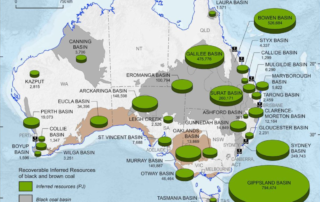
Australia wakes up to brown coal bonanza: 1,000 years of energy
Finally, we see a few key topics hitting the media in Australia, says Jo Nova. National Party leader Canavan even talks about the thousand-year supply of brown coal, and also about a method of turning coal to liquid fuel.
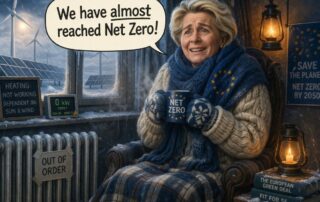
The Strait of Hormuz’s Bitter Lesson for the European Union
In May 2023, Ursula von der Leyen, President of the European Commission, declared that the fossil-fuel-based growth model is “simply obsolete.” The partial blockade of the Strait of Hormuz starkly exposes the irony of that statement, says Samuel Furfari.
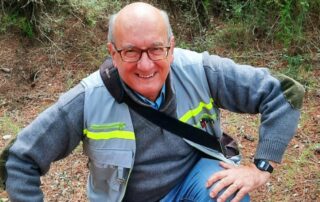
“Climate Policy Ignores Nature” – Interview with New WCD Signatory Enrique Ortega
Spanish geologist and new World Climate Declaration signatory Enrique Ortega brings decades of experience in earth sciences to the climate debate, emphasizing the importance of geological history in understanding present-day climate change.

