
Coal’s Rise: Energy Security and Climate Realism
Despite years of predictions that coal would soon disappear, global coal consumption continues to reach new record highs. Vijay Jayaraj examines why rising electricity demand, energy security concerns, and geopolitical realities are driving a renewed reliance on coal despite the rapid expansion of renewable energy.


A coal-fired power plant along the Grand Canal near Yangzhou, China. (Source: commons.wikimedia.org)
Vijay Jayaraj
Date: 27 July 2026
Much of the global energy conversation still pretends that coal is on its way out. The pretense may be comforting to activists, investors, and policymakers who built their plans for a transition to so-called clean energy that never acknowledged the limitations of solar and wind power. However, the newest work by Lars Schernikau and Portia Roberts, The Coal Reality That Western Policy Ignores, shows the opposite: Coal is not being replaced, but rather being layered on top of everything else.
The data reveal that global coal consumption is accelerating. The appetite for reliable, baseload power drove usage to an unprecedented high of approximately 9 billion tons in 2025.
This volume represents more coal mined and burned than at any time in history, far outstripping levels recorded before the multi-trillion-dollar Western net-zero campaign. In 2025, China alone brought on-line 80 gigawatts of new coal-fired generation – enough to power 60 million households.
The Iran war’s disruption to supplies of liquefied natural gas has further boosted demand for coal as nations switched fuels for electricity production. This strategic imperative drove a massive surge in coal shipments across the Pacific. Bangladesh, Japan, the Philippines, South Korea, Taiwan, and Vietnam immediately increased coal imports to avoid blackouts, with China and India leading the shift.
Coal Demand Continues to Grow
While alternative energy installations have expanded, coal utilization has grown right alongside them. The two asset classes are not locked in a zero-sum game but are growing to meet a voracious demand for electricity and industrial production.
The world’s proven reserves of coal – deposits that can be extracted economically utilizing current technologies – possess an operational runway of 130 to 150 years at today’s consumption rates. Taking into account remaining geological reserves, Earth holds enough anthracite and bituminous coal for many hundreds of years.
Schernikau and Roberts also remind readers that coal sits at the center of food security. Roughly a quarter of the world depends on fertilizers made with coal-derived ammonia. Abandon coal too quickly and you risk not only blackouts but also food production and, ultimately, lives.
The Climate Narrative Unravels
This return to dependable solid fuels coincides with a long-overdue collapse of the pseudoscientific architecture that sustained for decades the narrative of a fabricated climate crisis. For years, scenarios of extreme weather based on flawed climate models were systematically weaponized by activist bureaucrats to demand the dismantling of a hydrocarbon economy.
The most prominent of these fabrications was Representative Concentration Pathway 8.5 (RCP 8.5), alongside its companion RCP 7.0. The international modeling consensus has formally abandoned these deceptions, confirming that RCP 8.5 is officially “implausible.” The apocalyptic scenarios used to terrorize the public and coerce financial markets were never rooted in real-world data.
The institutional framework designed to starve conventional energy sectors of investment capital is unraveling before our eyes. The corporate campaign for Environmental, Social, and Governance (ESG) compliance has had a severe global retrenchment. Global investment consortia, led by institutional giants like BlackRock, have quietly dismantled or significantly downgraded strict climate mandates. International banking groups and global aviation associations have canceled or rolled back aggressive net-zero timelines.
Why Coal Still Matters
The fantasy of a rapid, painless transition away from hydrocarbons has run headfirst into physical laws and geopolitical necessities. Weather-dependent power technologies cannot run steel mills, operate heavy manufacturing, or secure domestic food supplies. The climate establishment can keep writing obituaries for coal, but the market keeps resurrecting it because there is no substitute for its scale, reliability, and availability.
Stop pretending that every rise in renewables implies a fall in coal. Stop using extreme scenarios to frighten the public into accepting policy mandates that do not fit the needs of growing economies. And stop telling developing nations that they must sacrifice dependable power in the name of predictive models that no longer command trust.
This commentary by Vijay Jayaraj was first published by PJ Media on July 15, 2026, under the title “Energy Security and Climate Realism Usher in Coal’s Rise.” The Clintel editorial team has added a few subheadings for readability.

Vijay Jayaraj
Vijay Jayaraj is a Science and Research Associate at the CO2 Coalition, Fairfax, Virginia. He holds an M.S. in environmental sciences from the University of East Anglia and a postgraduate degree in energy management from Robert Gordon University, both in the U.K., and a bachelor’s in engineering from Anna University, India. He served as a research associate with the Changing Oceans Research Unit at University of British Columbia, Canada.
The article you have just read was made possible by our donors.
Every day, Clintel publishes articles on climate, energy and science. We also translate and share international analyses in multiple languages, produce videos, publish reports and organize conferences and events around the world.
We receive no government funding and rely entirely on the support of our donors. Your support helps us promote independent research and contribute to a more open and balanced debate on climate and energy issues.
Would you like to support our work? Choose the option that suits you best:
• Become a Friend of Clintel – support us with an annual contribution
• Make a recurring donation – provide ongoing support and help us plan ahead
• Make a one-time donation – every contribution helps
Thank you for your support.

more news
“The Climate Change Business Is a Criminal Hoax” — Interview with WCD Signatory Tõnu Kalvet
Estonian journalist, translator, and editor Tõnu Kalvet has signed the World Climate Declaration, joining a growing network of professionals questioning prevailing climate narratives. In this interview, he explains why he believes climate policy has become ideological, how it affects energy prices in Estonia, and why he calls for a stronger focus on real environmental problems such as pollution.
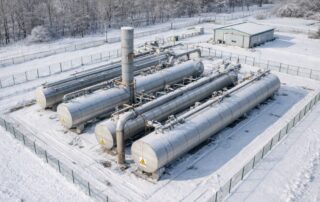
Germany Nears Energy Emergency — And Policy Failure Is to Blame
Germany is nearing a potential energy emergency as gas reserves fall and heavy industries face possible shutdowns. Critics argue the looming economic damage is less the result of harsh winter conditions than of years of far-reaching policy decisions. What is unfolding now may be the consequence of strategic choices that have left Europe’s largest economy increasingly vulnerable.

Dutch climate skeptics vindicated: KNMI reinstates seven pre-1950 heatwaves after long battle
Seven years after Dutch skeptics first challenged KNMI's temperature adjustments, the institute has reinstated seven "lost" pre-1950 heatwaves at De Bilt — validating claims of over-correction that had erased 16 out of 23 historical extremes. The breakthrough came via the skeptics' peer-reviewed paper.

