
Coal, The Fuel We Ignore But Cannot Replace
If you think coal is a thing of the past…then you are missing the big picture, which is far more complex and far more relevant than most headlines suggest, says energy expert Lars Schernikau.

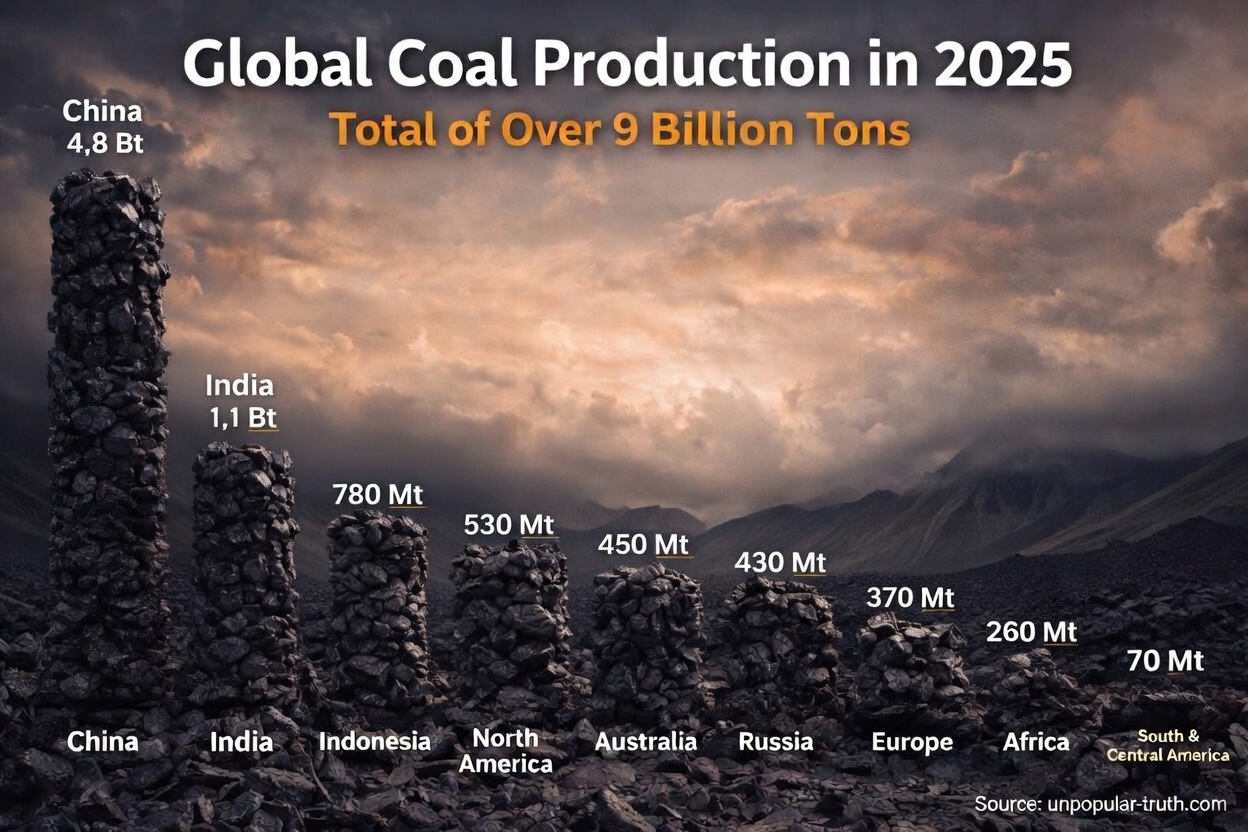
Image created with ChatGPT.
Lars Schernikau
Date: 10 April 2026
For years now, coal has been treated like a relic… a dirty word, something we were told would quietly disappear during the “energy transition”.
But yet, here we are… global coal consumption has definitely not declined, quite the contrary, it has only grown from roughly 6 billion tons in 2008 (when I wrote my first book on coal “The Renaissance of Steam Coal”) to around 9 billion tons today. Not to mention the seaborne trade which almost doubled! So the question is not whether coal is disappearing as we were told, it’s whether we misunderstood this useful black rock in the first place.
Our material world runs on something we are avoiding…
We like to think we live in a “clean” digital world with all our devices, apps, AI and cloud storage, but our physical world has not gone anywhere and should also be considered in this equation.
Steel, cement, metals, fertilizers….so many elements needed to actually build our modern lives which still heavily depends, directly or indirectly, on coal.
Did you know that roughly one-third of all coal is used not for electricity, but for industry? In fact, when you include electricity used for industrial purposes, more than half of all coal globally is consumed by industries keeping our daily amenities running :
- steel production,
- cement manufacturing,
- chemicals and fertilizers,
- high-temperature industrial heat (also used to make silicone for those very popular solar panels), and on and it goes.
Take coal out of that system, and you don’t just lose power, you also lose the ability to build and improve our physical environment.
The surprising reality about electricity is that coal still produces over a third of global electricity… not because coal is the trendy choice, but rather because it works, its “democratic”, and so damn low cost!
Let’s look at why I am saying this:
- coal plants are not weather dependant. They don’t stop when the wind doesn’t blow or the sun doesn’t shine
- coal doesn’t run the risk of exploding, you can have months of fuel supply sit in your back yard, no complex storage and auxiliary systems required and it is abundantly available with no region monopolizing supply
- coal plants sit there, quietly and reliably doing their job, at low cost, hour after hour year after year, decade after decade
- and a modern coal-fired power stations can emit less particle emissions than a busy intersection!
This is also why, when energy systems are under pressure, coal keeps reappearing, even in countries that claim to have moved on from it.
The scale of coal
Each year, humanity extracts around 110 billion tons of resources from the Earth and coal alone accounts for about 9 billion tons thereof.
Nearly half of global shipping activity is just moving energy in the form of oil, gas, and coal from one place to another. Coal is not a niche fuel…it’s one of the largest moving pieces of the global economy with 1.5 billion tons shipped each year.
Now, I suspect you have heard of the “we cannot mine coal forever” argument and yes, that is correct, but we are not running out of coal any time soon! Not even close!
Depending on how you measure it, the world has:
- over 100 years of proven reserves and
- thousands of years of total resources we already know of today, 20-30x more than gas, oil, or uranium
coal is also geographically widespread meaning it’s not easily controlled, disrupted, or “turned off.” From an energy security perspective, that matters…a lot!
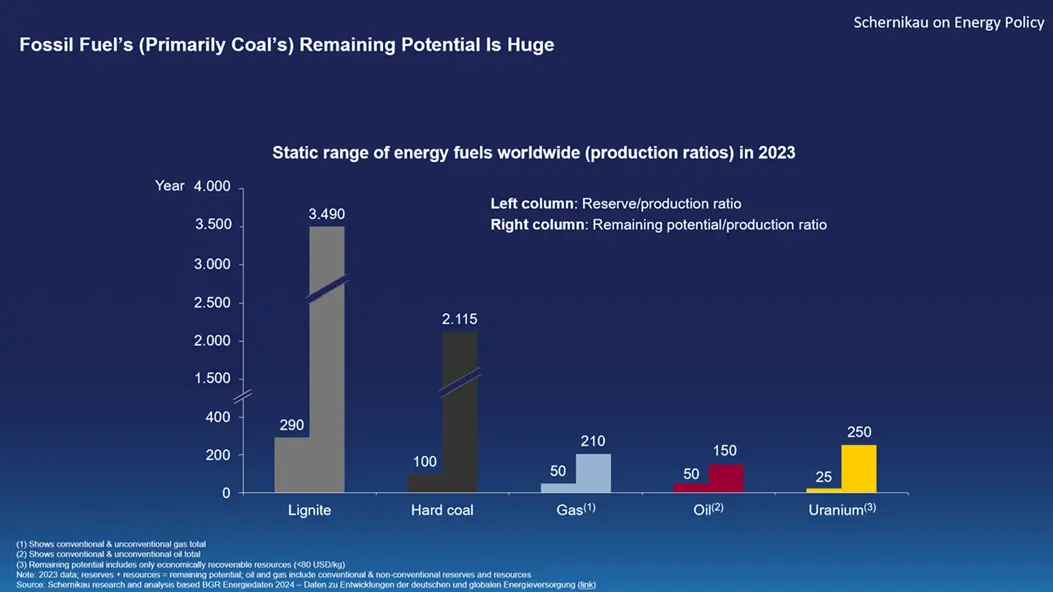
Figure 1: Coal lasts over 3.000 years. Source: Schernikau Research
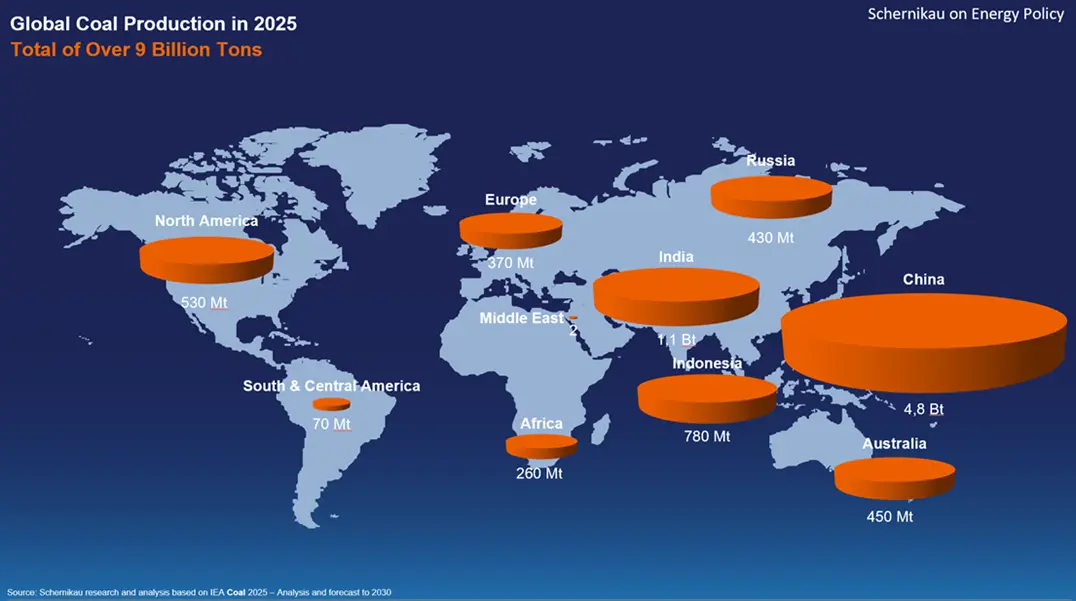
Figure 2: Global Coal Production. Source: Schernikau Research
Meanwhile, the world keeps on turning
As China continues to build coal capacity at scale, India is planning significant coal-powered energy production increases and Southeast Asia relies on coal for growth.
Even the US is reconsidering coal’s role in keeping their grids stable.
So, what about Europe? Everyone still turns back to coal whenever systems are stressed.
During these times of stress, not only did India, Japan, Philippines, and the US, but even Italy turned back to coal.
Now, what is the actual story?
My blog post on coal isn’t about being “pro” or “anti” anything.
It’s about understanding the reality of coal and that is, that coal is:
- deeply embedded in industrial systems
- structurally tied to and responsible for electricity reliability and
- still central to global growth and economic development
The real question isn’t about the existence of coal usage…it is whether we actually understand what replacing coal would require.
If you think coal is a thing of the past… then you are missing the big picture, which is far more complex and far more relevant than most headlines suggest.

This summary of the full blog post article was published originally at wattsupwiththat.com on 6 april 2026. The full blog “Coal keeps the lights on… are we experiencing a new renaissance of coal?” is available at www.unpopular-truth.com. For an in-depth look at the chemical and physical characteristics of coal, see: Schernikau’s Coal Handbook.

Lars Schernikau
Lars Schernikau, PhD has more than two decades of experience in the global energy and commodities industry. He began his career with the Boston Consulting Group in the U.S. and Germany, where from 1997 to 2003 he gained deep expertise in international coal, ore, and steel markets. He also managed a wind farm in Germany for three years, giving him first-hand experience in renewable energy operations.
As co-founder, shareholder, and former supervisory board member of HMS Bergbau AG and IchorCoal NV—international commodity marketing and mining companies—Lars has become a recognized authority on global energy economics. He is a frequent keynote speaker at energy and commodity forums worldwide and advises governments, banks, educational institutions, and corporations on macroeconomics, markets, and energy policy.
Lars is the author of several books, including The Unpopular Truth… About Electricity and the Future of Energy, which examines the economic realities of the transition from oil, coal, and gas to wind, solar, storage, and hydrogen. He has also written extensively on coking and thermal coal, contributing data-driven insights to the global energy conversation.

more news

Trump’s energy agenda: beware of government overreach
Trump’s energy agenda: beware of government overreach Rather than ‘invest’ American tax-payer dollars in ‘green R&D’, it may well be more appropriate for government departments to offer tax credits to the private sector to pursue their own lines of R&D, says economist dr. Tilak K. Doshi. A version of this article was [...]

Obsessed anesthesiologists fret over climate change
Obsessed anesthesiologists fret over climate change Scientists at the CO2 Coalition say a fuss over the greenhouse-warming effect of anesthetic gases is much ado about something so close to nothing as to be undetectable, tiny fractions of degrees in temperature. “In fact, compared to the stakes at risk in many surgical procedures, fretting [...]

Benny Peiser: The tide has turned but lawfare is now the problem
Benny Peiser: The tide has turned but lawfare is now the problem In his last speech as director of the Global Warming Policy Foundaton, Benny Peiser concluded that climate alarmists are now basically on their own. But “the main problem now is that governments are being shackled, not just by the bureaucracy [...]

