
“Complete elimination of all ruminants would reduce temperature by only 0.05°C”
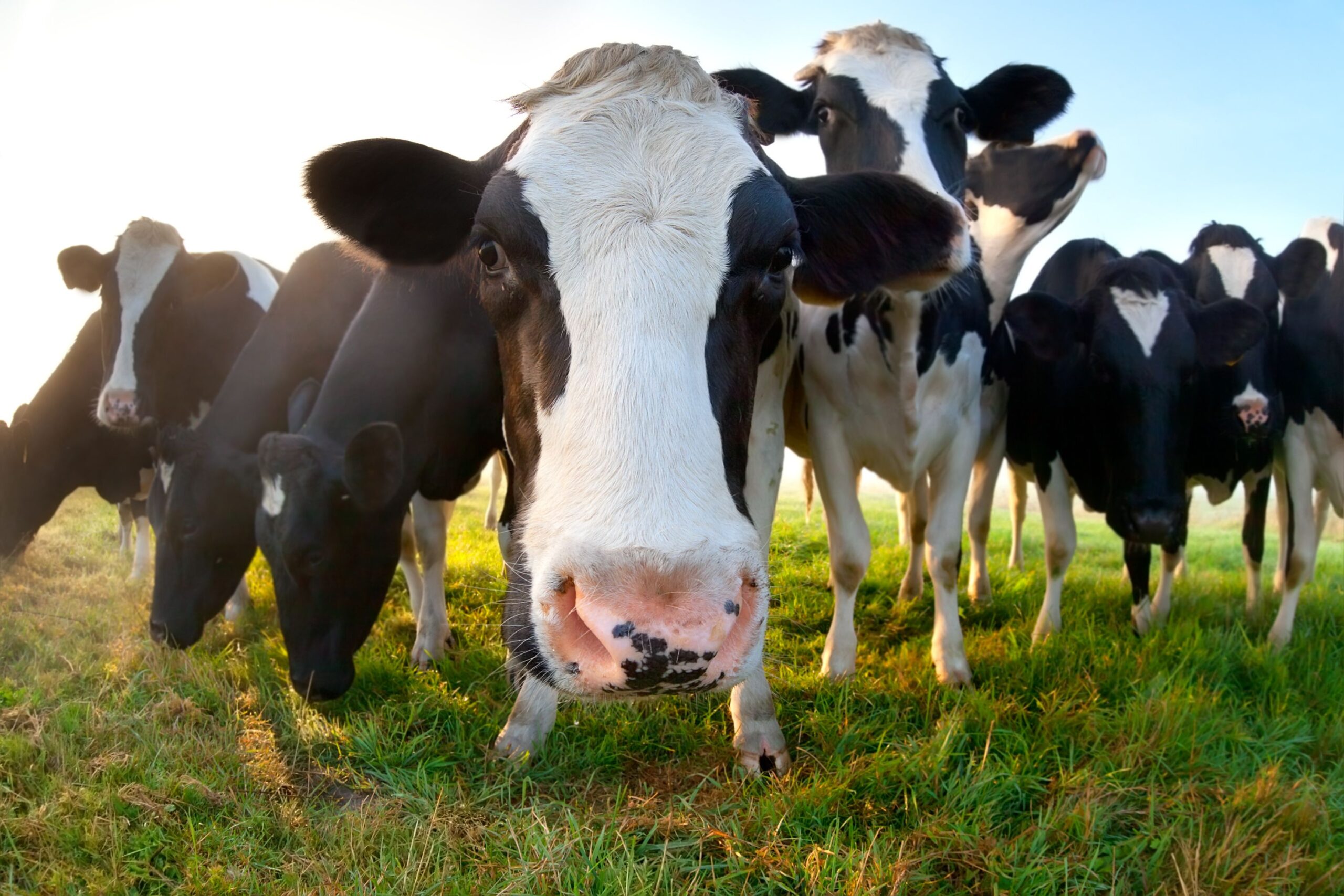
In a recent lecture prof. William Happer showed that even the complete elimination of all ruminants would reduce global temperatures by only about 0.05°C. The effect is so small that it calls into question the justification for aggressive mitigation policies targeting these methane producing animals, like cows.

Source: Shutterstock
Clintel Foundation
Date: 30 April 2026
At the recent Heartland Conference, William Happer (emeritus professor in Physics at Princeton University), talked about cows, the methane they produce and its climate effects. You can see his full presentation below. After an introduction, his lecture starts at 03.10 minutes.
Happer reflects on a recent visit to New Zealand, a country heavily dependent on agriculture, particularly livestock such as cattle and sheep. He explains that farmers there are facing increasing political pressure to reduce methane emissions from ruminants, driven by concerns about climate change. Happer’s central aim is to challenge the idea that methane emissions from livestock have a meaningful impact on global temperatures and to argue that policies targeting these emissions are misguided.
He begins by acknowledging that cattle do indeed produce methane as part of their digestive process. Methane is released when microorganisms in the rumen break down cellulose, enabling ruminants to extract energy from plant material that humans cannot digest. This process is biologically unavoidable and even beneficial for the animal’s nutrition. However, Happer argues that while methane is a greenhouse gas, its overall impact on climate is extremely small.
Immeasurable
To illustrate this, he presents quantitative estimates. New Zealand’s policy goal of reducing methane emissions by 14% over a decade would, according to his calculations, lower global temperatures by an almost immeasurable amount—on the order of 0.0001°C. He uses this example to question the rationale behind such policies, suggesting that the effect is so small that it cannot justify the economic and social costs imposed on farmers.
He then extends this argument to an extreme hypothetical scenario: eliminating all ruminants worldwide. Even in this drastic case, he claims, the reduction in global temperature would only be about 0.05°C. This figure is presented as the key takeaway of the lecture. Happer emphasizes that such a temperature change is effectively unmeasurable and therefore insignificant in practical terms. From this, he concludes that concerns about methane emissions from livestock are exaggerated and not grounded in meaningful climate impact.
Bison
To provide context, Happer discusses the historical presence of large populations of wild ruminants, such as bison in North America, which likely emitted as much or more methane than modern livestock. This suggests that methane emissions from ruminants are not a new phenomenon and have been part of Earth’s natural system for millennia.
The lecture also includes a cautionary historical analogy: the mid-19th century Xhosa cattle-killing movement in South Africa. A prophetic belief led to the mass slaughter of cattle, resulting in famine and societal collapse. Happer uses this story to warn against what he sees as irrational, ideologically driven policies targeting livestock today.
Greenhouse
A significant portion of the lecture is devoted to the physics of greenhouse gases. Happer explains the greenhouse effect in general terms, noting that gases like water vapor, carbon dioxide, and methane absorb and re-emit infrared radiation, thereby warming the Earth. However, he stresses that the magnitude of this effect is limited. Using radiation transfer theory, he argues that increasing concentrations of greenhouse gases lead to diminishing returns in warming due to saturation effects.
He illustrates this with the concept of infrared absorption spectra, showing that doubling carbon dioxide concentrations results in only about a 1% change in outgoing radiation. Because of the Stefan–Boltzmann law, which relates temperature to radiative flux, even this small change translates into only a modest temperature increase. Methane, while more potent per molecule than CO2, exists in much lower concentrations, making its overall contribution relatively minor.
Feedbacks
Happer also challenges the idea of strong positive feedbacks in the climate system, such as those involving water vapor or clouds. He argues that most natural systems are dominated by negative feedbacks that promote stability, and that the Earth’s climate has remained stable over billions of years. Therefore, he views claims of runaway warming or “tipping points” as implausible.
In the final part of the lecture, Happer shifts focus to agriculture and the role of carbon dioxide in plant growth. He argues that increased CO2 levels are beneficial for crops because they improve water-use efficiency and reduce photorespiration—a process that wastes energy in plants. As a result, higher CO2 concentrations contribute to increased agricultural productivity and the “greening” of the Earth, particularly in arid regions.
In conclusion, Happer frames current concerns about methane and climate change as part of a broader “popular delusion.” He maintains that the scientific evidence does not support the idea of a climate emergency driven by greenhouse gases, especially methane from livestock. His central claim is that even the complete elimination of all ruminants would reduce global temperatures by only about 0.05°C—an effect so small that it calls into question the justification for aggressive mitigation policies targeting agriculture.


more news

EU Outrage Over Maduro Arrest Exposes Deep Ignorance About the Oil Industry
Europe’s reaction to the arrest of Nicolás Maduro reveals deep misunderstandings about the oil industry, energy geopolitics and economic reality. Professor Samuele Furfari explains why EU media narratives distort the truth about Venezuela and oil.
25 Years of Climate Data Show No Increase in Weather Disasters
In this article, Dr. Matthew Wielicki examines official disaster data from the past 25 years, which show no increase in global extreme weather events despite rising CO₂ levels and record temperatures. The analysis explores what the climate data reveal and why they challenge prevailing climate narratives.
Climate Models vs Observations: Tropical Troposphere Trends 1979–2025
Climatologist Roy W. Spencer, PhD examines tropical tropospheric temperature trends (1979–2025) and finds a persistent gap between climate model projections and observations from satellites and radiosondes. His analysis raises questions about climate sensitivity and model reliability.

