
EU Outrage Over Maduro Arrest Exposes Deep Ignorance About the Oil Industry
Europe’s reaction to the arrest of Nicolás Maduro reveals deep misunderstandings about the oil industry, energy geopolitics and economic reality. Professor Samuele Furfari explains why EU media narratives distort the truth about Venezuela and oil.

Source: Shutterstock
Samuele Furfari
Date: 19 January 2026
The dramatic arrest of Venezuelan leader Nicolás Maduro sent shock waves around the world. Yet nowhere was the reaction more negative – and more baffling – than in the European Union, where outrage swept through public discourse, a stark contrast to the generally positive reaction in the U.S. and elsewhere.
Much of this anger was aimed at Donald Trump and, more pointedly, at the U.S. oil industry, which once again has become the convenient scapegoat for complex geopolitical realities.
Until his arrest, Maduro was universally condemned across the European Union as a dictator responsible for his people’s suffering and for widespread international drug trafficking – and as an unelected, illegitimate president.
Europe’s sudden shift on Maduro
But after his arrest by U.S. authorities, the EU media rapidly changed their tune. Suddenly, Maduro was portrayed as a victim – a martyr in the ongoing battle between American imperialism and the so-called defenders of sovereignty. This shift is hardly surprising. Most EU journalists lean left politically, and given Maduro’s communist background, they now seek to cast him in a heroic light. Comparisons to Nelson Mandela have even surfaced.
The European Union finds itself in an awkward position. Just weeks ago, it acknowledged Maduro’s authoritarian rule. Now, perhaps fearing public backlash, it hesitates to endorse the legitimacy of U.S. actions and instead allows the narrative to be dominated by accusations of American overreach.
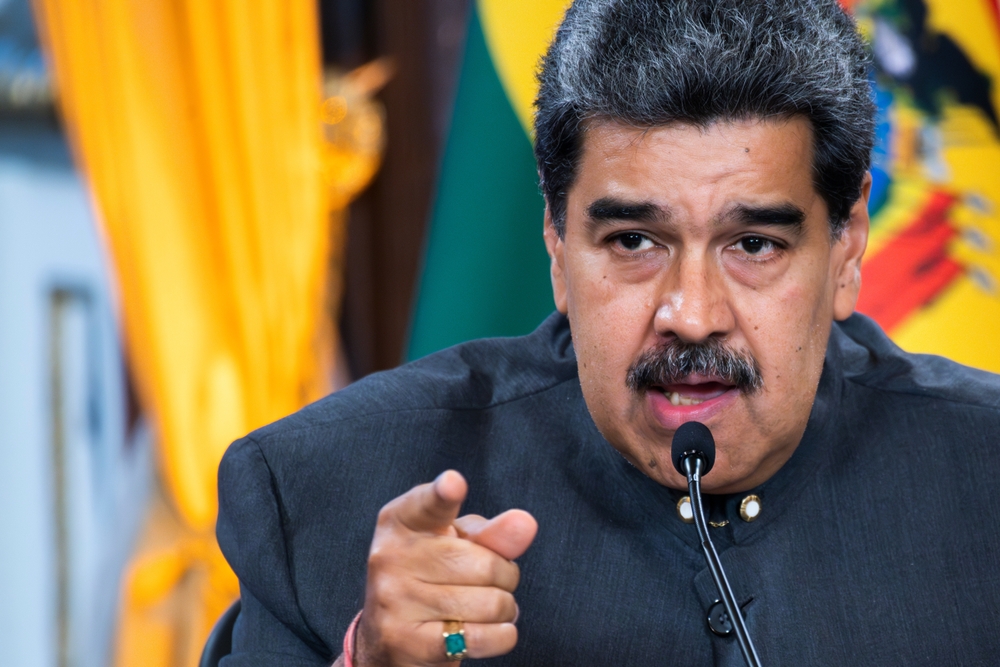
Nicolás Maduro (Source: Shutterstock)
Why EU media blame the oil industry
As a professor of energy policy, I am deeply frustrated by the European Union’s persistent hostility toward the oil industry. The EU press frames the U.S. operation in Venezuela almost exclusively through the prism of oil, with foreign producers portrayed as “predators.” Headlines scream about “grabbing Venezuela’s oil,” “looting Venezuelan resources,” and “stealing the country’s wealth.” Nuance is lost, and the complex realities of the oil business are ignored.
For example, the EU media don’t consider the technical challenges involved – such as the poor quality of the Venezuelan crude, which requires blending with naphtha or other lighter hydrocarbons to be fluid enough for processing. Nor do they acknowledge that refineries in the Gulf of America are uniquely equipped and best suited to handle Venezuelan crude.
This lack of understanding reveals a deep ignorance of technical complexities that shape the oil industry and the geopolitics of energy. The EU media often ignore that Citgo, originally a Venezuelan-owned company based in the U.S., remains a crucial economic lifeline for Venezuela. It provides essential revenue and access to refined petroleum products amid an ongoing legal dispute over its ownership, yet this important context rarely is covered.
The myth that foreign companies steal oil
Also infrequently explained is that oil always legally belongs to the country where it is found. Even during the early 20th-century oil boom, producing nations retained ownership of their resources, granting only minimal royalties to foreign companies. The myth that foreigners simply “take” oil solely for their enrichment persists, and many journalists prefer to keep this false narrative alive.
As Paolo Scaroni, CEO of Italy’s state oil company, once said, “I am not here to argue with oil-producing countries. It is their oil.” Yet this fundamental truth goes unrecognized by EU media, and therefore by the public.
The real risks of oil investment in Venezuela
I have repeatedly tried to explain that oil production is a risky business requiring enormous upfront investment and years – sometimes decades – before returns are realized. Moreover, EU audiences and media seem to forget that Venezuela is one of the most unstable countries for foreign investment. Companies like Chevron, ConocoPhillips, and ExxonMobil had assets expropriated by Maduro’s predecessor, the late Hugo Chávez, resulting in tens of billions of dollars in losses. Despite international arbitration that ordered compensation, Venezuela has not paid.
Europe’s energy hypocrisy and political ignorance
Most concerning to me is the deeply entrenched negative image of the oil industry in the European Union. “They didn’t like us, they don’t like us, and they never will,” one oil lobbyist told me. “We don’t care; we just keep doing our job.” The sentiment is commendable, but the lack of public understanding is unhelpful.
While EU citizens are quick to criticize, they readily consume oil products, which still account for over 90% of transportation energy use despite a half century of searching for alternatives.
European Commission President Ursula von der Leyen has said that fossil fuels are obsolete – a statement that ignores the harsh realities of current energy demands and infrastructure. Such rhetoric risks alienating the very industries and technologies critical to Europe’s security during this long – if not endless – energy transition.
With leaders like von der Leyen exhibiting such ignorance of facts, is it any wonder the EU media are hostile to U.S. oil companies? This lack of understanding deserves honest, courageous discussion.

This article was previously published on dailycaller.com. We have added headings for better readability.
Samuele Furfari
Dr. Samuele Furfari is a professor of energy geopolitics in Brussels and London, a former senior official with the European Commission’s Directorate-General for Energy and a member of the CO2https://co2coalition.org/Coalition. He is author of the paper, “Energy Addition, Not Transition,” and 18 books, including “Energy Insecurity: The organised destruction of the EU’s competitiveness.”

more news
“Should LCOE finally be retired from energy policy?”
“The LCOE narrative has just collided with reality. If ‘cheap’ solar and wind really were enough, the energy transition would largely run on autopilot. Emissions would fall. Subsidies wouldn’t be needed. Electricity would get cheaper. None of that is happening.” – Jonas Kristiansen Nøland, Norwegian University of Science and Technology
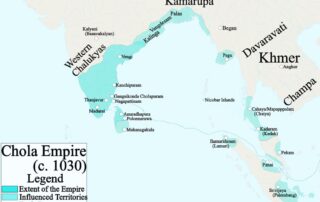
Global Warming Sustained a Naval Power That Dwarfed Vikings
Which civilization flourished during this warm medieval period, and what enabled it to rise and thrive—becoming even more successful than the Norse seafarers? In this article, Vijay Jayaraj examines the evidence and reveals the answers.
“Carbon” Capture Utilization & Storage (CCUS), Separating Fact from Fiction
Even if the world could effectively capture and permanently remove 1 billion tonnes of CO2 annually, the impact on temperature would be barely measurable. And the economic and ecological costs are enormous. Lars Schernikau lists the sobering facts.

