
Germany Nears Energy Emergency — And Policy Failure Is to Blame
Germany is nearing a potential energy emergency as gas reserves fall and heavy industries face possible shutdowns. Critics argue the looming economic damage is less the result of harsh winter conditions than of years of far-reaching policy decisions. What is unfolding now may be the consequence of strategic choices that have left Europe’s largest economy increasingly vulnerable.

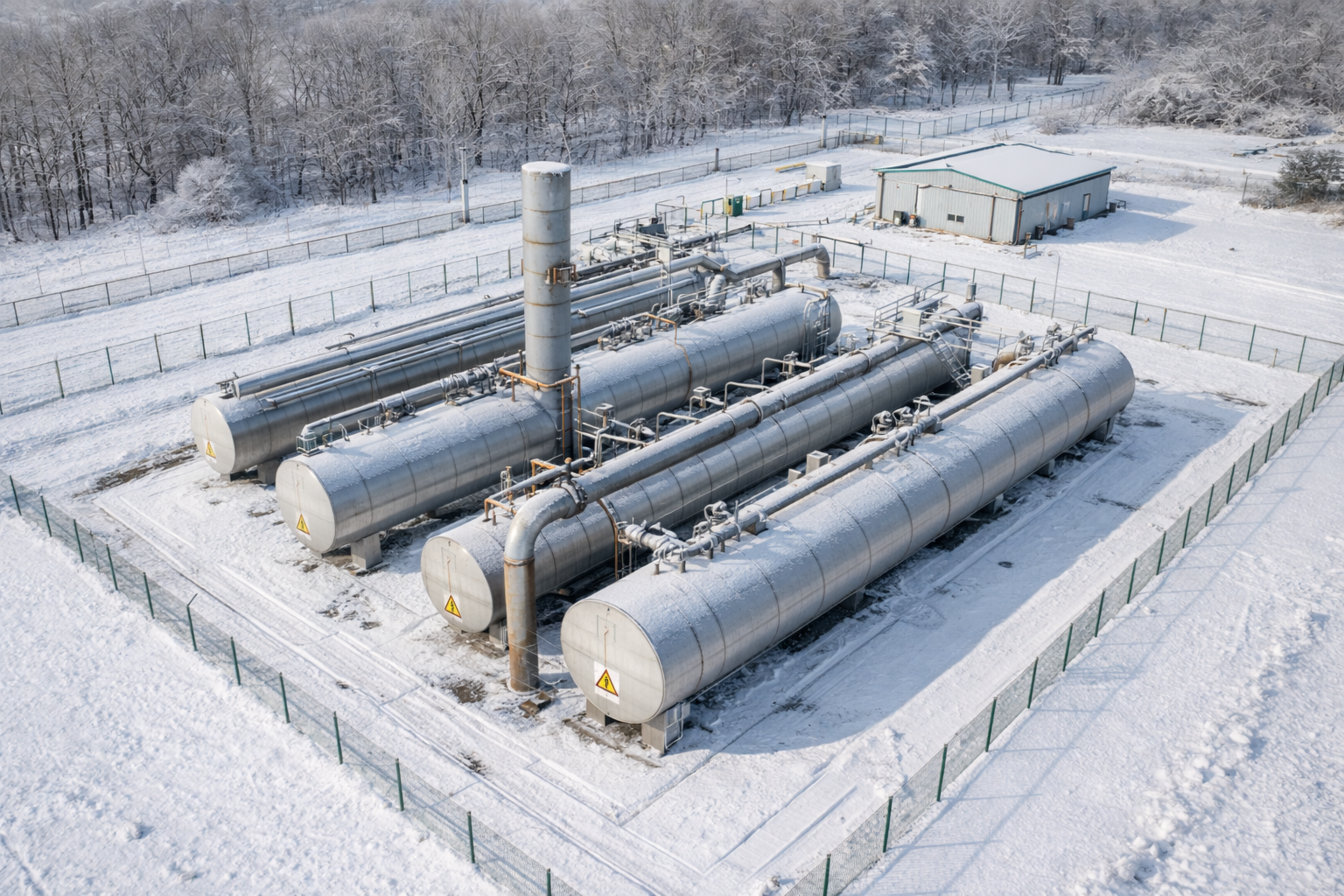
Symbol image generated by ChatGPT
P Gosselin
Date: 4 February 2026
As Germany’s heating gas supply becomes increasingly tense and nears emergency low levels, policymakers will likely blame a “colder than normal winter.”
But that claim will not hold. The real reason: It is what the Wall Street Journal called in January, 2019, the “World’s Dumbest Energy Policy” . However, since 2019, Germany’s energy policy has gotten even worse — much worse –going from the dumbest to simply hardcore dumbass. There’s no other grade to assign here.
From dumbest to hardcore dumbest
Since 2019, Germany not only stopped producing reliable, cheap and CO2-free nuclear-powered electrcity, but has since cut off its cheap supply from big bad Russia. The consequence: the heating gas supply is now close to running out and it’s only the end of January. A crisis is looming.
According to the online “Initiative Energien Speichern (INES) site here, the natural gas storage level is currently down to a measly 32.7%. Experts warn that the critical level of 20%, a point where pressures become too low to ensure adequate supply, will be reached in as little as 3 weeks.
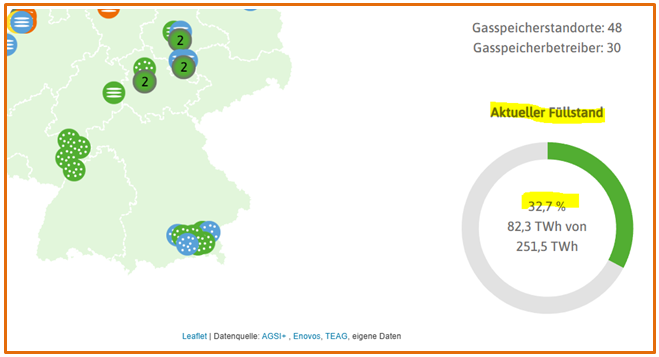
Image cropped at INES
Gas Emergency Plan
If Germany’s gas storage fall to 20% in February, as now expected, the country will be in a serious but planned-for situation. Under current German law and the Gas Emergency Plan (Notfallplan Gas), specific protocols will be triggered to prioritize human lives and essential services.
Industry facing mandatory shutdown
Under German and EU law, private households are classified as “protected customers;” which means the state is legally required to prioritize them. As the storage levels become extremely low, the government will have to cut off gas to heavy industry, power plants, and large commercial users. This would have enormous economic repercussions.
Overall, Germany has three alert levels. If storage hit 20% and supply is deemed insufficient for the remainder of the winter, the government will have to declare the third and highest level: the Emergency Level. In this case, the Federal Network Agency (Bundesnetzagentur) becomes the “federal load distributor, and will take control of the gas market and decide who gets gas and who does not. In this case, the agency issues orders to large industrial consumers to reduce or stop their gas intake.
20% fill level means less gas flows
As already mentioned, the real risk of low storage isn’t just “running out” of gas molecules; rather it is a loss of system pressure. Gas storage facilities need a certain amount of “cushion gas” to maintain the pressure required to push gas into the pipelines. If storage falls too low, the speed at which gas can be withdrawn slows down. This is why the government has to step in early to manage demand.
Summary
Under almost any realistic scenario involving a 20% storage level, which now appears unavoidable, the government has to force industries to shut down to ensure that homes, school and emergency services continue. The main consequence of a 20% storage is a severe economic hit.
This is, in large part, the consequence of Germany’s ideologically insane adoption of the radical Energiewende: transitioning to green energy no matter what the costs are.
Maybe president Trump will step in and bail out Germany by supplying LNG.
February will be a suspenseful month!

This article was previously published under the title ‘One Reason Only For Germany’s Heating Gas Crisis: Its Hardcore-Dumbass Energy Policy’ on notrickszone.com.

more news
Australia wakes up to brown coal bonanza: 1,000 years of energy
Finally, we see a few key topics hitting the media in Australia, says Jo Nova. National Party leader Canavan even talks about the thousand-year supply of brown coal, and also about a method of turning coal to liquid fuel.

The Strait of Hormuz’s Bitter Lesson for the European Union
In May 2023, Ursula von der Leyen, President of the European Commission, declared that the fossil-fuel-based growth model is “simply obsolete.” The partial blockade of the Strait of Hormuz starkly exposes the irony of that statement, says Samuel Furfari.

“Climate Policy Ignores Nature” – Interview with New WCD Signatory Enrique Ortega
Spanish geologist and new World Climate Declaration signatory Enrique Ortega brings decades of experience in earth sciences to the climate debate, emphasizing the importance of geological history in understanding present-day climate change.

