
‘Green’ Ideology is a force for African Oppression
After 2030, the number of people in extreme poverty is expected to start rising again, driven largely by Africa. While the rest of the world marches toward prosperity, Africa is being forced into a trajectory of destitution. The data is an indictment of the modern ‘green’ agenda.

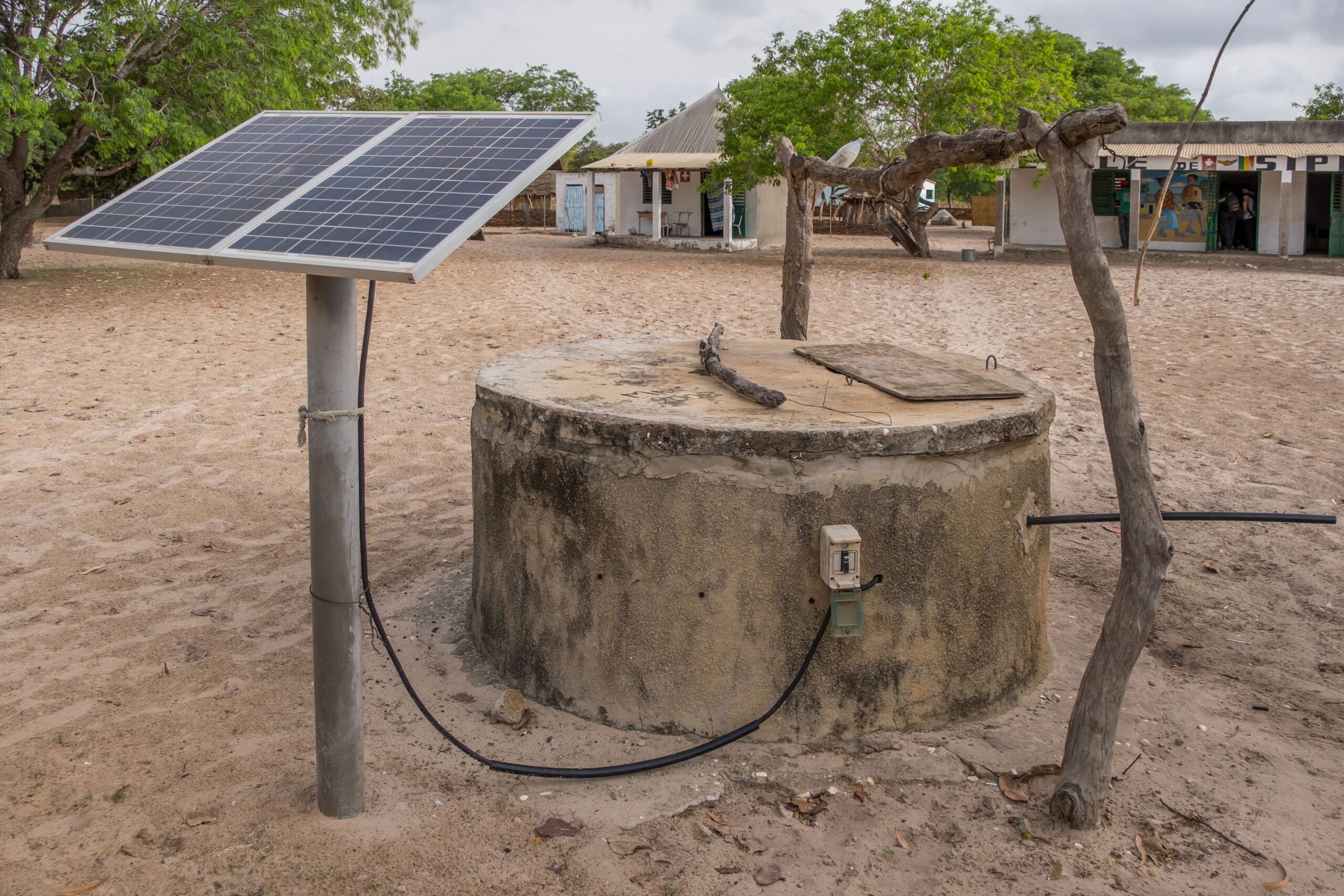
Image: Shutterstock
Vijay Jayaraj
Date: 9 March 2026
Anatomy of Despair
Extreme poverty is not an abstraction in Africa. Sub‑Saharan Africa now accounts for about 67% of the global population living in extreme poverty, up sharply from a few decades ago.
Surveys across 39 African countries between 2021 and 2023 found that at least 90% of respondents reported facing material deprivation. About 80% of respondents had gone without cash income at least once in the previous year, 66% went without medicines or medical care, and around six in 10 went without enough food. More than 50% reported that they had lacked access to cooking fuel or clean water at least once.
For Westerners fussing about Netflix streaming subscriptions or airline seat sizes, this is an alternate universe difficult even to imagine.
In countries such as the Democratic Republic of Congo, Mozambique, Malawi, Burundi, and the Central African Republic, more than half the population remains trapped below the global poverty line, and the number of poor rises with population growth because real economic opportunity has been lacking.
This economic stagnation has a terrifying mathematical consequence: As populations grow, the number of people in extreme poverty increases in lockstep. The projection is that after 2030, the global headcount of those in extreme poverty will rise, driven almost entirely by the crisis in Africa.
Blueprint
Africa is desperate for an aggressive blueprint for expansion that unleashes all assets. The continent brims with untapped minerals, arable land, and youthful labor forces, but unlocking them requires energy – abundant, affordable and reliable.
History suggests that no region has escaped poverty without prioritizing growth above all, deploying local strengths to fuel factories, farms and cities.
From the 1980s onward, per capita gross domestic product in much of Asia surged relative to sub‑Saharan Africa. Asian economies – led by China and India – have lifted hundreds of millions out of squalor. They did it by embracing industrialization and the dense, reliable energy required to power it – mostly with coal. In Western Europe, the United States, Canada and Australia, per capita incomes have climbed over decades as societies rode successive waves of growth powered by fossil fuels.
The pattern is unmistakable. Where energy use grows quickly, poverty declines rapidly.
If decisive push for African growth does not materialize in the coming decades, projections of rising poverty will become reality. For a region blessed with energy resources and other raw materials, this would be an embarrassing and tragic failure.
The second largest continent in land area, Africa has the youngest population. Its 1.6 billion people have a median age of under 20 compared to a global average of over 31. (Median age for North America and Europe are 39 and 43, respectively.)
The coming African demographic surge that such youth portends means hundreds of millions languishing in cycles of deprivation, unrest and humanitarian crises that spill across borders. That is, unless half-measures are replaced with an enthusiastic embrace of economic growth.
Tragedy
The tragedy is that the political leadership in Africa knows what is required. Leaders across the continent have shown a willingness to tap domestic gas reserves, develop coal resources, and attract investment in refining and petrochemicals. You hear it in speeches from heads of state in Nigeria, Senegal and Mozambique. They speak about ‘energy sovereignty’ and the right to use their own resources to fight poverty.
Yet the reach of the global anti‑fossil‑fuel campaign is more than any African government can counter on its own. Western‑based organizations and public development banks have spent years rewriting their lending rules to restrict support for coal projects and, increasingly, for oil and gas infrastructure. Large European and American financial institutions have adopted policies that discourage financing of fossil fuel projects in Africa while continuing to rely on these fuels themselves.
Africa does not need Western pity, and it certainly does not need its solar panels. It requires the freedom to burn gas, mine coal and drill for oil – just as the West did. Africa’s young population deserves the same industry-powered societal leap that lifted billions out of poverty in Asia and the West. The green ideology that runs counter to this vision is one of oppressors, not of nature’s caretakers.

This article by Vijay Jayaraj was first published on PJ Media, 16 February.

Vijay Jayaraj
Vijay Jayaraj is a Science and Research Associate at the CO2 Coalition, Fairfax, Virginia. He holds an M.S. in environmental sciences from the University of East Anglia and a postgraduate degree in energy management from Robert Gordon University, both in the U.K., and a bachelor’s in engineering from Anna University, India. He served as a research associate with the Changing Oceans Research Unit at University of British Columbia, Canada.

more news

“The Climate Change Business Is a Criminal Hoax” — Interview with WCD Signatory Tõnu Kalvet
Estonian journalist, translator, and editor Tõnu Kalvet has signed the World Climate Declaration, joining a growing network of professionals questioning prevailing climate narratives. In this interview, he explains why he believes climate policy has become ideological, how it affects energy prices in Estonia, and why he calls for a stronger focus on real environmental problems such as pollution.
Germany Nears Energy Emergency — And Policy Failure Is to Blame
Germany is nearing a potential energy emergency as gas reserves fall and heavy industries face possible shutdowns. Critics argue the looming economic damage is less the result of harsh winter conditions than of years of far-reaching policy decisions. What is unfolding now may be the consequence of strategic choices that have left Europe’s largest economy increasingly vulnerable.

Dutch climate skeptics vindicated: KNMI reinstates seven pre-1950 heatwaves after long battle
Seven years after Dutch skeptics first challenged KNMI's temperature adjustments, the institute has reinstated seven "lost" pre-1950 heatwaves at De Bilt — validating claims of over-correction that had erased 16 out of 23 historical extremes. The breakthrough came via the skeptics' peer-reviewed paper.

