
Why Aren’t Democrats Fighting Back? Morano on Turning Point in U.S. Climate Politics
Democrats and American environmental groups have grown strangely quiet on climate, says Marc Morano in a recent podcast with Tom Nelson. “It’s the complete and total collapse of everything we’ve covered over the last two decades of the climate movement.”

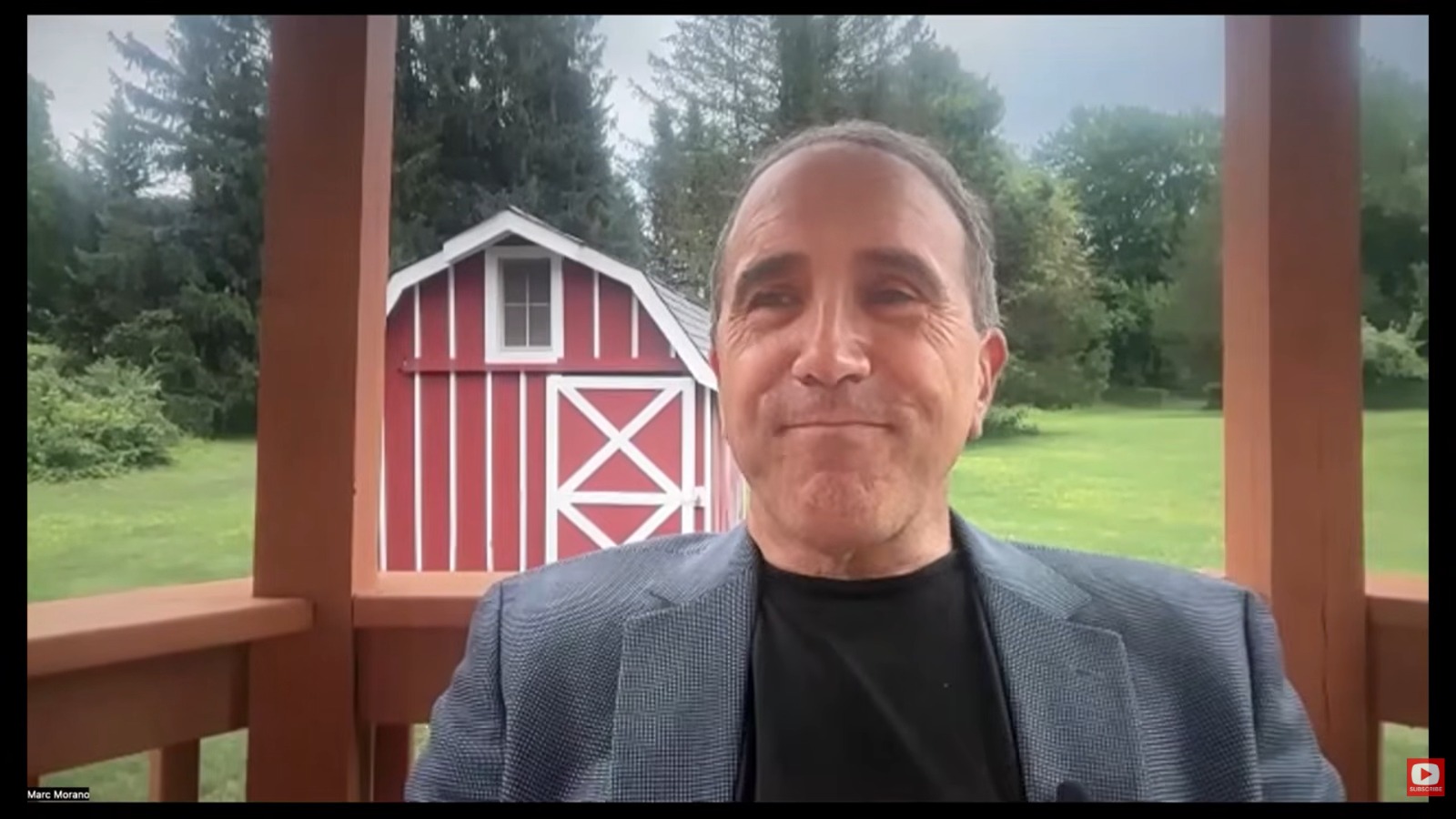
Marc Morano on Tom Nelson’s podcast
Clintel Foundation
Date: 5 June 2026
In a wide-ranging conversation with Tom Nelson, climate commentator Marc Morano argues that the climate movement in the US is experiencing its weakest political moment in decades. Speaking from the perspective of someone who has followed climate politics for more than twenty years, Morano describes the current situation as unprecedented. Early in the interview he states: “It’s the complete and total collapse of everything we’ve covered over the last two decades plus of the climate movement.”
You can see the entire podcast here:
A central theme of the discussion is Morano’s belief that the climate movement overreached during the years leading up to Donald Trump’s return to office. He argues that climate advocates enjoyed support from major institutions, universities, corporations, international organizations, media outlets, and much of the political establishment. In his view, this extensive institutional backing ultimately generated a public backlash rather than greater public acceptance.
Morano spends considerable time comparing Trump’s first and second administrations. While he credits Trump’s first term with withdrawing from the Paris Agreement and rolling back some Obama-era energy regulations, he argues that the second administration has gone much further. According to Morano, Trump 2.0 is attempting a more fundamental restructuring of climate and energy policy, including efforts to weaken regulatory frameworks, challenge long-standing federal climate assumptions, and reduce U.S. involvement in international climate institutions.
Muted
One of the most striking observations in the interview is that the opposition response has been unexpectedly muted. Morano repeatedly returns to what he sees as the remarkable absence of a coordinated Democratic counteroffensive. Citing recent reporting from major media outlets, he notes that even traditionally climate-focused publications have observed a reduction in climate-related messaging from Democratic politicians and environmental organizations. He highlights reports suggesting that many Democrats now emphasize affordability and energy costs rather than aggressive climate action.
Morano views this as one of the most important developments in contemporary American politics. As he puts it, “Dems and environmental groups have grown strangely quiet.” He argues that this silence reflects a broader political reassessment after the 2024 election, particularly concerns that climate and energy-transition policies may have alienated working-class voters and employees in traditional industries. He points to a Democratic post-election analysis that reportedly concluded that climate and green-energy messaging created anxiety among workers concerned about job losses.
A second major theme is the changing position of large corporations and technology leaders. Morano argues that one of the most significant reasons for the declining prominence of climate policy is the explosive growth of artificial intelligence. According to his interpretation, AI has fundamentally altered the priorities of major technology companies. Massive AI data centers require reliable, large-scale electricity supplies, creating demand for energy sources that can operate continuously rather than intermittently.
Role of AI
Morano cites comments attributed to financial and business leaders acknowledging that AI’s power requirements cannot easily be met by wind and solar energy alone. He quotes a statement that “you can’t have intermittent power like wind and solar. You need dispatchable power.” According to Morano, this reality is driving companies such as Google, Amazon, Meta, and others toward natural gas, nuclear power, and expanded electricity generation, even when doing so complicates previously announced net-zero commitments. He argues that profitability and competitive pressure associated with AI have begun to outweigh climate-related priorities within the corporate sector.
This leads to one of Morano’s most memorable lines in the discussion. Describing what he sees as the shift in corporate attention, he says: “They’ve moved on. Climate was wife number one. They’re on to the next one, which is AI.”
The interview also explores Morano’s view that the COVID-19 era contributed significantly to growing public skepticism toward institutional authority. He argues that pandemic-era debates over scientific expertise, censorship, and government mandates weakened public trust in appeals to expert consensus. In his assessment, that erosion of trust subsequently affected public attitudes toward climate messaging as well.
Another topic is the future of international climate governance. Morano recounts his long history attending United Nations climate conferences and argues that recent summits have struggled to maintain momentum. He points to what he sees as growing frustration within the climate-policy community and suggests that some activists now believe existing international mechanisms are insufficient to achieve their goals.
Not over yet
Throughout the conversation, Morano repeatedly emphasizes that he does not view the debate as permanently settled. Although he believes climate politics is currently in retreat, he argues that the underlying networks, institutions, and funding structures remain influential and could regroup in the future. He predicts that a future Democratic administration would likely continue supporting renewable-energy subsidies and climate-related programs, even if climate rhetoric becomes less prominent in public messaging.
The overall message of the podcast is that the climate issue has entered a new political phase. Morano contends that Trump’s policy changes, the public reaction to COVID-era governance, concerns about energy affordability, and above all the rapid expansion of AI have combined to weaken the climate movement’s influence. The phenomenon he finds most noteworthy is not simply Trump’s dismantling of climate policies, but the apparent lack of vigorous resistance from many of the political and institutional actors who previously championed them.

more news
The Big Five – the worst Scandals of IPCC
In his new paper, Erik Bye, a Norwegian signatory of Clintel’s World Climate Declaration, takes a hard look at what he calls “The Big Five Scandals of the IPCC” — the core issues undermining the credibility of the UN’s climate panel.

Europe’s Terminal Decline: The Philosopher Queens and Their Ruinous Rule
In this hard-hitting essay, Tilak Doshi exposes how Angela Merkel and Ursula von der Leyen’s misguided leadership has driven Europe to the brink of decline.

Lindzen and Happer on Joe Rogan: money is the most important factor in climate madness
Two leading climate sceptics, Richard Lindzen and William Happer, recently joined Joe Rogan for an in-depth conversation about the state of climate science and the powerful financial forces driving today’s climate alarmism. Peter Baeten reflects on this remarkable exchange and its broader implications.

