
Marc Morano: the best time for climate realism in the last 50 years
At the 16th ICCC in Washington, D.C., Marc Morano argues that the global climate agenda is weakening, calling this the most promising moment for climate realism in the past 50 years.

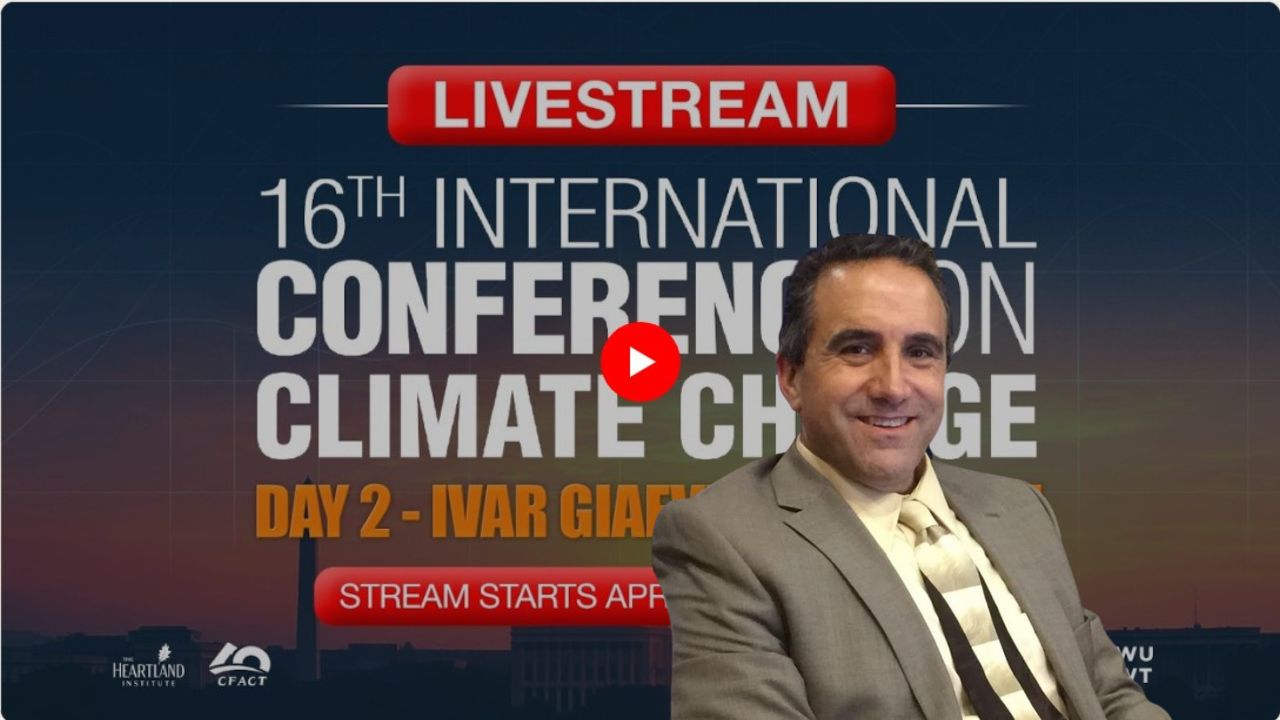
Marc Morano
Marcel Crok
Date: 12 April 2026
The final talk of the 16th International Conference on Climate Conference in Washington DC (8 and 9 April) was given by Marc Morano of the website climatedepot.com. Morano is a longtime follower of the climate agenda (he visited close to all the yearly Conference of the Parties, COP’s). He gave a fascinating overview of how the climate agenda has been crumbling down in the past year or so, not only in the US but around the globe (although Europeans maybe notice this less). He concluded with the remark that we live in the best times for climate realism in the last 50 years.
That’s all good news, but Morano also warned that we aren’t there yet and that the forces behind the climate agenda can or will pop up again, for example these days in the form of energy lockdowns because of the crisis in the Strait of Hormuz. So we have to be very vigilant. But the fact of the matter is that Trump, Chris Wright and administrator Lee Zeldin (who spoke at the Conference) are punching big holes in the climate agenda currently and that the other side is not fighting back at all. They seem to have given up, maybe because of a lack of funding (Bill Gates, Jeff Bezos, Larry Fink all moved away from the climate agenda, partly or mainly because of their interests in AI for which you need dispatchable energy).
The Conference in Washington is organised every year by the Heartland Institute. Clintel and The Heartland Institute (and maybe other organisations) have serious plans to organise next year’s conference in The Netherlands.
The complete recordings of both days (in both rooms) are available on the conference website. You can see the presentation by Clintel Director Marcel Crok: here.
Watch Marc Morano’s lecture below:


more news
The Polar Bear Narrative: What Scientists Knew Before Frozen Planet Aired
In 2011, BBC viewers were told that polar bears in the Barents Sea were starving due to climate-driven sea ice loss. Later scientific evidence shows that this portrayal was inconsistent with data already available at the time.
Why Is the Southern Ocean Cooling? Three New Scientific Explanations Challenge Climate Models
Surface temperatures in the Southern Ocean around Antarctica have cooled for decades, defying the projections of leading climate models and puzzling researchers worldwide. In this article, physicist Ralph B. Alexander examines three recent studies that propose strikingly different explanations for this unexpected climate anomaly.

Utility Scale Lithium Based Energy Storage Systems
Large-scale lithium-ion battery storage is expanding rapidly, often with limited public discussion of safety and environmental risks. The article below examines a recent white paper by engineer Richard Ellenbogen that analyzes these risks, particularly when such facilities are sited in densely populated or environmentally sensitive areas.

