More on the New Climate Report from the US DOE
This report will be a very useful mechanism to allow much more open dialogue on the climate change policy journey that will affect us all.
It’s clear from this report that Climate science is far from settled and that the past frozen narrative of the climate emergency is over.
An Important Update to the Climate Science Narrative and Review Process.
This report will be a very useful mechanism to allow much more open dialogue on the climate change policy journey that will affect us all.
It’s clear from this report that Climate science is far from settled and that the past frozen narrative of the climate emergency is over.
The authors are going to welcome broad input and review and with possibly a website to support this process.
I will be advising all my readers where they can go to participate or get updates.
Here is the executive summary and a conclusive statement unchanged from the report…
Executive Summary
This report reviews scientific certainties and uncertainties in how anthropogenic carbon dioxide (CO2) and other greenhouse gas emissions have affected, or will affect, the Nation’s climate, extreme weather events, and selected metrics of societal well-being.
Those emissions are increasing the concentration of CO2 in the atmosphere through a complex and variable carbon cycle, where some portion of the additional CO2 persists in the atmosphere for centuries.
Elevated concentrations of CO2 directly enhance plant growth, globally contributing to “greening” the planet and increasing agricultural productivity [Section 2.1, Chapter 9].
They also make the oceans less alkaline (lower the pH). That is possibly detrimental to coral reefs, although the recent rebound of the Great Barrier Reef suggests otherwise [Section 2.2].
Carbon dioxide also acts as a greenhouse gas, exerting a warming influence on climate and weather [Section 3.1].
Climate change projections require scenarios of future emissions.
There is evidence that scenarios widely-used in the impacts literature have overstated observed and likely future emission trends [Section 3.1].
The world’s several dozen global climate models offer little guidance on how much the climate responds to elevated CO2, with the average surface warming under a doubling of the CO2 concentration ranging from 1.8°C to 5.7°C [Section 4.2].
Data-driven methods yield a lower and narrower range [Section 4.3].
Global climate models generally run “hot” in their description of the climate of the past few decades − too much warming at the surface and too much amplification of warming in the lower- and mid troposphere [Sections 5.2-5.4].
The combination of overly sensitive models and implausible extreme scenarios for future emissions yields exaggerated projections of future warming.
Most extreme weather events in the U.S. do not show long-term trends.
Claims of increased frequency or intensity of hurricanes, tornadoes, floods, and droughts are not supported by U.S. historical data [Sections 6.1-6.7].
Additionally, forest management practices are often overlooked in assessing changes in wildfire activity [Section 6.8].
Global sea level has risen approximately 8 inches since 1900, but there are significant regional variations driven primarily by local land subsidence; U.S. tide gauge measurements in aggregate show no obvious acceleration in sea level rise beyond the historical average rate [Chapter 7].
Attribution of climate change or extreme weather events to human CO2 emissions is challenged by natural climate variability, data limitations, and inherent model deficiencies [Chapter 8].
Moreover, solar activity’s contribution to the late 20th century warming might be underestimated [Section 8.3.1].
Both models and experience suggest that CO2-induced warming might be less damaging economically than commonly believed, and excessively aggressive mitigation policies could prove more detrimental than beneficial [Chapters 9, 10, Section 11.1].
Social Cost of Carbon estimates, which attempt to quantify the economic damage of CO2 emissions, are highly sensitive to their underlying assumptions and so provide limited independent information [Section 11.2].
U.S. policy actions are expected to have undetectably small direct impacts on the global climate, and any effects will emerge only with long delays [Chapter 12].
12.3 Concluding thoughts
This report supports a more nuanced and evidence-based approach for informing climate policy that explicitly acknowledges uncertainties.
The risks and benefits of a climate changing under both natural and human influences must be weighed against the costs, efficacy, and collateral impacts of any “climate action”, considering the nation’s need for reliable and affordable energy with minimal local pollution.
Beyond continuing precise, un-interrupted observations of the global climate system, it will be important to make realistic assumptions about future emissions, re-evaluate climate models to address biases and uncertainties, and clearly acknowledge the limitations of extreme event attribution studies.
An approach that acknowledges both the potential risks and benefits of CO2, rather than relying on flawed models and extreme scenarios, is essential for informed and effective decision-making.
Download the full report here.

Nigel Southway
This article has been published by Nigel Southway on nigelsouthway.substack.com on 30 July 2025. Nigel Southway is an advocate for the restoration of our manufacturing sectors in North America. The author of the new book Take Back Manufacturing. An independent business consultant, Author, Manufacturing Engineer and Professor.

more news
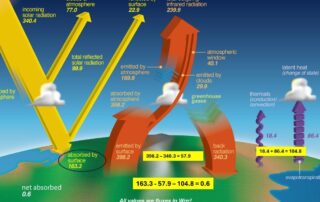
TOA EEI versus Surface Net Flux
Explore how climate scientist Andy May analyzes the relationship between TOA energy imbalance and surface net flux, challenging common interpretations in climate science.

Met Office temperature measurements unreliable and systematically biased
The article below by Chris Morrison clearly demonstrates that the reliability of temperature measurements in the United Kingdom is seriously lacking. Based on detailed research, Dr Eric Huxter shows that a large share of recorded temperature spikes is not the result of natural variation, but of artificial influences at poorly located measurement stations. This raises fundamental questions about the quality of the underlying data used for climate reporting and policy decisions.
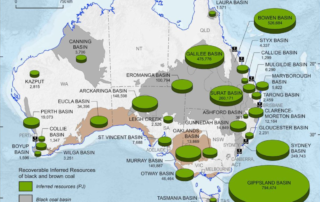
Australia wakes up to brown coal bonanza: 1,000 years of energy
Finally, we see a few key topics hitting the media in Australia, says Jo Nova. National Party leader Canavan even talks about the thousand-year supply of brown coal, and also about a method of turning coal to liquid fuel.