
Professor Judith Curry: Climate Science Has Become Pseudo Science
Renowned climatologist Dr. Judith Curry debunks the myth of a climate consensus, revealing deep scientific disagreement on critical issues like the causes and impacts of warming.

“Your funding, your salary increase, your tenure case is tied to agreeing with the ‘consensus.’ It’s really about careerism and resources. They all have to dance to that same drum beat if they want to get professional recognition and professional advancement,” says Dr. Judith Curry, professor emeritus at the Georgia Institute of Technology, describing the state of climate science and research in recent years.
Despite this pressure, there is no consensus on climate change—talk of 97% of scientists agreeing that we are facing a man-made climate crisis is, according to Curry, simply a joke. She explains that scientists disagree on the most important issues surrounding climate change. For example, there is significant debate about how much of the planet’s current warming is man-made versus natural. At the same time, however, many widely held beliefs, such as the notion that a climate crisis or global warming causing more extreme weather, are simply false. According to Curry, it is also difficult to justify the claim that a few degrees of warming is dangerous in any meaningful way.
Under such conditions, the advancement of climate science has clearly been hampered. “It’s not science anymore. It has become a pseudo science,” Curry says. “The hardcore physics-based climate dynamics such as what we had in the 1980s—that’s just a small sliver of what we now define as climate science. What the students are getting their PhDs in—they analyze the output of these climate models, looking for some sort of catastrophe that they can identify and write a paper on without ever even critically evaluating these models or how they should be used. It’s just sort of nonsense, but it has received so much funding,” Curry explains.
Dr. Judith Curry is a renowned U.S. climatologist. Until 2014, she chaired the School of Earth and Atmospheric Sciences at the Georgia Institute of Technology. Curry left the university in 2017 due to pressure from the so-called climate consensus and because of restrictions on freedom of speech.
Before joining Georgia Tech, Curry was a professor at the University of Colorado Boulder and before that held academic positions at several other universities. She received her Ph.D. in geophysical sciences from the University of Chicago (1982).
Curry has published approximately 190 scientific papers and co-authored several significant publications on climate science. Her 2023 book, Climate Uncertainty and Risk: Rethinking Our Response (a part of Anthem Environment and Sustainability series), provides a comprehensive overview of what we can say with certainty about the climate and balances widespread fears about a climate crisis with a realistic perspective.
Throughout her career, Curry has received several prestigious scientific awards, including the Georgia Tech Graetzinger Moving School Forward Award (2011), Georgia Tech Sigma Xi Best Faculty Paper Award (2006), NASA Group Achievement Award for CAMEX-4 (2002), University of Colorado Green Faculty Award (2002), the American Meteorological Society’s Henry G. Houghton Award (1992), and the National Science Foundation’s Presidential Young Investigator Award (1988). She is also an elected Fellow of the American Association for the Advancement of Science (2007), American Geophysical Union (2004), and American Meteorological Society (1995). She has also served as a Councilor for the American Meteorological Society, elected in 1997.
Currently, she is in the private sector and serves as the president of Climate Forecast Applications Network, LLC.


more news
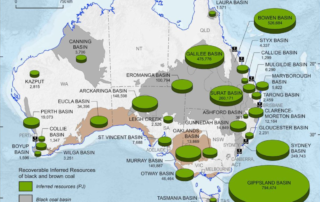
Australia wakes up to brown coal bonanza: 1,000 years of energy
Finally, we see a few key topics hitting the media in Australia, says Jo Nova. National Party leader Canavan even talks about the thousand-year supply of brown coal, and also about a method of turning coal to liquid fuel.
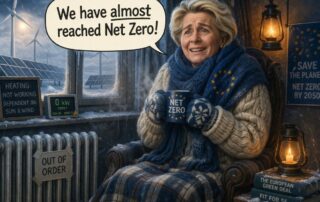
The Strait of Hormuz’s Bitter Lesson for the European Union
In May 2023, Ursula von der Leyen, President of the European Commission, declared that the fossil-fuel-based growth model is “simply obsolete.” The partial blockade of the Strait of Hormuz starkly exposes the irony of that statement, says Samuel Furfari.
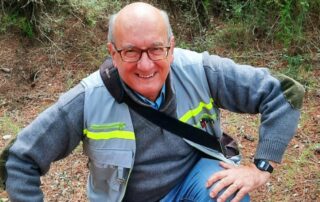
“Climate Policy Ignores Nature” – Interview with New WCD Signatory Enrique Ortega
Spanish geologist and new World Climate Declaration signatory Enrique Ortega brings decades of experience in earth sciences to the climate debate, emphasizing the importance of geological history in understanding present-day climate change.

