
“There Should Be No Climate Policy”: Interview with WCD Signatory Tomáš Elbert
Tomáš Elbert, an organic chemist from the Czech Republic, is among the latest signatories of CLINTEL’s World Climate Declaration. In this interview, he explains his scientific background, his views on climate change, and why he believes open debate is essential.

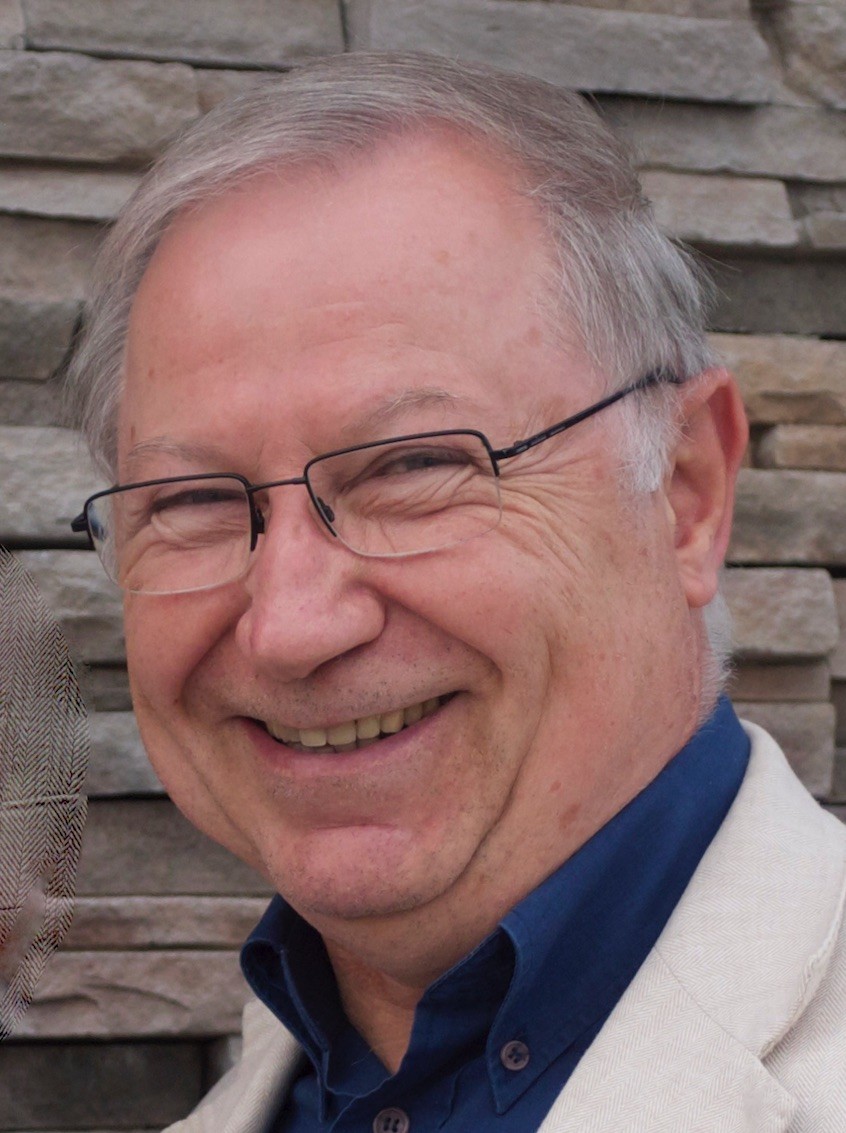
Tomáš Elbert
Clintel Foundation
Date: 3 February 2026
NAME: Tomáš Elbert
COUNTRY: Czech Republic
What is your background?
I have graduated from Charles University, Prague in organic chemistry. After one year of military service I pursued my postgraduate studies at the same university and earned a Ph.D. in organic chemistry. I have specialized in the organic synthesis of compounds labelled by radioisotopes 14C, 3H and 125I as a tools for life sciences. I spent 18 months as a foreign collaborator at the tritiation laboratory of the Centre of Atomic Studies in Saclay near Paris. As the head of the Radioisotope Laboratory of IOCB CAS, I had the duties of a radiation safety officer, too. At present I work part-time.
Since when and why are you interested in climate change and how did your views on climate change evolve?
One of my best friends since secondary school, graduated in meteorology and climatology and from our debates I learned some of the problems of the computer weather forecast models. When the famous ‘hockey stick’ graph was published at the end of last century and the frenzy of a burning planet and oceans started, I was sceptical about the exaggerated role of the carbon dioxide in climate change and the forecasts of the global temperature rising based on computer modelling.
Is climate change a big issue in your country and how do you notice this?
As in all countries, in Czechia there are a lot of ‘experts’ with a very weak background in natural sciences parroting the catastrophic climate changes scenarios. I have nothing against discussing the climate change theories and it is undeniable that the winters in Czechia are milder (as a child I was skating on the frozen Vltava river and skiing on the snow covered Prague hills) but I strongly object to applying not proven theories in political and economy decisions.
What would climate policy ideally look like in your view?
Climate change in time is an inherent attribute of the complexness of the Earth ecosystem and fluctuating Sun activity. Our civilization is absolutely dependent on electric energy production and since we do not know with certainty the mechanisms behind the climate changes, there should be no climate policy, since human experiments with influencing nature usually end up with an even bigger mess than it was destined to solve.
What is your motivation to sign the CLINTEL World Climate Declaration?
I am worried about the consequences of climate alarmists actions and I want the public to see that there is no consensus of 99% of scientists on the anthropogenic origin of climate change.


more news
Bovaer Bovine Stupidity
Bovaer is being hailed as the miracle that will make cows climate-friendly—but the data behind it may be more bovine than scientific.

A Thanksgiving Tribute to Global Warming and CO2
What if we celebrate Thanksgiving with a tribute to global warming and the relative abundance of carbon dioxide (CO2) in our atmosphere? An outrageously scandalous thought, right? To propose we honor what global elites and their compliant media insist are bringing on certain doom. Yet, this is precisely what sound thinking demands.
What is a “climate crisis?”
Before we declare a ‘climate crisis,’ perhaps we need a clear definition — grounded not in fear, but in evidence. This piece argues for quantifiable metrics over rhetoric.

