
What If Everything You Thought About CO2 Was Wrong?
In my web browsing today, I stumbled upon a video posted yesterday by Robin Horsley, which is based on my work. I was impressed with the simple, beautiful and convincing way he presents my findings, and goes beyond them to what they mean, in just 8 minutes.
I didn’t know Robin Horsley, but the video intrigued me and I found some information he gives about himself.
His video, which is linked below, is an honour for me and I am grateful to him.

The youtube page gives the following description of the video.
‘What If Everything You Thought About CO₂ Was Wrong?’ dives deep into one of the most provocative challenges to the mainstream climate narrative. For decades, we’ve been told that human-generated CO₂ is the leading cause of global warming, driving apocalyptic policies and shaping global agendas. But what if this foundational belief is flawed?
This film explores groundbreaking research by Professor Demetris Koutsoyiannis, who argues that rising CO₂ levels are not the cause of global warming but its consequence. Supported by historical ice core data and natural processes, his findings raise serious questions about the simplistic story we’ve been fed for years. The film examines natural CO₂ emissions from oceans and decaying plant life, which account for 96% of the total, leaving human contributions as a mere 4%. It challenges long-held assumptions about CO₂’s role as a greenhouse gas and casts doubt on the effectiveness of Net Zero policies, which could cost up to $150 trillion by 2050. What if these funds could be better spent mitigating the effects of climate change or eradicating poverty and disease?
This isn’t about denying climate change; it’s a call to scrutinise the science driving monumental decisions. Are we solving the right problem, or simply following a narrative that benefits the few at an unimaginable cost?


more news
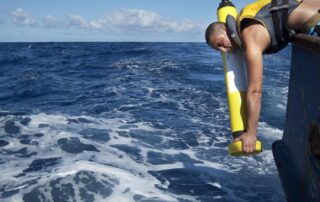
Groundbreaking New Paper Challenges Foundation of Climate Change Assessments, Revealing Fatal Flaws in Ocean Heat Content Measurements
An international team of scientists has published groundbreaking research revealing that the primary measurement used to support claims of planetary “warming” is fundamentally flawed and scientifically invalid.
The Frontier of Climate Science: Solar Variability, Natural Cycles and Model Uncertainty
Climate scientist Nicola Scafetta has published a new book examining the complex interplay between solar variability, natural climate cycles, and the limits of current climate models. The Frontier of Climate Science explores how natural variability, observational uncertainties, and model limitations shape our understanding of past and future climate change.

Absurd new study: hair salons can be a secret weapon for climate action
Great news! Researchers from several British universities have discovered that ‘hairdressers could be a secret weapon in tackling climate change’. Jo Nova reflects on this absurd finding.

