
Benny Peiser: “The political consensus around climate is broken”
Benny Peiser, director of the Global Warming Policy Foundation for the last 15 years, gave a talk for the Clintel Foundation in The Netherlands in late November.

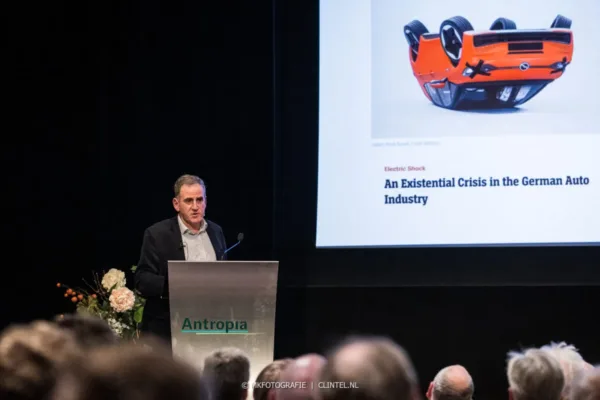
Peiser gave examples from around Europe showing how the Net Zero agenda is crumbling down. He also talks about international climate policy after the Trump election. And who is going to pay for the promised 300 billion a year at the COP29 in Baku?
This is a must see talk. As Benny said to me: “This is the first time in all those years that people start listening to us.”
Is the Net Zero agenda really nearing its end?
Photo credit: http://www.mkfotografie.nl/


more news

No, New York Times, Climate Change Is Not Making Tennis Players Ill
In this article, climate researcher and writer Linnea Lueken examines claims by The New York Times that climate change is making tennis players ill during the French Open. She argues that player health, tournament infrastructure, and individual heat sensitivity provide more plausible explanations than climate change, and that a single heatwave does not constitute evidence of a long-term climate trend.
Kathryn Porter: “The whole model is starting to crumble”
Policymakers and media institutions underestimate the dangers created by unreliable energy systems and rising electricity costs, energy analyst Kathryn Porter recently stated on the Heretics podcast. But she thinks the problem is much bigger than that: “Societies entering periods of political and economic stress, often become more authoritarian. The whole model is starting to crumble.”

Matthew Wielicki on Climate Debrief: “The human condition has never been better”
Students were crying during conversations about the future, their fears largely driven by repeated exposure to highly negative messaging about climate change, recalls ‘professor in exile’ Matthew Wielicki on the Climate Debrief Podcast. He encourages young people to approach environmental and climate concerns with balance, optimism, and practical action rather than despair.

