China Threat Calls for Ideologically Free Energy Policy
Whether China’s threat to restrict export of rare earth minerals materializes or is resolved through trade negotiations, the episode underscores the fragility of U.S. supply chains and the importance of developing domestic sources.
Vijay Jayaraj
Date: 23 October 2025
Nowhere is this more evident than in the energy sector where climate policies have made dozens of countries more reliant on imports than ever before. Adherence to climate orthodoxy has repeatedly exposed countries to avoidable risks, each instance demonstrating the cost of subordinating real-world utility to the pseudoscience of theoretical models and the grifting of special interests.
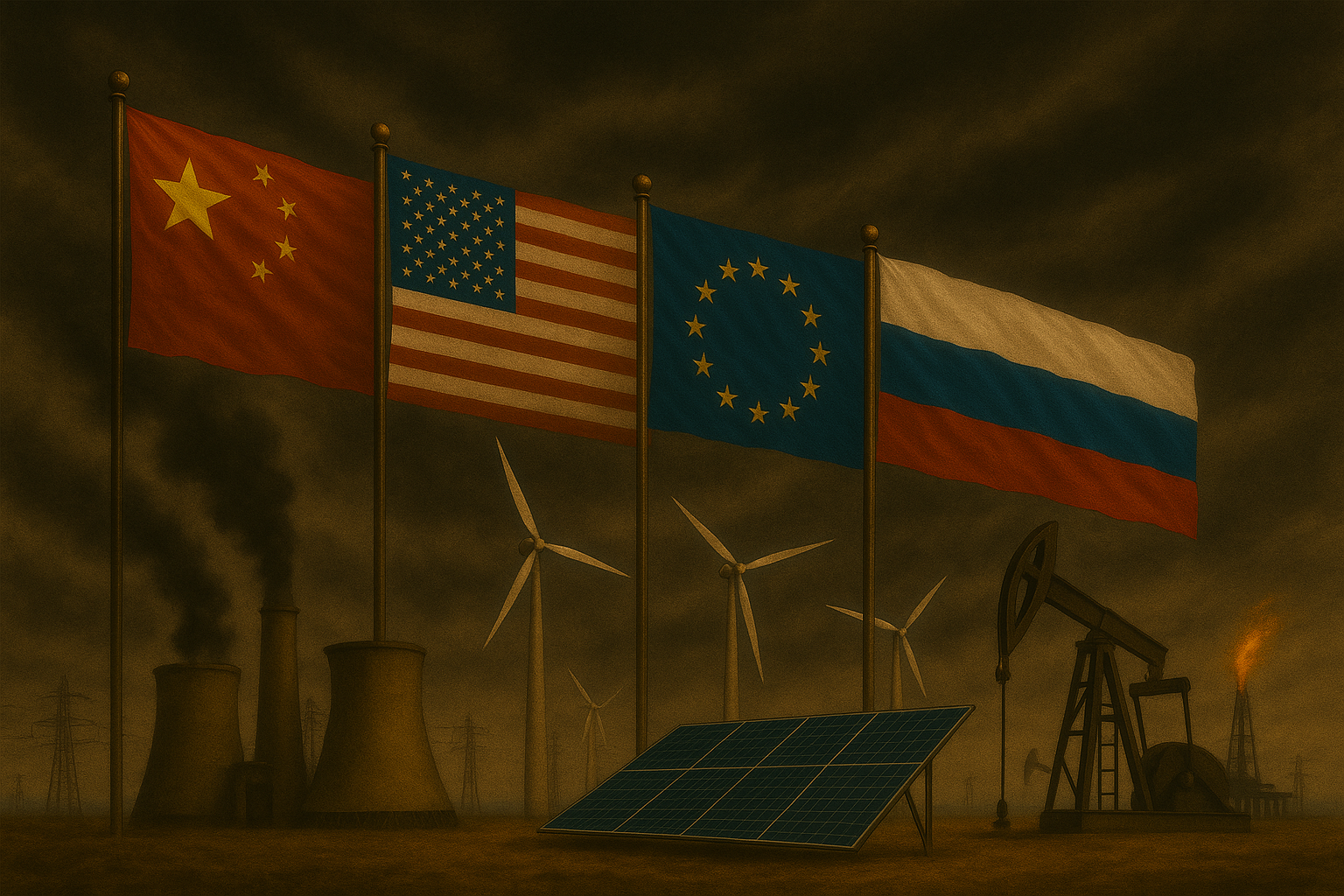
The reshuffling of the global flow of oil and coal after 2022 exposed the foolishness of the anti-fossil fuel agenda. European nations, led by Germany and the U.K., embarked on aggressive phaseouts of fossil fuels, dismantling coal plants and shrinking domestic natural gas output in favor of wind and solar. Domestic production of hydrocarbons collapsed, and reliance on imported energy spiked, particularly for the Germans and British.
As Europe turned away from Russian coal, it rushed to buy that fuel from the U.S., Qatar and Africa, often at much higher prices. Coal that Germany once imported from Russia was replaced with fuel shipped from more distant locations, undermining supposed “carbon savings” of its climate policy. When Russia’s gas pipeline became a casualty of war, Europe found itself reliant on LNG (liquefied natural gas) shipments from the U.S. at double the cost.
Bureaucratic obstacles to restarting coal- and gas-fired power plants further magnified shortages, driving up costs for manufacturing and household heating. Energy-intensive sectors — steel, aluminum, fertilizers — either shut down or relocated to countries with more reliable and affordable electricity, among them the U.S. and India.
In the United States, federal climate-centered policies presented new bottlenecks. The Biden administration’s Inflation Reduction Act poured billions into “renewables” and imposed restrictions on offshore drilling and pipeline construction. Supply chain resilience was undermined by the ideological sidelining of cheap, abundant fuels.
Why does a nation willingly trade resilient domestic energy for unreliable sources that are bound to fall short of their citizens’ daily needs and fail disastrously during a crisis? How can policymakers justify burdening entire industries with inflated energy costs to satisfy “net zero” policies based on wishful thinking and vacuous rhetoric? For some, the answer is ideological purity and muddled thinking, and for others, a cynical grab for power and money.
Every megawatt of domestic energy production mothballed in pursuit of climate targets is a future vulnerability that materializes not in white papers but in tangible hardships for people.
Countries with rigid “green” energy mandates fared worst during disruptions; those with diversified, fossil-based power grids bounced back faster.
Countries that continued investing in fossil fuels — such as India and Indonesia — did far better. As Europe suffered under the high cost of electricity, India accelerated coal production, expanded refinery capacity and signed long-term LNG deals. Indonesia leveraged its coal and oil resources to stabilize domestic power and shield consumers from global volatility.
These are examples proving energy pragmatism, not ideology, safeguards national interests. The failure of the “net zero” experiment lies in its detachment from physical reality. Fossil fuels remain the foundation of modern civilization — powering transport, agriculture, defense, manufacturing, digital technology and more.
Governments must repeal the labyrinth of regulations that stifle domestic oil and gas exploration and coal mining. They must fast-track the approval of pipelines, refineries and LNG export terminals. They must end the colossal subsidies that prop up unreliable technologies and allow energy sources to compete on cost and reliability.
Investment should be directed toward developing advanced fossil fuel technologies, such as high-efficiency, low-emission coal plants, which can provide clean power without sacrificing reliability. Simultaneously, irrational regulation of nuclear power must be replaced with a clear-eyed view of that technology’s enormous benefits and manageable risks.
Ultimately, energy independence is not merely an economic issue; it is the bedrock of national sovereignty. A nation that cannot power its homes, fuel its industries, and move its military is not independent. It is a nation at the mercy of others. In an era of escalating great-power competition, outsourcing energy security is an act of unilateral disarmament.

Vijay Jayaraj
Vijay Jayaraj is a Science and Research Associate at the CO2 Coalition, Fairfax, Virginia. He holds an M.S. in environmental sciences from the University of East Anglia and a postgraduate degree in energy management from Robert Gordon University, both in the U.K., and a bachelor’s in engineering from Anna University, India.

more news

What does it take to stop landslides in Nepal (especially terrible ones 800 years ago?)
Already the Climate Porn industry is using the ghastly death and destruction in Nepal to sell Net Zero and Socialism, even though landslides have always happened, and there was a far worse one in 1190 AD, says Jo Nova.

EU Decarbonization Is a Security Threat for the West
Europe refuses to take full advantage of domestic energy reserves, clinging to economically destructive policies that can only undermine the security of the West, says Samuel Furfari. Energy security is inseparable from military power.

Nepal-Tibet Disaster: First the Facts, Then the Climate Verdict
The devastating Nepal-Tibet disaster was quickly linked to climate change. Yet its precise causes remain under investigation, while glacier collapses, ice-rock avalanches and outburst floods have occurred for centuries. Population growth, development and vulnerability also shape the scale of the losses.