
Clintel at Heartland Conference: new terminology in climate debate needed
At the Heartland Conference in Washington, D.C., Clintel highlighted new perspectives on climate science, including the benefits of CO₂-driven global greening and the need for a renewed vocabulary in the climate debate, as presented by Marcel Crok.

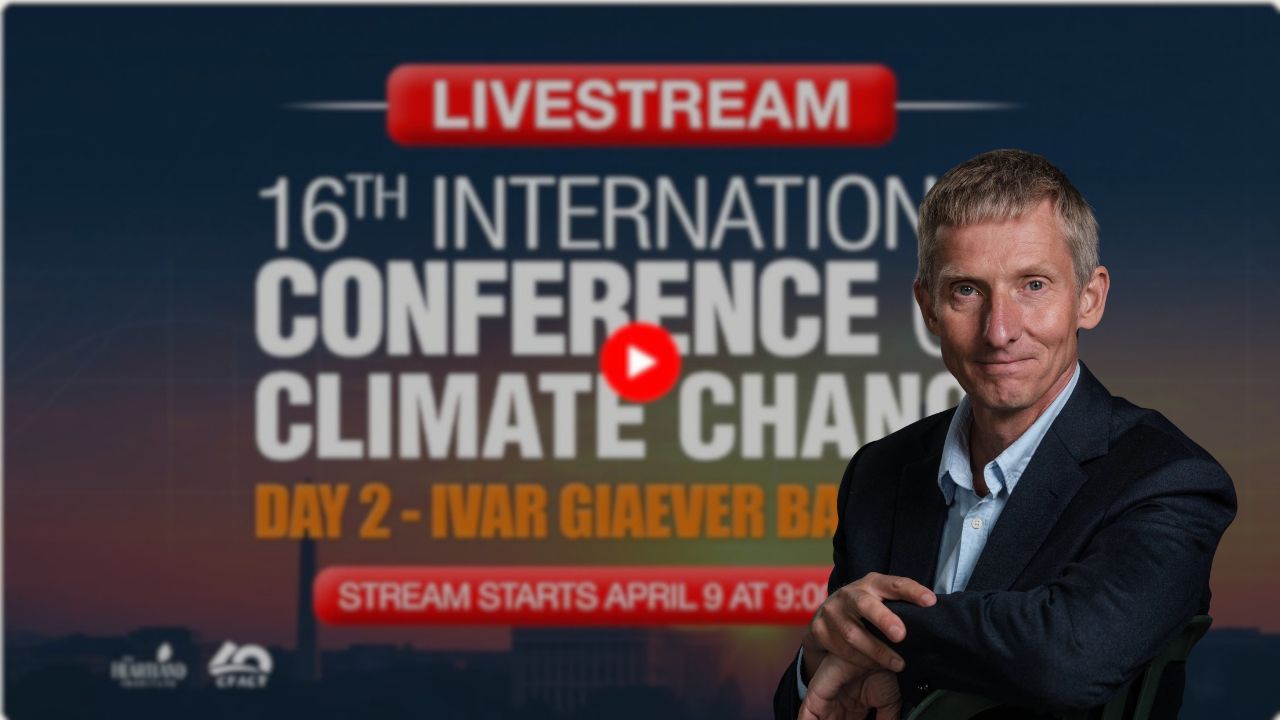
Marcel Crok
Peter Baeten
Date: 11 April 2026
Last week (April 8 and 9), Clintel attended the 16th International Conference on Climate Change in Washington, D.C., organized by the Heartland Institute. Clintel Director Marcel Crok was one of the speakers at this important annual climate-realist conference. The focus of his presentation was on the significant (positive impact of the) greening of the Earth due to the increased concentration of CO2 in the atmosphere. This greening effect is now undeniable and also has a positive impact on global agricultural yields.
New language and vocabulary are needed
Clintel’s American branch, Climate Intel, led by researcher Forrest Frantz, is also closely monitoring this greening effect and contributed to the data presented. Frantz has also put forward striking suggestions regarding the language used in the climate debate, a topic Marcel also addressed in his presentation. Language plays an enormous role in how people experience the climate debate. Climate alarmists have been using this to their advantage since the beginning of the discussion. Crok and Frantz therefore advocate that the climate-realist side also start using new, more positive terms. As a start, Crok offered six concrete suggestions:
Emissions is replaced by: Restoration of CO2 to the air
Fossil fuels becomes: Natural Organic Energy
Carbon dioxide changes into: CO2, Earth’s Oxygen-of-Life
Climate change becomes: climate (because the climate is always changing anyway)
Greenhouse gas is replaced by: Active IR-effect of CO2
H2O and CO2 emissions from power plants becomes: Atmospheric rivers of life
Watch Marcel Crok’s lecture below:


more news

Paul Ehrlich (1932-2026): Farewell to the Long-Lived Failed Prophet of Miserablism – The Population Bomb author lived a long, wealthy, healthy life, an opportunity his work denied to countless others
Paul Ehrlich, author of The Population Bomb, became one of the most influential voices behind modern environmental pessimism. His warnings of inevitable resource depletion and societal collapse shaped decades of policy and public thinking. Yet, as history unfolded, many of his most prominent predictions failed to materialize—raising enduring questions about the consequences of alarmist narratives in science and policy.

US Energy Realism Pays Off in Iran Crisis
The stark contrast between American resilience and European collapse is a permanent lesson. National security should not be subject to the whims of the weather or the approval of climate activists in European capitals.

AI accurately reconstructs temperatures across Antarctica
Artificial intelligence is increasingly being applied in climate science, with mixed results so far. A new study, however, suggests that deep learning can successfully reconstruct Antarctic surface temperatures despite limited observational data. By combining sparse measurements with reanalysis datasets, the researchers claim to achieve high accuracy—offering new insights into long-term temperature trends across the continent.

