COP30 Is Lying To Justify Its Existence
COP30 is building its case on climate misinformation that rewrites the past to claim a victory it never earned.

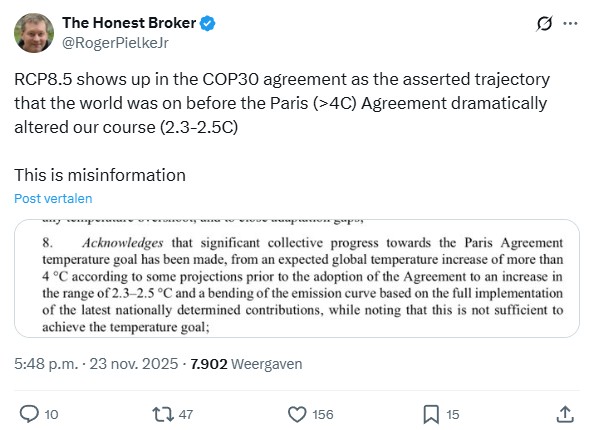
The COP30 agreement claims the world was previously on track for more than 4C of warming until the Paris Agreement heroically “bent” that trajectory down to 2.3–2.5C:

However, “this is misinformation,” says Roger Pielke Jr., Professor of Environmental Studies at the University of Colorado Boulder. It is a fiction built on the carcass of RCP8.5 — the extreme scenario that scientists quietly abandoned years ago because it required impossible coal use, implausible demographics and an economic collapse that never happened.
COP30 is resurrecting an unrealistic, disowned scenario in order to claim that Paris saved the world. The problem is the data. Real-world emissions show no curve bending, no slowdown and no “Paris effect”.
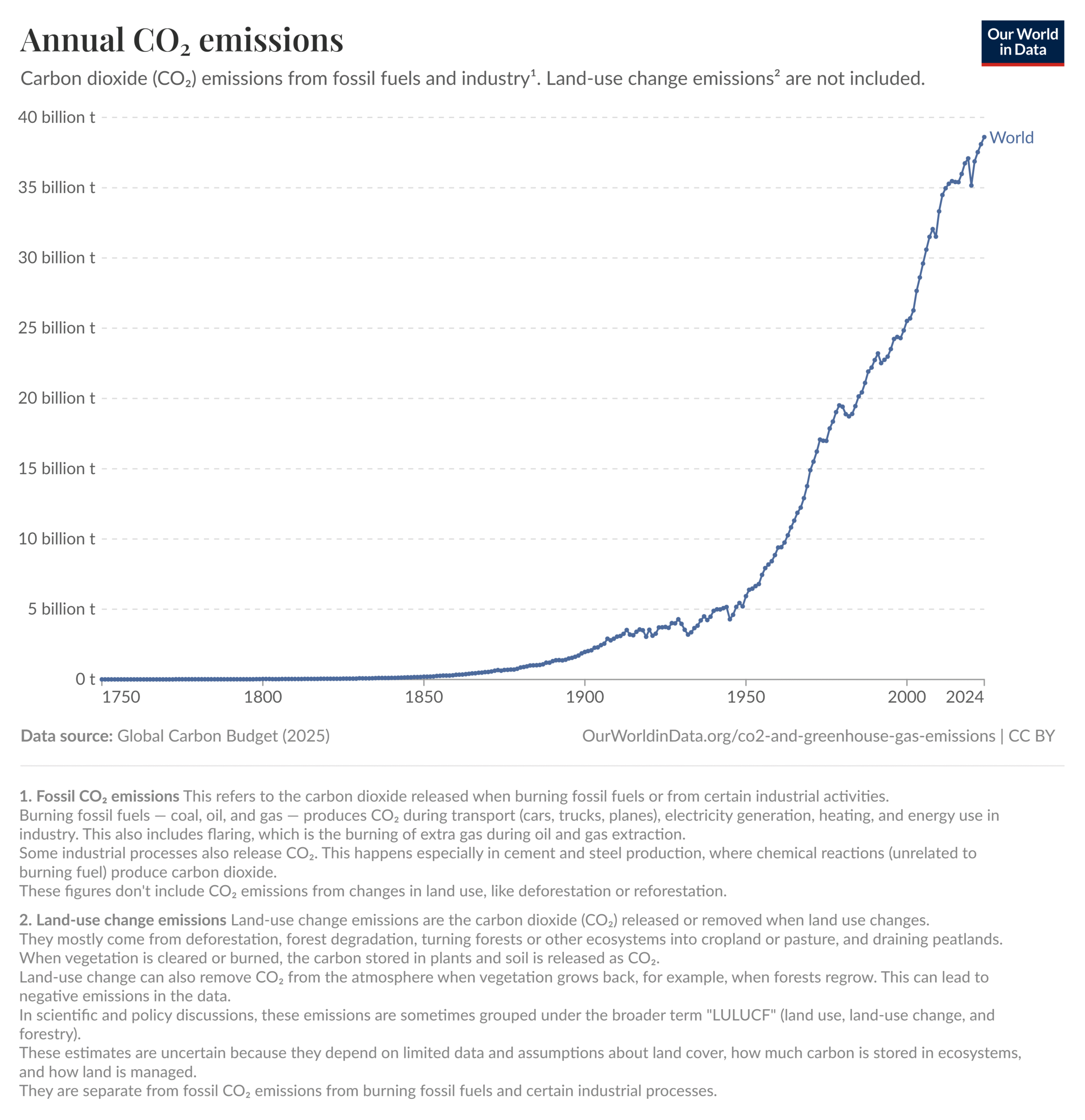
Paris didn’t change emissions, but it did unlock a permanent justification for climate taxation, energy rationing and the dismantling of cheap, reliable power — the foundation of economic prosperity.
COP30 needs a victory to justify its existence. So it has rewritten history: invent a 4C trajectory, pretend Paris knocked it down, and congratulate itself for saving humanity.
The world was never heading for RCP8.5. Paris didn’t change emissions.
Lies.

more news

A Thanksgiving Tribute to Global Warming and CO2
What if we celebrate Thanksgiving with a tribute to global warming and the relative abundance of carbon dioxide (CO2) in our atmosphere? An outrageously scandalous thought, right? To propose we honor what global elites and their compliant media insist are bringing on certain doom. Yet, this is precisely what sound thinking demands.
What is a “climate crisis?”
Before we declare a ‘climate crisis,’ perhaps we need a clear definition — grounded not in fear, but in evidence. This piece argues for quantifiable metrics over rhetoric.
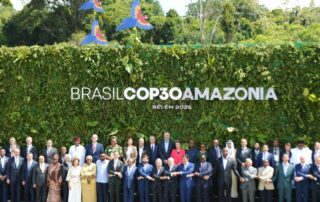
COP30 fumbles the hard issue into the future
According to David Wojick the COP30 climate summit in Belém ended without resolving its toughest challenges — delaying decisions on fossil-fuel phase-outs, climate finance and trade policies until some unspecified “future roadmap.”