
COP30 Is Lying To Justify Its Existence
COP30 is building its case on climate misinformation that rewrites the past to claim a victory it never earned.

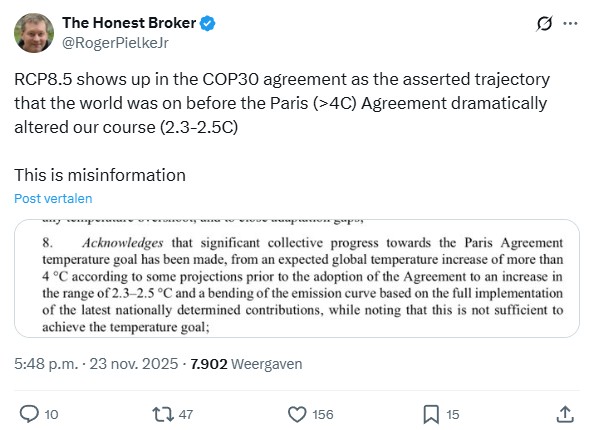
The COP30 agreement claims the world was previously on track for more than 4C of warming until the Paris Agreement heroically “bent” that trajectory down to 2.3–2.5C:

However, “this is misinformation,” says Roger Pielke Jr., Professor of Environmental Studies at the University of Colorado Boulder. It is a fiction built on the carcass of RCP8.5 — the extreme scenario that scientists quietly abandoned years ago because it required impossible coal use, implausible demographics and an economic collapse that never happened.
COP30 is resurrecting an unrealistic, disowned scenario in order to claim that Paris saved the world. The problem is the data. Real-world emissions show no curve bending, no slowdown and no “Paris effect”.
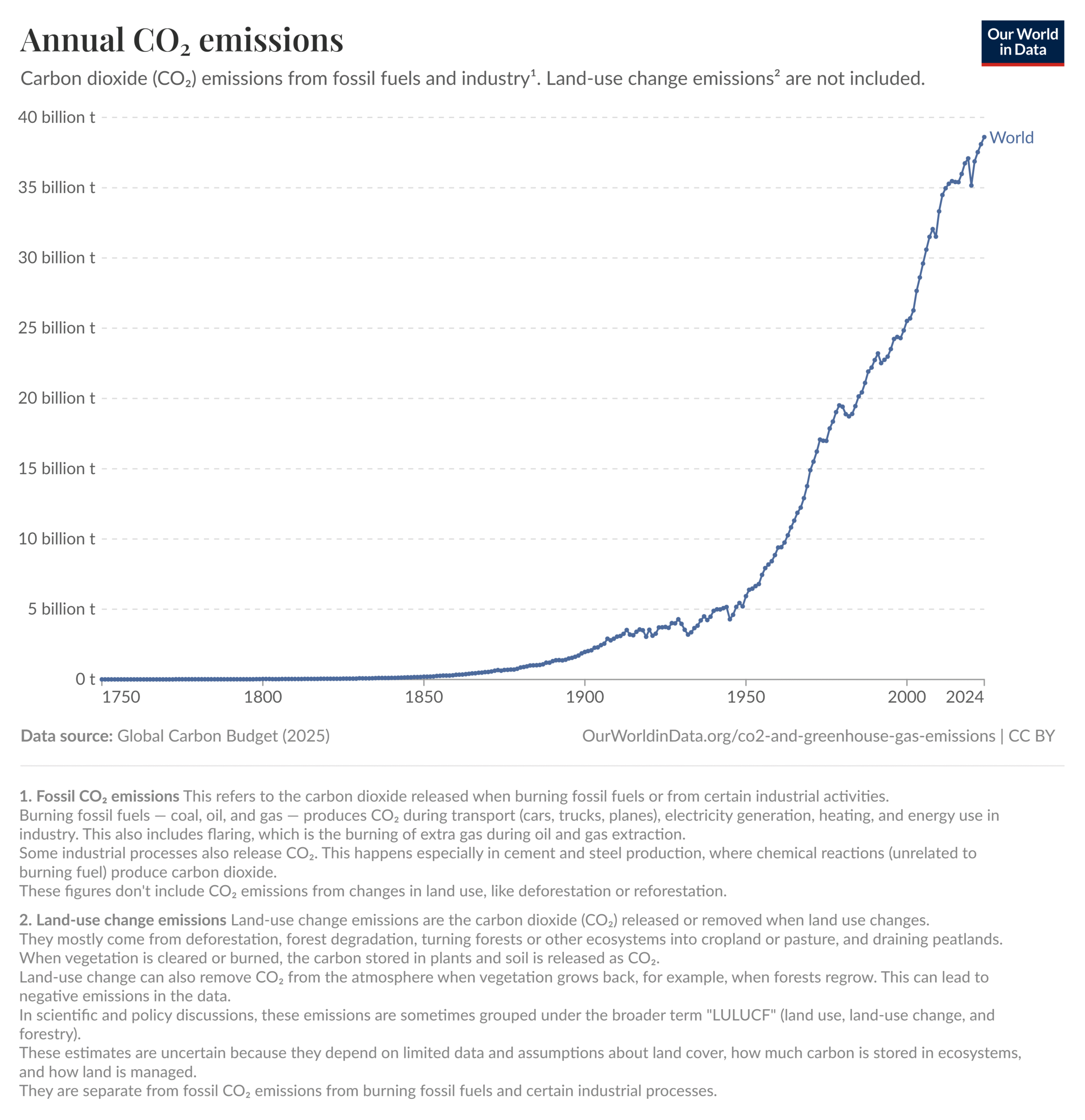
Paris didn’t change emissions, but it did unlock a permanent justification for climate taxation, energy rationing and the dismantling of cheap, reliable power — the foundation of economic prosperity.
COP30 needs a victory to justify its existence. So it has rewritten history: invent a 4C trajectory, pretend Paris knocked it down, and congratulate itself for saving humanity.
The world was never heading for RCP8.5. Paris didn’t change emissions.
Lies.


more news

European energy policy: full speed towards the wall
What do you do when you realise you are heading in the wrong direction? Hit the brakes, right? In Europe, this is not the case. Instead, the answer of European leaders is to accelerate further, opting for an energy transition that is even faster, more ambitious, and more radical. In the meantime, the problems are piling up. A summary of the key facts, makes you wonder desperately: why isn't anyone hitting the brakes?
Abuse of Science: Extreme Event Attribution Studies
Both the mainstream media and government reports have latched on to Event Attribution to fan the flames of climate alarmism. But such studies are deeply flawed, with errors in both science and inter¬pretation, having been created for legal and political rather than scientific reasons, says Ralph Alexander.

New paper: U.S. temperature extremes have declined since 1899
The key takeaway from a new paper by John Christy is that the story of temperature extremes in the U.S. is more complicated than often presented.

