
Energy Expert Dr. Lars Schernikau: Wind and Solar Energy Make Electricity Expensive
Grid-scale batteries are not the solution—they are expensive, do not last long, and are harmful to the environment.

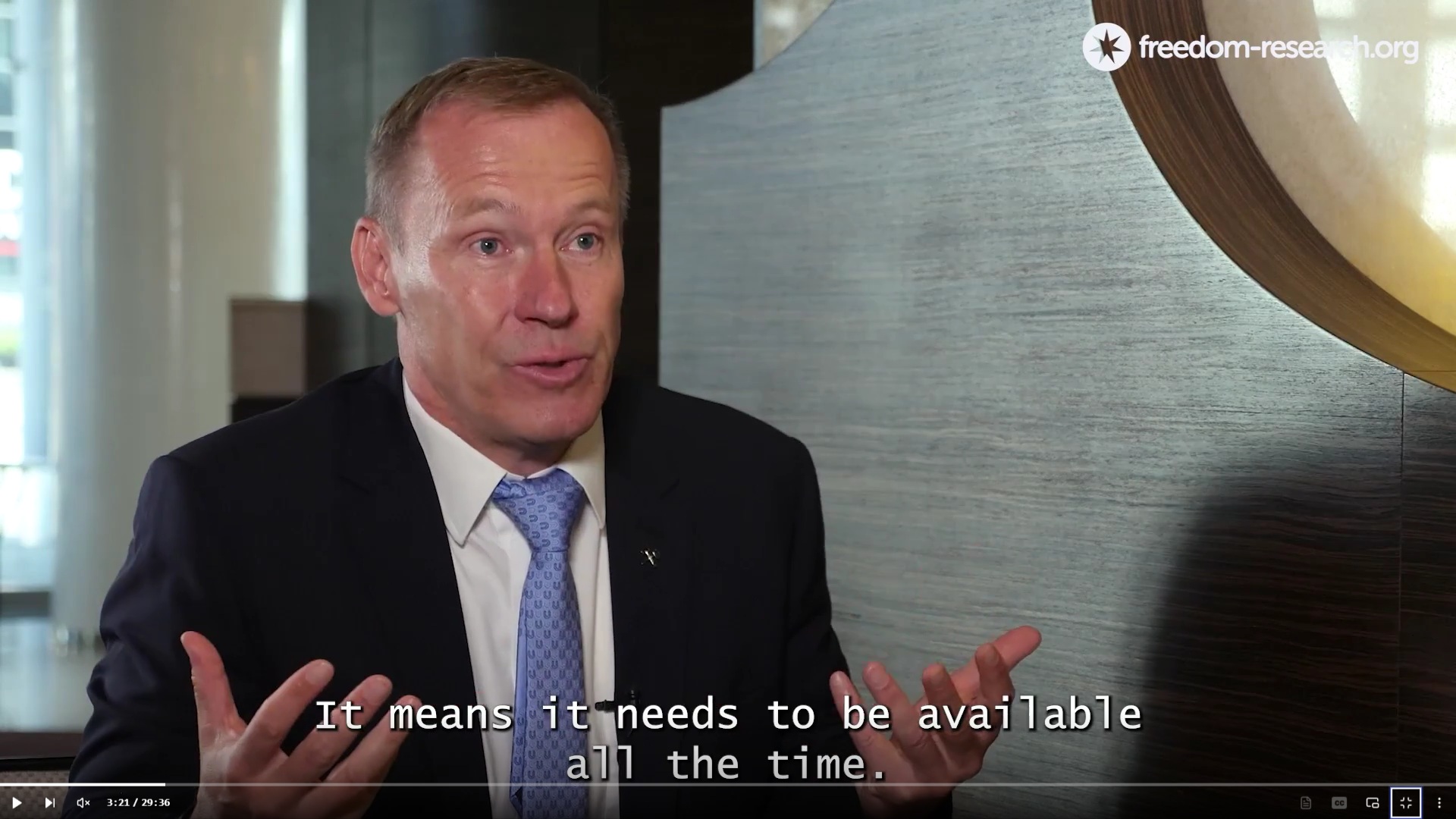
Dr. Lars Schernikau
Hannes Sarv
Date: 3 October 2025
Dr. Lars Schernikau is an energy expert and author who has thoroughly studied the electricity generation system. He says that wind and solar energy production are unstable and, instead of lowering prices, will significantly increase the total cost of electricity generation. In an interview to Freedom Research, Dr. Schernikau explains in detail the requirements of the electricity generation system and why wind and solar energy, which are proclaimed by the authorities to be environmentally friendly, are actually not so, and why the increasingly widespread use of these systems will drive the electricity prices up, rather than reduce them.
Dr. Lars Schernikau explains the fundamental issues with wind and solar energy
In the interview, Schernikau pays particular attention to storage technologies, i.e. batteries. These systems are supposed to supplement weather-dependent wind and solar energy production, i.e. provide us with electricity when the wind is not blowing and the Sun is not shining. However, according to Schernikau, batteries are not the solution because they are extremely expensive and current technologies are capable of storing only a fraction of the energy that we actually need. In addition, Schernikau says that batteries and their production are an environmental nightmare.
Dr. Lars Schernikau is an energy economist and entrepreneur involved in commodity trading. He is the founder, shareholder, and former board member of the German-listed commodity company HMS Bergbau AG and has founded and advised several other companies in the commodity, mining, and energy sectors around the world. He studied at New York University and INSEAD in France and holds a doctorate in economics from the Technical University of Berlin (TU Berlin) in Germany. He advises government agencies, banks and corporations on energy policy issues. He has signed our World Climate Declaration and is also a member of the CO2 Coalition.
Last year, he and Professor William H. Smith published a book that takes an in-depth look at electricity generation systems, their efficiency, environmental footprint, and future options: The Unpopular Truth about Electricity and the Future of Energy.

Hannes Sarv
Freedom Research
This interview by Hannes Sarv with Dr Lars Schernikau was published on 2 October 2025 on the Freedom Research website. Hannes Sarv is a journalist and media specialist.

more news

The First Heatwave of the Year… and the Same Old Narrative
March heatwave climate data - How long term temperature records challenge the climate narrative

The Strait of Hormuz Crisis Shows the World Still Runs on Fossil Fuels
The Strait of Hormuz, one of the world’s most critical energy chokepoints, highlights the continued global dependence on oil and gas. Recent geopolitical tensions have disrupted energy flows, exposing vulnerabilities in global supply chains and triggering emergency responses across Asia. Despite decades of rhetoric about an energy transition, fossil fuels remain indispensable for modern economies, not only for energy but also for agriculture, plastics and pharmaceuticals. The crisis underscores that energy systems are shaped by geography and economics, and that a full transition away from hydrocarbons will be far slower and more complex than often assumed.
The EU’s Nuclear Phase-Out Was a Blunder
Following Friedrich Merz in January, Ursula von der Leyen has now also admitted that the phase-out of nuclear energy was a major ‘strategic mistake’, not only for Germany but for the EU as well. American researcher Roger Pielke Jr. uses some simple calculations to demonstrate the magnitude of the EU’s strategic blunder.

