
Former Czech President Václav Klaus appointed President of Clintel
The Climate Intelligence Group (Clintel) is honoured to announce that Professor Václav Klaus, the former President of the Czech Republic, from today on will be the new president of Clintel, succeeding the current president, Professor Guus Berkhout, who co-founded the Clintel Foundation in 2019 with Dutch science writer Marcel Crok.

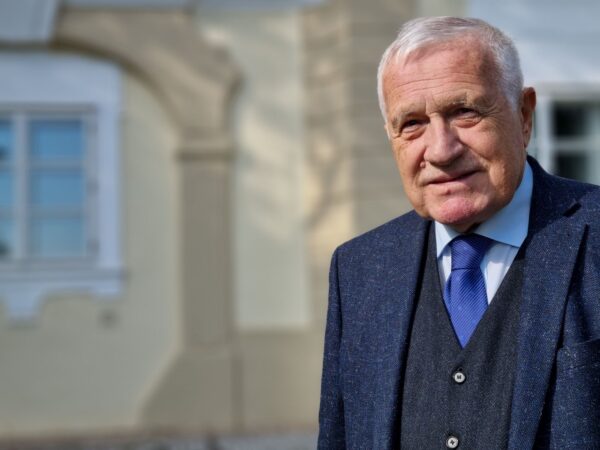
President Václav Klaus
Clintel Foundation
Date: 4 December 2025
The speeches of both Guus Berkhout and President Václav Klaus can be downloaded here.
A recording of the press conference with President Klaus and Clintel director Marcel Crok is available here.
President Klaus has been one of Europe’s most prominent and outspoken critics of climate alarmism. As a politician he saw it straight for what it was: an economically damaging and freedom limiting ideological agenda. Already in 2007 in an op-ed in the Financial Times he wrote: “As someone who lived under communism for most of his life, I feel obliged to say that I see the biggest threat to freedom, democracy, the market economy and prosperity now in ambitious environmentalism, not in communism. This ideology wants to replace the free and spontaneous evolution of mankind by a sort of central (now global) planning.” These words could easily be written today. Which also shows how little progress there has been in the climate debate.
In his farewell speech the outgoing president Berkhout said that “it is not primarily human activity, but the immense forces of nature that drive climate change.” He also emphasized the much more important role of water in all its phases on the climate than the minor role of CO2 and insisted that “climate adaptation is by far the most effective and humane way to reduce victims and damage from extreme weather. Climate mitigation, by aiming for unrealistic emission reductions, has never saved one dollar or one victim.”
In his inaugural speech President Klaus said “that it is our duty to oppose the irrational, populist, and evidently non-scientific climate alarmism.” He added that “we have to search for new ways to make a change – each of us individually and all of us together.”
President Klaus: “We plan to expand our activities both in individual countries and on the global level. We plan to be more active in public debates. We plan to find new supporters. In this respect, we don’t intend to centralize our activities. We will give independence to national groupings and initiatives, and we will welcome their activity.”
Clintel, an independent foundation founded and headquartered in Amsterdam, is the publisher of the World Climate Declaration, which states that “There is no climate emergency”. More than 2000 scientists and professionals from more than 40 nations, including President Klaus, and including the Nobel Prize in Physics 2022 winner Prof. John F. Clauser, have signed the Declaration.
In 2023, Clintel published The Frozen Climate Views of the IPCC, a book that critically examines the 2021 Sixth Assessment Report by the Intergovernmental Panel on Climate Change (IPCC). This book has so far been translated into German, French, Dutch and Danish.
Professor Václav Klaus is a Czech economist and politician who played a key role in the transformation of Czechoslovakia and later the Czech Republic after the fall of communism. He was Minister of Finance of Czechoslovakia (1989–1992) during which he was the main architect of the post-communist economic reforms and privatization. He was Prime Minister of the Czech Republic (1993–1998) and President of the Czech Republic (2003–2013). Klaus was Founder and head of the Václav Klaus Institute (think tank) since 2012. President Klaus is the author of the book Blue Planet in Green Shackles, that has been translated in 18 languages.


more news

Met Office temperature measurements unreliable and systematically biased
The article below by Chris Morrison clearly demonstrates that the reliability of temperature measurements in the United Kingdom is seriously lacking. Based on detailed research, Dr Eric Huxter shows that a large share of recorded temperature spikes is not the result of natural variation, but of artificial influences at poorly located measurement stations. This raises fundamental questions about the quality of the underlying data used for climate reporting and policy decisions.
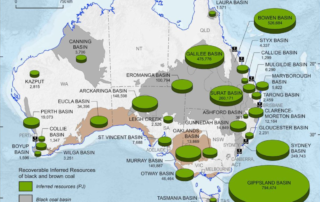
Australia wakes up to brown coal bonanza: 1,000 years of energy
Finally, we see a few key topics hitting the media in Australia, says Jo Nova. National Party leader Canavan even talks about the thousand-year supply of brown coal, and also about a method of turning coal to liquid fuel.
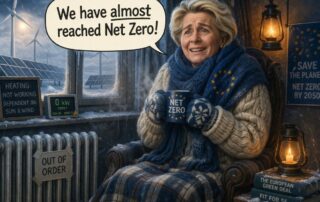
The Strait of Hormuz’s Bitter Lesson for the European Union
In May 2023, Ursula von der Leyen, President of the European Commission, declared that the fossil-fuel-based growth model is “simply obsolete.” The partial blockade of the Strait of Hormuz starkly exposes the irony of that statement, says Samuel Furfari.

