
Ignoring EV Pollution for Fake Climate Crisis
The silent, gleaming chassis of an electric vehicle (EV) glides through a pristine forest or a spotless, futuristic city. The message is simple: The driver is saving the planet. It is a narrative built on a convenient, calculated omission.

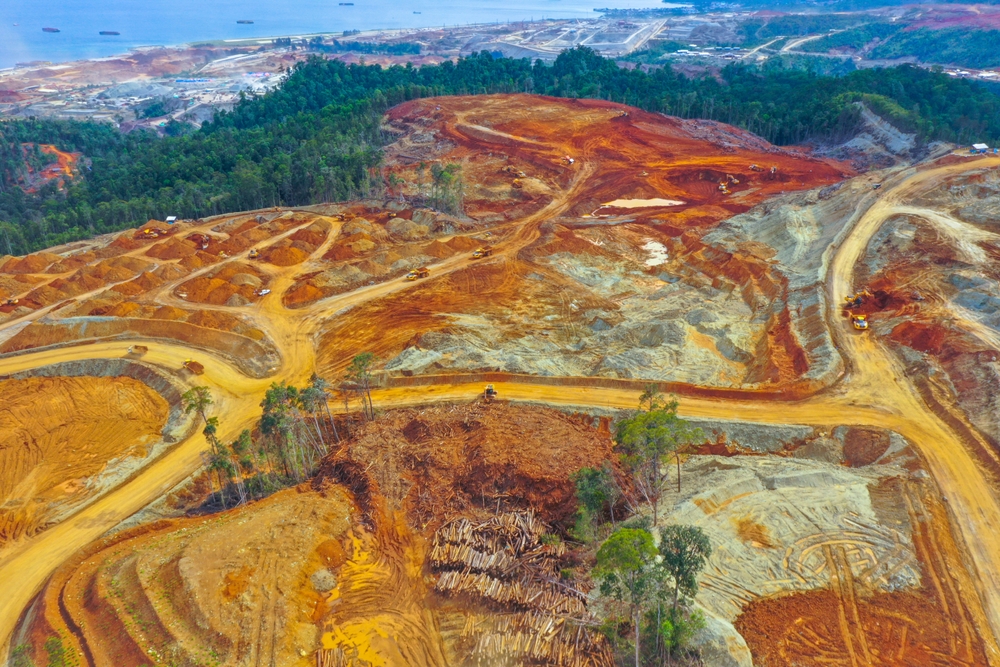
Drone photo view of mining activities in the laterite nickel ore mining industry,
Weda Island, Halmahera, Indonesia. Source: Shutterstock
Vijay Jayaraj
Date: 2 December 2025
Pull back the curtain on the EV supply chain – starting with Indonesian nickel mining and extending through rare-earth mineral processing in China – and there is revealed a far less immaculate picture. The “zero tailpipe emissions” tag is a masterpiece of misdirection, diverting attention away from an environmental hellscape.
In Sulawesi, Indonesia, conveyor belts stretch across once-lush forests belching dust into the air, while smokestacks stain the sky with a toxic haze. The rush to supply the West’s EV appetite has triggered a nickel boom, but the cost lands squarely on the people and ecosystems of Indonesia.
So, why single out nickel? Today’s batteries – the heart of EV propulsion – are built on nickel, of which Indonesia is the largest producer. Without Indonesian nickel, the supply chains for “clean” vehicles grind to a halt. And every new electric SUV delivered to showrooms leaves behind the environmental cost imposed on these Indonesian communities.
What exactly billows from Indonesian smokestacks and seeps from factory discharges into rivers and soils? A partial list includes sulfur dioxide, a corrosive gas; nitrogen oxides and microscopic particulate matter, both constituents of smog; chromium; ammonia; hydrogen sulfide; and heavy metals such as lead, arsenic, cobalt and cadmium. All are pollutants with potential effects on health.
Fishers from Sulawesi and North Maluku lament vanishing shoals and toxic mud spilling into the sea. Even the air is said to taste of metal and ash. These are the lived experiences of thousands of Indonesians, not isolated anecdotes.
The battery is only part of the story. The EV’s electric motor, as well as the machinery of giant wind turbines that might charge the battery, require powerful magnets made from rare-earth minerals. And more than 90% of the world’s supply of these processed minerals comes from China.
The processing of these minerals has left in its wake an ecological ruin that is glossed over in Western policy debates.
Cities like Baotou in Inner Mongolia are infamous for dystopian toxic lakes, which are artificial ponds filled with black sludge contaminated by thorium, uranium and hazardous chemicals. Acidic wastewater, the byproduct of mineral extraction and processing, leaks into the environment, poisoning farmland and waterways.
Toxic runoff has polluted Southeast Asian rivers such as the Malihka and N’Mai Hka, which are headwaters of the great Irrawaddy and Mekong rivers. Water supplies for millions of people in Thailand, Laos, Cambodia and Vietnam have been tainted.
Sadly, “green” enthusiasts are not interested in real pollution but rather in the demonization of carbon dioxide (CO2). The alarmist movement requires an invisible, ubiquitous bogeyman to panic people in relinquishing their money and sovereignty.
The entire “net-zero” edifice is built on the claim that CO₂ is a pollutant that is causing a climate crisis. This is the greatest deception of our time. Many countries do not regulate CO₂ for the protection of public health, as common sense and good science would dictate. After all, CO2 is a gas of life, sustaining plants and every animal that depends on them for food. Each of us exhales two pounds of CO2 daily.
The mass evangelism for EVs and wind turbines is not a noble crusade to save the planet. It is a cynical ploy to enrich a small cadre of green-tech investors and empower global bureaucrats.
The intent here is not to halt the use of nickel or rare earths, both of which serve many useful purposes. The point is, the “green” agenda is not green. It is a dark marketing campaign for a self-serving ideology willing to sacrifice whole regions to its toxic byproducts.

This commentary was first published at PJ Media November 25.

Vijay Jayaraj
Vijay Jayaraj is a Science and Research Associate at the CO2 Coalition, Fairfax, Virginia. He holds an M.S. in environmental sciences from the University of East Anglia and a postgraduate degree in energy management from Robert Gordon University, both in the U.K., and a bachelor’s in engineering from Anna University, India.

more news
Yet Another Reason Why Wind And Solar Will Never Work
The idea that wind and solar power can easily replace fossil fuels sounds appealing. But behind this optimistic narrative lie complex technical challenges, such as intermittency, grid stability, and the crucial roles of synchronization and inertia in maintaining a reliable electricity system, concludes Francis Menton after a powerful presentation by Kathryn Porter.
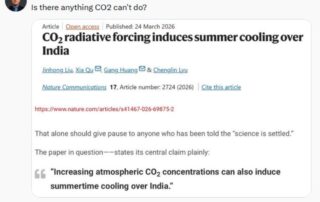
CO₂ Can Cause Cooling Too? Climate Models Say Yes (Sometimes)
As Dr. Matthew Wielicki dryly put it: “Is there anything CO₂ can’t do?” The study behind that remark claims that rising CO₂ levels may even lead to regional cooling under certain conditions—highlighting just how flexible—and uncertain—climate model outcomes can be.
Press release GWPF: Event Attribution Studies are “a blot on science”, says Ralph B. Alexander
Extreme weather attribution studies are based on flawed logic and misleading statistical practices, according to a new report by The Global Warming Policy Foundation (GWPF). Author Ralph B. Alexander argues that these studies, which link individual weather events to climate change, are driven more by political and legal agendas than by robust scientific evidence.

