
What Climate Crisis? Indonesia Taps Fossil Fuels
Indonesia is engineering a spectacular revival, rejecting the economic suicide of Western climate mandates to reclaim its energy sovereignty and resurrect its historical blueprint for prosperity, says Vijay Jayaraj.

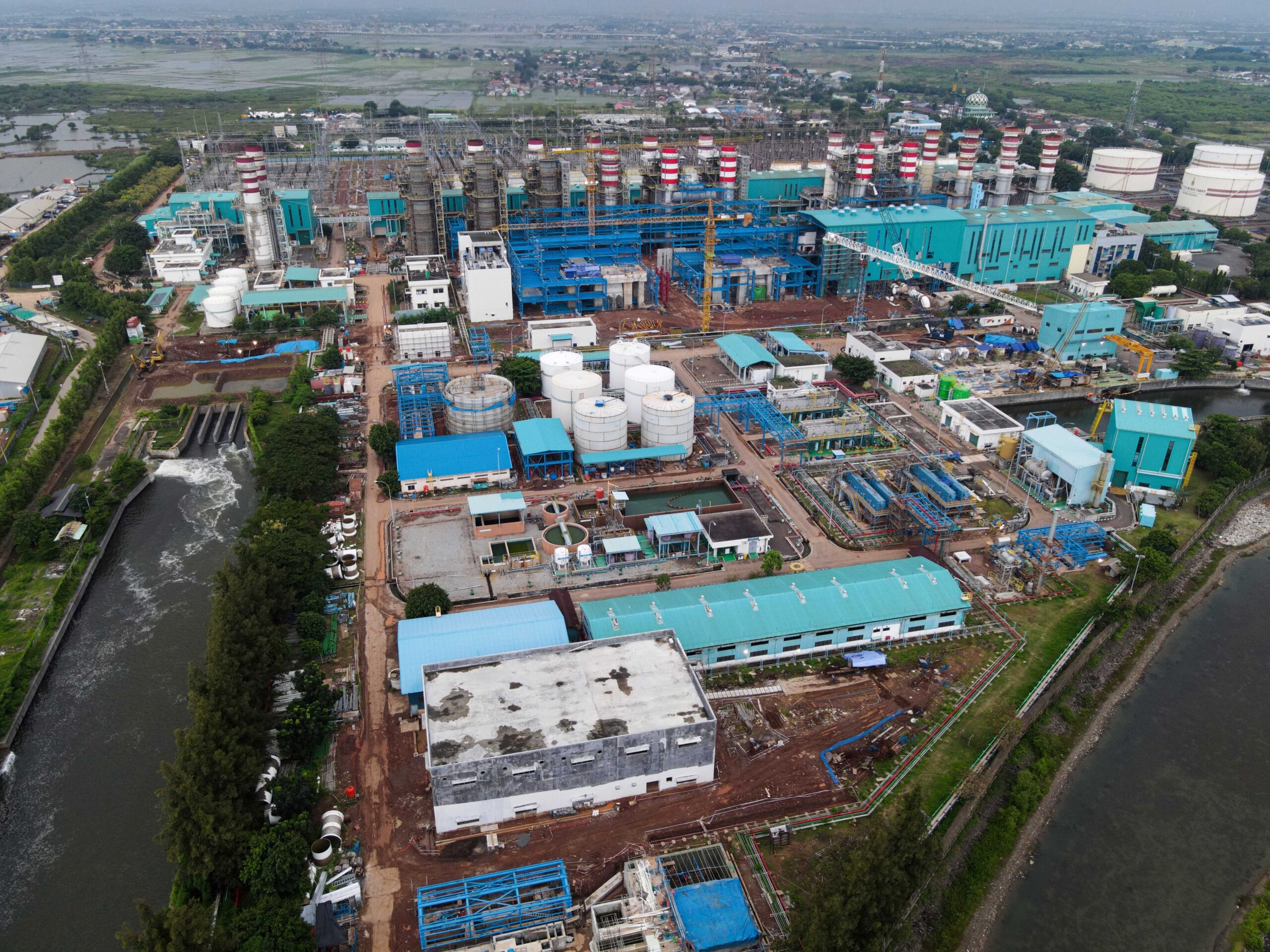
Oil refinery and petrochemical plant in Bekasi, Indonesia. (Source: Shutterstock)
Vijay Jayaraj
Date: 25 June 2026
For years, Indonesia, with the world’s fourth largest population, was part of a global chorus of climate commitments. Like many others, the government had embraced a moral pretense behind the diplomatic language of reducing emissions of harmless greenhouse gases in the quixotic pursuit of an energy transition to save the planet.
However, governments reveal their true convictions not through speeches or carefully worded communiqués but through investment decisions, regulatory priorities, and infrastructure strategy. By that measure, Indonesia has delivered a blunt message to the world: Hydrocarbons remain indispensable.
Going full throttle with fossil fuel development
Indonesia is not a rich country that can afford to indulge in ideological experiments. Home to nearly 280 million people spread across thousands of islands, it is a vast, fast-growing nation with expanding industrial ambitions and enormous developmental demands. The millions of Indonesians climbing out of poverty cannot tolerate power shortages, expensive fuel imports, or fragile supply chains.
Accordingly, Indonesia’s Energy and Mineral Resources Ministry has emphasized the creation of a fair and attractive investment climate for oil and gas developers. To encourage domestic production, officials have promised equal treatment across regulatory frameworks, balancing the interests of state-owned enterprises, contractors, regional governments, and domestic entrepreneurs.
In May, Indonesia moved to auction 13 new oil and gas blocks, part of a broader push to keep hydrocarbons at the center of its energy strategy. This includes frontier areas in Natuna, East Kalimantan, North Kalimantan, East Nusa Tenggara, Papua, and the Arafura Sea, with large resource estimates attached to several of them.
At the same time, British multinational BP was reported to have won major acreage awards in Indonesia, while INPEX Corp., Mubadala Energy, Medco Energi, Bumi Armada, Proteknik Gagah Energi, and Sele Energi also picked up pieces of the country’s new upstream push. BP walked away with three production contracts. Two sit near its existing Tangguh liquefied natural gas (LNG) operations in Bintuni and Drawa. The third, Barong, it shares with Japan’s INPEX Corp. These wins build on proven resources and promise steady output for years.
INPEX is pushing toward an investment of more than $20 billion in the massive Abadi natural gas field near Indonesia’s maritime border with Australia. The project is expected to produce annually 9.5 million metric tons of LNG and deliver daily 150 million cubic feet of pipeline gas to Indonesia’s domestic market.
By aggressively auctioning oil blocks and courting billions in LNG investments, Indonesia joins a growing coalition of practical nations. When a government aligns state assets with private enterprise to maximize oil extraction, you know they have abandoned the suicidal dictates of the climate lobby. They want the fuel, and they want it now.
It proves the country is not merely paying lip service to the fossil fuel industry. They are tearing down bureaucratic barriers to ensure drills penetrate the ground and hydrocarbons flow. Net-zero pledges made at international forums vaporize in the political heat of inflation and energy shortages.
Reclaiming Indonesia’s golden era of energy production
Decades ago, Indonesia dominated the global energy market as an OPEC member and as Asia’s largest oil and gas producer. From the late 1970s through the early 2000s, the country ranked as the top exporter of LNG. With its Bontang and Arun facilities shipping more than one-third of all globally traded LNG throughout the 1990s, Indonesia powered economies across the region.
The subsequent decades brought decline through maturing fields, underinvestment, regulatory uncertainty, and rising domestic demand, flipping Indonesia from exporter to importer.
Now, the wave of drilling-block auctions, fresh acreage awards and the luring of private capital signals a deliberate return to the model of energy-led development, one that treats domestic supply, fiscal strength, and poverty reduction as more urgent than vacuous promises to change the climate.
Jakarta is engineering a spectacular revival, rejecting the economic suicide of Western climate mandates to reclaim its energy sovereignty and resurrect its historical blueprint for prosperity.
This commentary was first published at California Globe on 18 June 2026.

Vijay Jayaraj
Vijay Jayaraj is a Science and Research Associate at the CO2 Coalition, Fairfax, Virginia. He holds an M.S. in environmental sciences from the University of East Anglia and a postgraduate degree in energy management from Robert Gordon University, both in the U.K., and a bachelor’s in engineering from Anna University, India. He served as a research associate with the Changing Oceans Research Unit at University of British Columbia, Canada.
The article you have just read was made possible by our donors.
Every day, Clintel publishes articles on climate, energy and science. We also translate and share international analyses in multiple languages, produce videos, publish reports and organize conferences and events around the world.
We receive no government funding and rely entirely on the support of our donors. Your support helps us promote independent research and contribute to a more open and balanced debate on climate and energy issues.
Would you like to support our work? Choose the option that suits you best:
• Become a Friend of Clintel – support us with an annual contribution
• Make a recurring donation – provide ongoing support and help us plan ahead
• Make a one-time donation – every contribution helps
Thank you for your support.

more news
More on the New Climate Report from the US DOE
This report will be a very useful mechanism to allow much more open dialogue on the climate change policy journey that will affect us all. It’s clear from this report that Climate science is far from settled and that the past frozen narrative of the climate emergency is over.

The Ethics of Uncertainty: Science as a Public Dialogue
The title of this post is borrowed from Marcoen Cabbolet’s recent paper. Its abstract is the following, but I warmly recommend reading the entire paper.

Chris Martz 2000th signatory of the World Climate Declaration
An Interview with Chris Martz.

