
Interview with Demetris Koutsoyiannis: “The Climate Is Regulated by Nature”
In this interview with the Hungarian magazine Demokrata, Professor Demetris Koutsoyiannis reflects on science, truth, and climate discourse following his lecture at the Hungarian Academy of Sciences. He offers a critical perspective on current climate narratives and emphasizes the role of natural processes in shaping the climate.

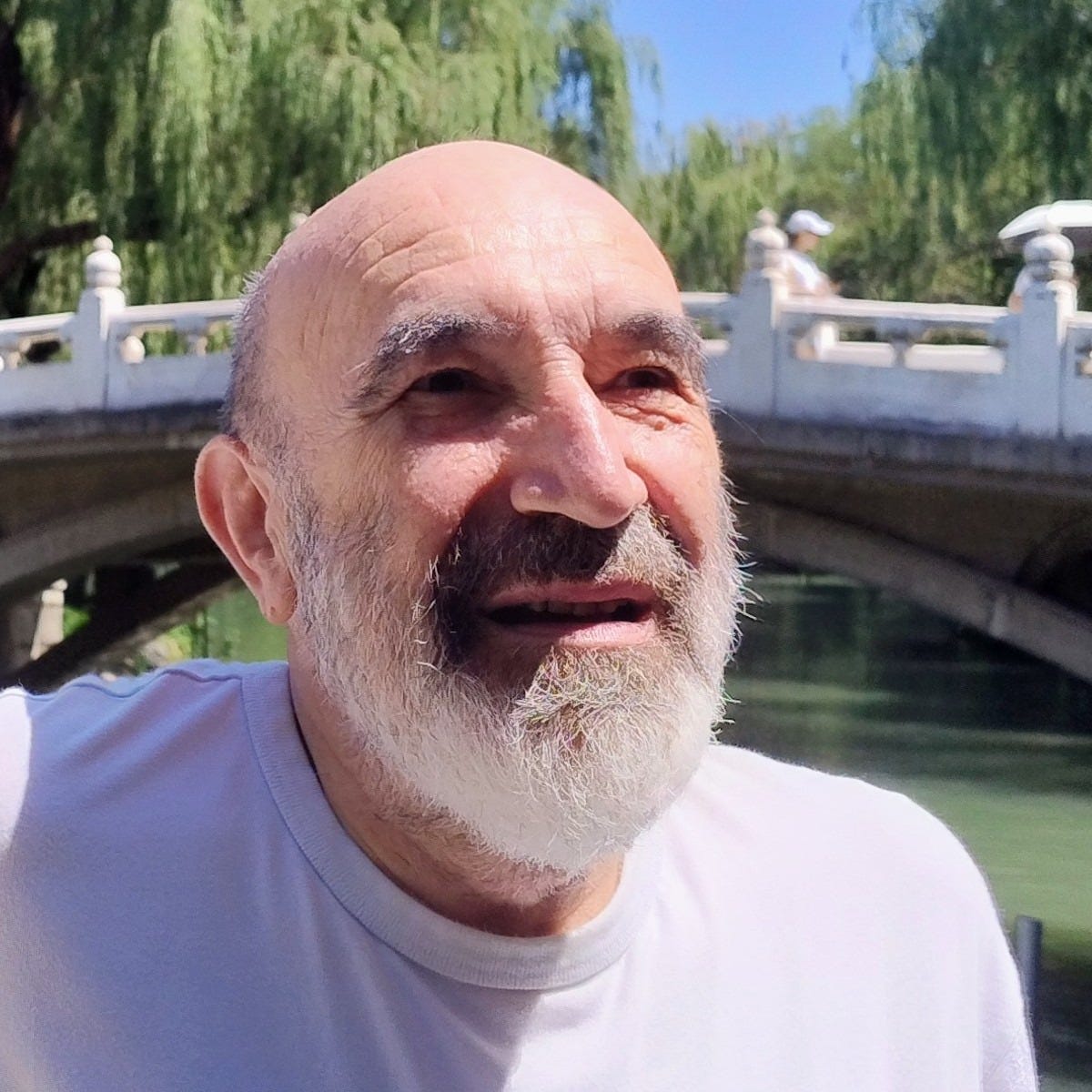
Demetris Koutsoyiannis
Clintel Foundation
Date: 20 January 2026
CLIMATE CHANGE SCAM IS CRUEL AND STUPID
The climate is regulated by nature
What we see today is a mixture of scientific knowledge and politics. An endless series of disaster predictions, the promotion of ideas for saving the planet, and the reversal of cause and effect — as noted by Demetris Koutsoyiannis, professor at the National Technical University of Athens, with whom we spoke after his lecture at the Hungarian Academy of Sciences.
You come from Greece, the cradle of science. What prompted you to challenge the official climate narrative and question the “almighty” role of carbon dioxide in global warming?
The search for truth. Socrates believed in the triumph of truth, and according to the ancient Greeks, truth can only be known through a constant practice of doubt and critical thinking. Socrates’ approach was that in order to seek truth, one must always ask questions, because this is the only way to acquire knowledge. According to Aristotle, in order to serve truth, philosophers and researchers must sacrifice even their good relationships with their beloved friends, because there is nothing more precious (valuable) in the world than truth. As a Greek, I try to follow Aristotle, and this determines my relationship with science.
How does this relate to the conference?
A question was asked, What prevents consensus on climate change. I replied that there is no consensus because there are still researchers who seek the truth, even at the cost of sacrificing their own financial security or personal relationships.
However, there are also rumours that the so-called climate sceptics are allegedly financed by the oil lobby. What is your opinion on this?
Fortunately (or unfortunately), the opposite is true—we sceptics are not getting any money. The oil lobby is rather paying those who want to ban carbon dioxide emissions. Most money is given to climate research, and those who do not accept the prevailing dogma receive no support whatsoever. The world’s largest project was previously the Manhattan Project, a research and development project during World War II aimed at developing atomic weapons. In recent decades, much more money has been spent on climate research to spread the dogma that human carbon dioxide emissions are threatening the future of the planet. This is big money, but above all, it is power: since there are no national borders in the atmosphere, this is a global project that prepares for the governance of a one-world empire by breaking down borders.
While there is an increasingly lively debate in scientific circles about climate change and its causes, you stated in your presentation that today’s climate science is not science at all. What do you mean by that?
What we see today is a mixture of scientific knowledge and politics. References to consensus, censorship and suppression of opinions that differ from the official narrative, labelling those who express dissenting opinions as deniers, an endless series of disaster predictions that almost always prove to be wrong, the promotion of ideas about saving the planet, and the reversal of cause and effect. This is not science, but deception. It is foolish and cruel to replace scientific terminology with political slogans and ambiguous language.
Can you give an example?
The first is the term “climate change.” It is as if the climate had remained unchanged for thousands of years and only began to “change” a few decades ago. The reality, however, is that the climate has always changed throughout the Earth’s entire 4.5 billion-year history. This is evidenced, for example, by the longest measured time series on Earth, which shows changes in the water level of the Nile over 849 years. In contrast, the climate crisis with which humanity is being frightened is purely a political construct and has nothing to do with reality. The same is true of the term “greenhouse effect.”
Why?
There is no atmospheric greenhouse effect. The functioning of the atmosphere is nothing like what happens in a greenhouse. The atmosphere is not isothermal, and there is not a plastic dome that prevents airflow. There is no plastic sheet covering us. Consequently, there is no such thing as a “greenhouse gas.” In the standard atmosphere, the atmospheric radiation effect (ARE) is dominated by water: water vapour and clouds. Carbon dioxide plays a very minor role. The increase in atmospheric carbon dioxide concentration has not produced any noticeable effect. The atmospheric carbon dioxide balance is dominated by natural processes. Human carbon dioxide emissions (from fossil fuels, for example) account for four percent of total emissions.
What do you mean by “reversal of cause and effect”?
There is no proof that an increase in atmospheric carbon dioxide concentration causes a rise in temperature. On the contrary, paleoclimate and modern observational data support a reverse causal relationship: temperature rises precede carbon dioxide level changes, so the increase in carbon dioxide levels is not the cause, but the effect. A consequence. However, climate models suggest the opposite causal relationship.
What is your methodology based on?
Since we identified problems with existing methods, we developed a new one to approach causality. Causality plays a key role in the entire knowledge tree, from philosophy and natural sciences to technological and socio-political research, but there are significant unresolved problems. The causal relationship in our method is of the “hen or egg” type, i.e., bidirectional. We applied this to the relationship between temperature and carbon dioxide, which led us to conclude that the generally accepted causal direction can be ruled out because it violates the necessary condition. In contrast, the temperature — carbon dioxide causal direction is probable. Extensive analyses have led to the only possible conclusion that temperature change occurs first, followed by a change in carbon dioxide concentration. This conclusion applies to both proxy and instrumental data, at all time scales and time intervals.
What causes the increase?
The dynamics of atmospheric carbon dioxide can be expressed mathematically solely in terms of natural processes. Carbon isotope data reflect changes in the isotopic composition of the atmospheric carbon dioxide, with no trace of human influence. They show that the observed changes are the result of natural processes.
So what is causing global warming?
The rise in temperature in the 21st century is consistent with changes in shortwave radiation (SW), that is, solar radiation. The Earth’s albedo is the planet’s ability to reflect solar radiation back into space. When absorption is total, the albedo is zero, and when reflection is total, it is one. In the 21st century, the Earth’s albedo has decreased, meaning that the absorbed solar radiation absorption has increased.
Is the reason for this known?
Not entirely. The change in albedo is probably related to the Earth’s surface rather than the atmosphere; it is probably related to the greening of the Earth. Living organisms like warmth. The changes taking place in the atmosphere are natural processes, the result of respiration and photosynthesis. The Earth is greening, which expands the biosphere and makes it more productive. I think we should be happy about this.
This interview was previously published on climath.substack.com by Demetris Koutsoyiannis. The interview by Hernádi Zsuzsa was published in Hungarian in ‘Demokrata’ on 13 January 2026. It was translated into English by Koutsoyiannis using DeepL.

more news
Why the CO₂ theory can’t be allowed to fall down
Director Martin Durkin and producer and podcaster Tom Nelson, both known for the award-winning documentary “Climate: The Movie“, launched the initiative GorillaScience last year.

Professor Norman Fenton: An Anatomy of Cancellation
a highly distinguished university professor was persecuted for merely doing his scientific work: founded on evidence and proper reasoning, questioning scientific theories
Blackout
Blackout It seems that the Spanish government has no intention of revealing the true cause of the blackout of April 28. That is why we share the article below by Fernando del Pino Calvo Sotelo, which he published on his website on May 9. publications [...]

