
Marc Morano: the best time for climate realism in the last 50 years
At the 16th ICCC in Washington, D.C., Marc Morano argues that the global climate agenda is weakening, calling this the most promising moment for climate realism in the past 50 years.

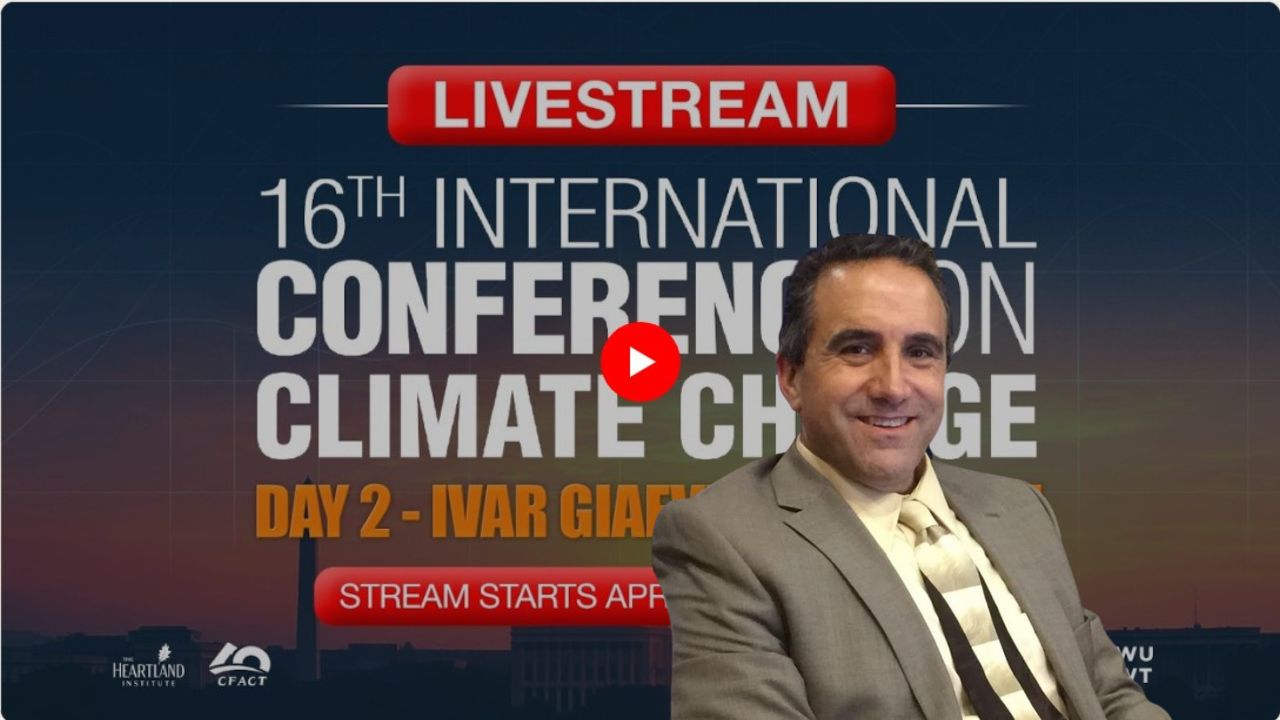
Marc Morano
Marcel Crok
Date: 12 April 2026
The final talk of the 16th International Conference on Climate Conference in Washington DC (8 and 9 April) was given by Marc Morano of the website climatedepot.com. Morano is a longtime follower of the climate agenda (he visited close to all the yearly Conference of the Parties, COP’s). He gave a fascinating overview of how the climate agenda has been crumbling down in the past year or so, not only in the US but around the globe (although Europeans maybe notice this less). He concluded with the remark that we live in the best times for climate realism in the last 50 years.
That’s all good news, but Morano also warned that we aren’t there yet and that the forces behind the climate agenda can or will pop up again, for example these days in the form of energy lockdowns because of the crisis in the Strait of Hormuz. So we have to be very vigilant. But the fact of the matter is that Trump, Chris Wright and administrator Lee Zeldin (who spoke at the Conference) are punching big holes in the climate agenda currently and that the other side is not fighting back at all. They seem to have given up, maybe because of a lack of funding (Bill Gates, Jeff Bezos, Larry Fink all moved away from the climate agenda, partly or mainly because of their interests in AI for which you need dispatchable energy).
The Conference in Washington is organised every year by the Heartland Institute. Clintel and The Heartland Institute (and maybe other organisations) have serious plans to organise next year’s conference in The Netherlands.
The complete recordings of both days (in both rooms) are available on the conference website. You can see the presentation by Clintel Director Marcel Crok: here.
Watch Marc Morano’s lecture below:


more news
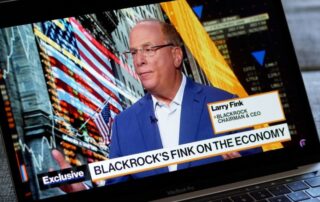
BlackRock CEO Abandons Climate Delusion for Investor Needs
BlackRock CEO Larry Fink has publicly shifted toward what he calls energy pragmatism, admitting that society now demands a balanced approach to meeting power needs rather than adherence to rigid climate agendas. This could be a pivotal moment for global energy policy, as one of the planet's most powerful financial players steps back from decades of ill-advised “green” mandates.

The First Heatwave of the Year… and the Same Old Narrative
March heatwave climate data - How long term temperature records challenge the climate narrative

The Strait of Hormuz Crisis Shows the World Still Runs on Fossil Fuels
The Strait of Hormuz, one of the world’s most critical energy chokepoints, highlights the continued global dependence on oil and gas. Recent geopolitical tensions have disrupted energy flows, exposing vulnerabilities in global supply chains and triggering emergency responses across Asia. Despite decades of rhetoric about an energy transition, fossil fuels remain indispensable for modern economies, not only for energy but also for agriculture, plastics and pharmaceuticals. The crisis underscores that energy systems are shaped by geography and economics, and that a full transition away from hydrocarbons will be far slower and more complex than often assumed.

