
How Roger Pielke Jr. Became Voldemort in Climate Science
Climate scientist and public-policy scholar Roger Pielke Jr. argues that the climate debate has become increasingly detached from the underlying evidence. In a wide-ranging interview on the Love Journalism show, Pielke discussed extreme weather, climate scenarios, decarbonisation, energy policy, political polarisation, journalism and his transition from academia to becoming one of Substack’s most widely read climate writers.

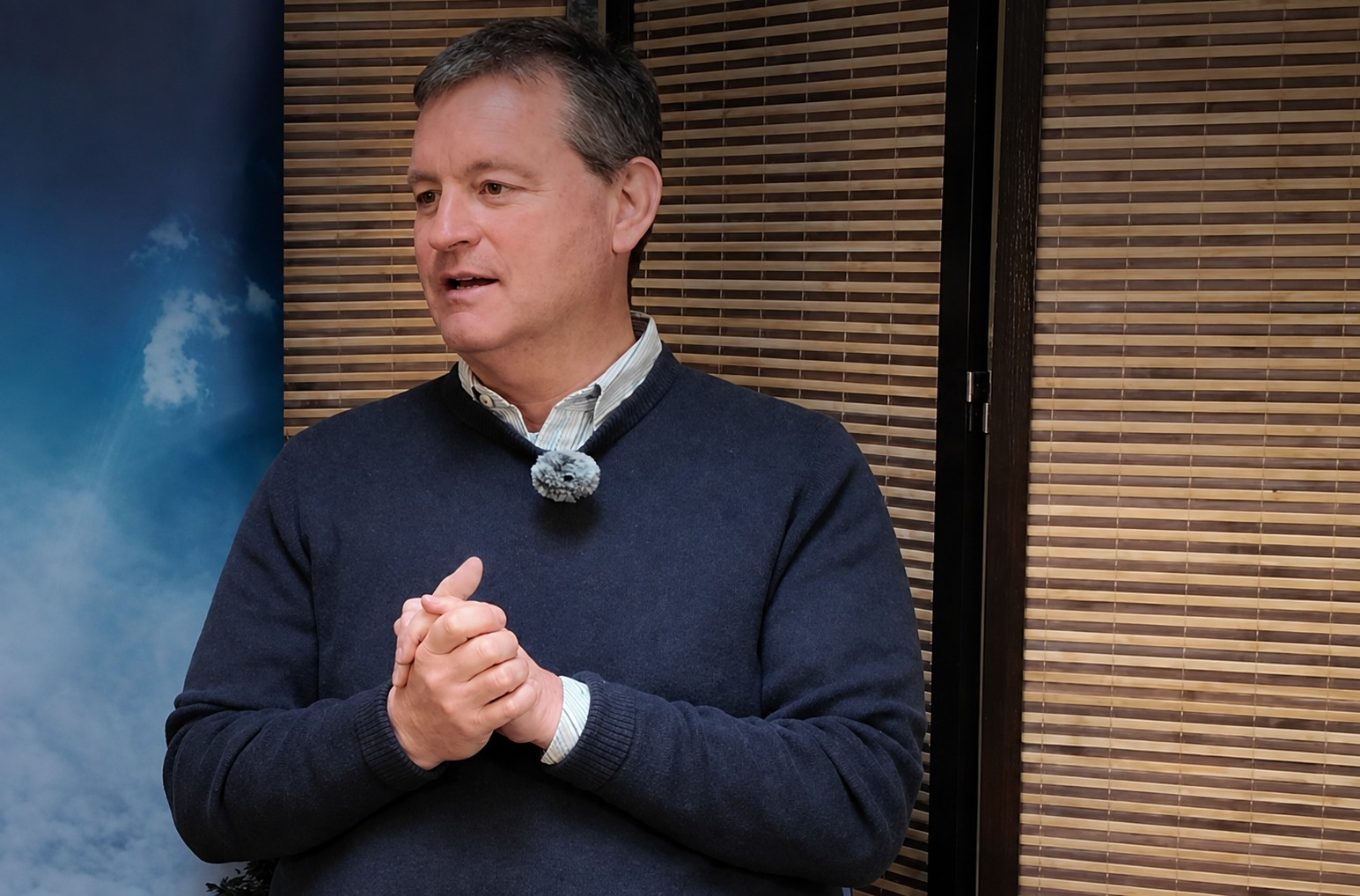
Roger Pielke Jr.
Clintel Foundation
Date: 21 August 2026
Pielke, a senior fellow at the American Enterprise Institute and author of The Honest Broker Substack, now has more than 40,000 subscribers in 174 countries. He says the audience is politically diverse and highly educated, and that writing publicly has become an integral part of how he develops his ideas. He publishes two or three times a week, but writes considerably more than he publishes. “Writing is how I think,” he explains, describing the interaction with readers as a form of extended peer review.
You can see the full interview here:
Pielke’s approach reflects what has become a central theme of his career: resisting simple, politically convenient narratives in favour of examining what the data actually show. He says that as people become more knowledgeable about a subject, the world increasingly appears in “shades of gray” rather than black and white. In an era when almost every issue is presented as a battle between left and right, Pielke believes there is a substantial audience for nuance—even when the conclusions do not fit readers’ political preferences.
Extreme weather and the problem of attribution
Much of the interview centred on extreme weather, a subject Pielke has studied since the 1990s. His interest began during a postdoctoral position at the National Center for Atmospheric Research, where his mentor showed him a 1996 Newsweek cover linking hurricanes, floods and blizzards to global warming. Pielke says that even at the time, many of the claims being made about worsening extreme weather did not correspond with the available data.
His research subsequently demonstrated that the increasing economic costs of disasters were largely explained by growing populations, wealth and development in areas exposed to hazards—not necessarily by changes in the frequency or intensity of the hazards themselves. His work became particularly controversial after Hurricane Katrina and the release of Al Gore’s An Inconvenient Truth in 2006.
Pielke recalls that this was the moment when extreme weather became the public face of climate change. Environmental organisations and funders recognised that abstract projections of future temperature changes were difficult to communicate, whereas hurricanes, wildfires and floods provided powerful imagery. His research consequently became inconvenient because it did not fit the emerging narrative.
That experience eventually turned Pielke into a target for environmental campaigners and some journalists. He nevertheless insists that his work has always been located firmly within the scientific mainstream. The IPCC cites his research, he says, and his studies are peer reviewed. “My work is just right in the fat part of the scientific consensus,” he says.
He has now created an online Extreme Weather and Climate Change Dashboard, partly in response to the removal of federal climate information by the Trump administration. Using government datasets, the dashboard tracks 32 indicators covering seven categories of extreme weather. Its purpose is to provide journalists, policymakers and the public with direct access to the underlying evidence rather than forcing them to rely on individual studies or sensational headlines.
Importantly, Pielke says that the data are consistent with the IPCC’s assessment of extreme weather. He rejects the idea that his dashboard represents an alternative to mainstream climate science: the data come from official government sources, and “the IPCC working group one is perfectly consistent with this official data.”
“Climate change is not a cause”
Pielke also takes issue with one of the most common formulations in contemporary climate reporting: asking whether a particular heatwave, wildfire or hurricane was “caused by climate change.”
He considers this scientifically misleading because climate change is a statistical description, not an independent causal agent. Greenhouse gases, aerosols or changes in land use can influence weather and climate, but “climate change is not the cause.”
This distinction may sound technical, but Pielke regards it as important for public policy. If every extreme event is automatically attributed to climate change, governments can easily shift the conversation away from practical measures that could reduce vulnerability to disasters today. A politician responding to wildfires by saying that “we have to do something about climate change,” he argues, may be avoiding the more immediate question of how to reduce exposure to fire risk.
The public, meanwhile, often supports climate action in principle but becomes less enthusiastic when concrete costs are introduced. Pielke points to polling showing strong support for “doing something” about climate change, but much weaker support for paying even an additional $10 a month on an electricity bill to achieve that goal.
Climate policy has not accelerated decarbonisation
Pielke’s scepticism is not directed at decarbonisation itself. He says explicitly that he supports deep decarbonisation. His objection is to the assumption that existing climate policies have been responsible for the progress that has occurred.
He points to the long-term decline in carbon dioxide emissions per unit of GDP. The decline has continued for roughly six decades, but, according to Pielke, the rate has not noticeably accelerated following major climate-policy initiatives such as the Kyoto Protocol, the Paris Agreement, US cap-and-trade proposals or the Inflation Reduction Act.
Instead, he identifies structural changes in the energy system—including the expansion of natural gas and the displacement of coal, together with the growth of wind and solar—as important contributors. His conclusion is deliberately provocative: there is no clear evidence that climate policy has accelerated the underlying rate of decarbonisation.
For Pielke, that should prompt a reassessment rather than a doubling down on existing policies. The central question is why policymakers would expect “doing more of the same” to produce a different outcome.
Energy should become the umbrella again
Pielke believes that the US has also made a conceptual mistake by allowing climate policy to subsume energy policy. Energy policy, he argues, matters directly to everyone, albeit differently depending on where they live. Climate policy, by contrast, has become a highly polarised and increasingly abstract political issue.
He advocates an “all of the above” energy strategy in which wind, solar, nuclear and natural gas all have roles, while coal has a much smaller role. The key, he says, is not to pick technological winners and losers. “Wind has a place. Solar has a place. Nuclear has a place. Natural gas has a place,” he says.
The renewed growth in electricity demand could force this broader approach back onto the political agenda. Data centres and artificial intelligence are increasing demand, while electrification of heating and transport could add substantially more. For years, the US could assume that electricity demand would remain relatively flat. That era, Pielke argues, is ending.
The result could be a healthier debate in which affordability, energy expansion, economic growth and emissions reductions are considered together. He sees this as particularly important because energy remains fundamentally regional: the needs of California, Texas, Wyoming and West Virginia are not the same.
The forgotten climate-scenario debate
Asked which climate story receives too little attention, Pielke gives a striking answer: the retirement of the most extreme climate scenarios that have dominated climate research for decades.
He is particularly concerned that scenarios which have been superseded are still being used in local planning and other applications. Media coverage of the issue, he argues, has focused largely on political conflict surrounding Donald Trump’s comments about RCP8.5 rather than explaining what the scenarios actually are, who constructs them and how they influence institutions such as central banks.
For Pielke, this illustrates a broader problem: the media often devote more attention to political confrontation than to the technical details necessary to understand climate science.
A new model for public scholarship
Pielke’s move from academia to Substack has given him greater independence. He left academia in 2024 and says the paid-subscription model eventually allowed him to replace a substantial part of his academic income. The platform has also connected him with people in governments, businesses and organisations around the world whom he would probably never have reached through traditional academic publishing.
Artificial intelligence has further transformed his work. He uses Claude largely as a quantitative research assistant, employing it for statistics, calculations, replication and data dashboards. Tasks that once required research assistants and months of work can now be completed in weeks.
Yet Pielke does not see himself as a journalist in the traditional sense. He does, however, regard journalism and academia as sharing a common mission: gradually getting closer to the truth through correction and refinement. He argues that journalists sometimes subjected his work to more rigorous fact-checking than academic peer review.
His broader message is therefore less about being “for” or “against” climate action than about restoring a distinction between evidence, interpretation and politics. Climate change is real and has important consequences, he says, and reducing emissions is a legitimate policy objective. But the public discussion becomes less useful when every disaster is treated as proof of climate change, outdated scenarios are presented as forecasts, or political identity determines how evidence is interpreted.
For Pielke, the challenge is to make climate and energy policy more empirical, less partisan and more attentive to trade-offs. His career has been shaped by refusing to simplify complicated questions for political convenience. In an increasingly polarised debate, he believes that may be precisely why there is now such a large audience for what he calls the “shades of gray.”
On Sunday, October 11, Roger Pielke Jr. will come to Driebergen, the Netherlands, at Clintel’s invitation for an extensive lecture on extreme weather, climate-related damages, climate scenarios, and the politicization of climate science.
The article you have just read was made possible by our donors.
Every day, Clintel publishes articles on climate, energy and science. We also translate and share international analyses in multiple languages, produce videos, publish reports and organize conferences and events around the world.
We receive no government funding and rely entirely on the support of our donors. Your support helps us promote independent research and contribute to a more open and balanced debate on climate and energy issues.
Would you like to support our work? Choose the option that suits you best:
• Become a Friend of Clintel – support us with an annual contribution
• Make a recurring donation – provide ongoing support and help us plan ahead
• Make a one-time donation – every contribution helps
Thank you for your support.

more news

The weather isn’t getting worse. The lawsuits are
The recent NAS (National Academies of Sciences) report could trigger a wave of costly new lawsuits and forced settlements based on theoretical assumptions rather than observable evidence, says Angela Wheeler.

In Covid as in Climate Change: Truth Will Out
Anthony Fauci has been caught red-handed twisting science during Covid to serve an authoritarian agenda. A similar reckoning is coming for the ‘scientists’ who preach climate catastrophe, says Dr Tilak Doshi.

No Evidence Weather Extremes Are Becoming More Frequent or Intense: (2) Droughts
In a series of articles on extreme weather attribution, physicist Ralph B. Alexander examines whether observational evidence supports claims that weather extremes are becoming more frequent or intense. Following his previous article on heat waves, this installment focuses on droughts.

