Spanish climate realists hold conference: “Without data, there is no crisis”
In mid-November, the first conference of the Spanish Association of Climate Realists (ARC) took place in Madrid. The event drew a full audience at Francisco Marroquín University. According to the organizers — a group of scientists from fields such as climatology, meteorology, biology, and geology — the aim was to open an alternative discussion on climate change. Their central message: fewer slogans, more evidence. “Without data, there is no crisis; without debate, there is no science.”

In mid-November, the first conference of the Spanish Association of Climate Realists (ARC) took place in Madrid. The event drew a full audience at Francisco Marroquín University. According to the organizers — a group of scientists from fields such as climatology, meteorology, biology, and geology — the aim was to open an alternative discussion on climate change. Their central message: fewer slogans, more evidence. “Without data, there is no crisis; without debate, there is no science.”
ARC president Dr. Javier Vinós opened the conference, reports the newspaper Libertad Digital. He recalled the association’s purpose: “to combat climate alarmism” and “to encourage free debate on climate, environmental, and energy issues.”
According to Vinós, much media coverage becomes trapped in a one-sided interpretation of data. He pointed to the long-term cooling trend in geological history. “The Earth is experiencing an exceptionally cold period: for fifty million years it has undergone a cooling process,” he said. He described recent warming primarily as a matter of natural variability.
Vinós was also critical of the role attributed to CO₂. “No one knows precisely to what extent CO₂ influences the climate,” he stated, while at the same time describing the gas as a building block for plant growth. “CO₂ is probably the most valuable contribution humanity has made to the biosphere.”
The role of media and government
Geographer Javier del Valle addressed the way climate change is presented. He recalled the 1970s, when newspapers warned of an impending ice age. In his view, this shows how climate narratives can shift without the public being informed about underlying uncertainties.
Del Valle referred to the Spanish Ministry for Ecological Transition’s Communication Handbook, which provides guidelines on how climate change should be communicated. He described this as an indication of politically driven communication.
His criticism was blunt: “Is there such a thing as scientific consensus? Of course not — otherwise we would not be here.” On the role of fear, he said: “Alarmism is profitable, and no one is held accountable for it.”
Wildfires, glaciers, and natural variability
Environmental science professor José Ramón Arévalo argued that wildfires are not simply the result of climate change. According to him, rural abandonment and the accumulation of biomass are more important factors. His summary: “Fires are not a curse of Mother Nature.”
Glaciologist Javier González Corripio focused on glaciers, noting that their retreat began before current emission levels. “Glaciers started retreating before the widespread use of coal and before temperatures rose,” he said, recalling that the IPCC acknowledged this until 2003.
Climatologist Saúl Blanco presented research based on diatom fossils, which revealed strong temperature fluctuations in historical periods. His conclusion: “There is no clear warming trend. ‘Climate change’ is a contradictio in terminis, because the Earth does not have a single climate.”
Food security and technological progress
Danish researcher Karl Iver Dahl-Madsen spoke about agriculture and food security. According to him, hunger is primarily the result of governance failures. He pointed to the sharp decline in global undernourishment to 7 percent. He also defended technology in agriculture, calling organic farming a “retro-technology” because it requires more land and is less efficient.
During a final panel, the political and societal impact of climate policy was discussed. Nuclear physicist Manuel Fernández Ordóñez warned against measures presented as necessary for the climate but, in his view, not supported by data.
Journalist Carmelo Jordá stated that climate change is often used to justify political choices, with fear serving as an effective tool. Economist José Ramón Ferrandis highlighted the capacity of wealthy countries to adapt to risks. Del Valle reiterated that “the climate is by definition a dynamic and changing reality.”
José María González Moya also pointed to the lack of technical scrutiny in many policy proposals. “Many measures are developed without prior technical assessment or cost-benefit analysis.”
Room for a different debate
At the end of the day, one main conclusion emerged. According to the participants, the climate debate needs more open discussion and fewer one-sided frames. The ARC aims to provide that space by sharing scientific viewpoints that they believe receive insufficient attention.
Although the speakers’ views generate considerable controversy within the scientific community, it was clear to the audience that the dominant climate narrative is no longer accepted without question. The organizers see this as a sign that the debate is broadening.
This article was previously published in Dutch on the Nieuw Rechts website and was translated into English by Tom van Leeuwen.

more news
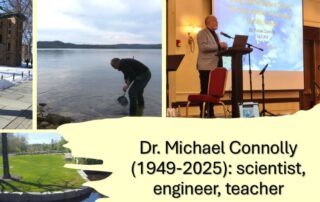
Dr. Michael Connolly (1949-2025)
Last month, on August 25th, 2025, CERES co-founder, Dr. Michael Connolly, unexpectedly passed away. He is survived by his wife, Dr. Imelda Connolly, their four children – Stephen, Ronan (also a CERES co-founder), Orla and Leona – and six grandchildren.
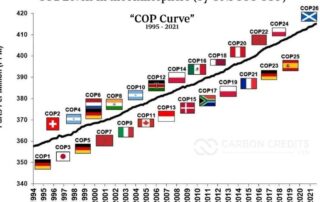
The Great UN Climate Con
The United Nations Framework Convention on Climate Change (UNFCCC), signed at the Rio Earth Summit on June 12, 1992, is not just another communiqué.
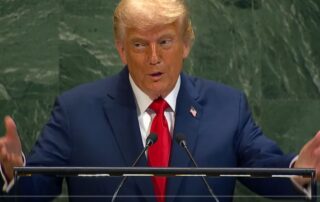
Epic climate speech by Trump at the UN in New York
Trump to UN: ‘Climate change is the greatest con job ever perpetrated on the world’. Most awesome & important climate/energy speech of his presidency, says Marc Morano.