
Texas Flood Tragedy
This article was written by dr. Matthew Wielicki and was previously published on July 6, 2025 on his website Irrational Fear.

A Call for Truth and Action, Not Political Exploitation
The heartbreaking flooding in central Texas, including the devastating loss of young lives at a girls’ camp near Austin, is a tragedy that demands reflection, accountability, and action, not political grandstanding. This catastrophe, while deeply painful, must be examined through a lens of historical and scientific clarity, not hijacked to push climate change or budgetary blame games.
https://www.cnn.com/weather/live-news/texas-flooding-camp-mystic-07-06-25-hnk
The Flooding Crisis: What Happened?
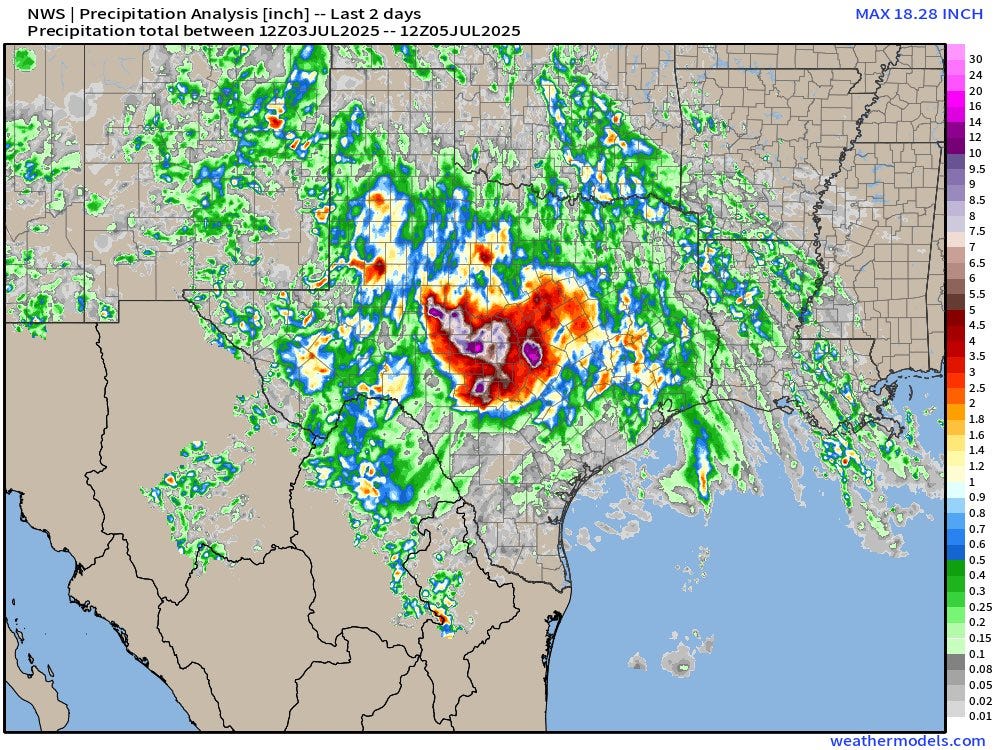
Historical Context of Texas Flooding
According to extensive research, including the recent Texas A&M 2024 Climate Report, river flooding in central Texas has not demonstrated a significant long-term increasing trend. The report explicitly states,
“No long-term river flooding trend has been identified in the observations, nor is such a trend projected at this point…”
Evaluating the Official Government Reports
Additionally, NOAA and Texas A&M climate data explicitly contradict claims that extreme rainfall frequency and flooding are unprecedented or primarily climate-driven. Central Texas has experienced variable rainfall trends, with recent decades showing primarily decreasing precipitation, dependent largely upon specific locations within the state. EPA data plots show variability rather than clear upward trends in flooding events, undermining the narrative that climate change alone drives increased flooding… unless climate change is only working in certain parts of the country.
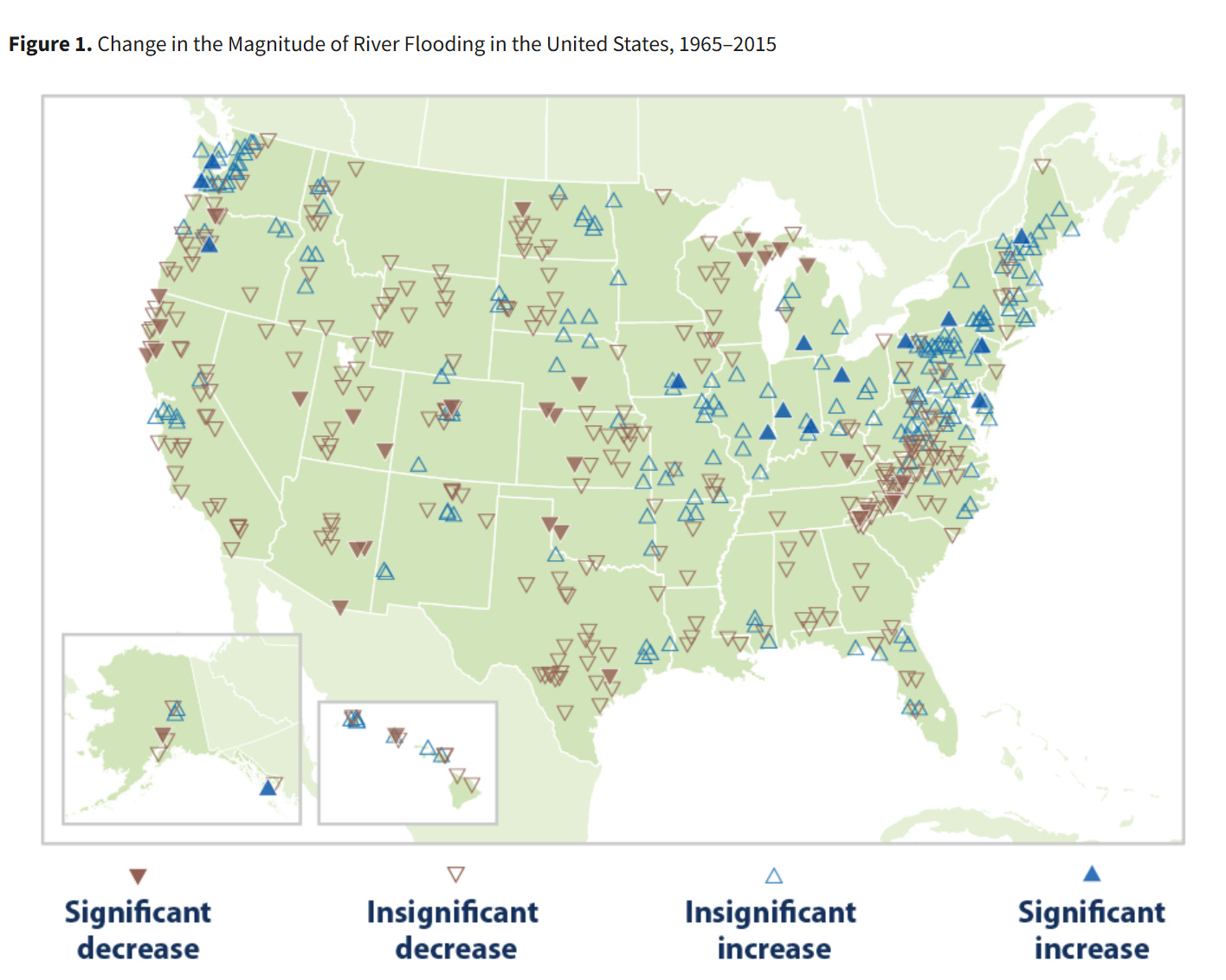
This figure shows changes in the size of flooding events in rivers and streams in the United States between 1965 and 2015. Blue upward-pointing symbols show locations where floods have become larger; brown downward-pointing symbols show locations where floods have become smaller. The larger, solid-color symbols represent stations where the change was statistically significant. Source: https://www.epa.gov/climate-indicators/climate-change-indicators-river-flooding
Dissecting the Climate Narrative and Political Exploitation
One particularly egregious example is a recent statement by Jay Inslee, who attempted to link President Trump’s policy actions on renewable energy directly to the Texas floods, claiming cuts to solar and wind energy have exacerbated extreme weather.
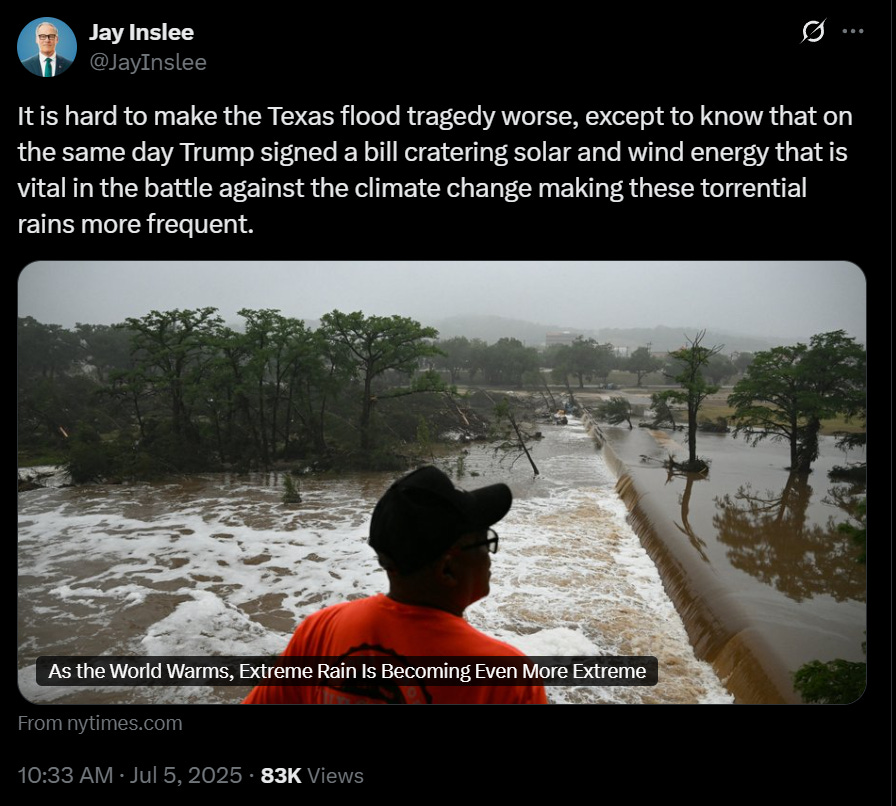
This claim is not only scientifically baseless but profoundly insensitive, using tragedy to push a political agenda.
However, historical records of flood-related fatalities…
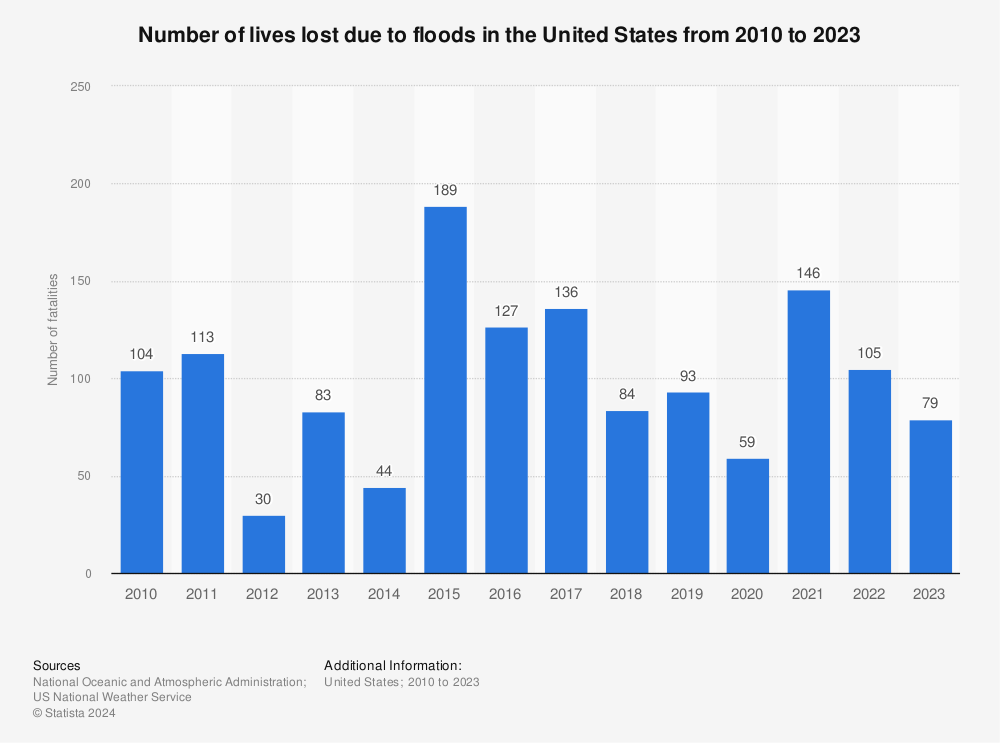
clearly shows no definitive upward trend correlating with agency budgets, GHG concentration, or global average temperature. Death tolls from flooding fluctuate year-to-year without demonstrable dependence on changes in agency staffing or funding. These data-driven insights expose the politically motivated nature of claims linking recent budgetary decisions to tragic fatalities.
The Reality of Warnings and Response
“According to the National Weather Service website, the flash flood watch, which included Kerr County, was issued at 1:18 p.m. Thursday. Nearly 12 hours later, a “life threatening” flash flood warning was issued at 1:14 a.m., according to the website.”
Despite this clear and timely warning, the emergency response and community preparedness failed catastrophically. The failure was one of planning, zoning, and infrastructure, not the availability or accuracy of weather data, nor GHG concentration.
Real Solutions, Not Climate Alarmism
Practical solutions exist: strengthening flood infrastructure, improving land-use zoning, investing in better emergency management systems, and implementing stricter regulations to restrict development in flood-prone areas. These solutions are immediate, actionable, and demonstrably effective, unlike vague climate-oriented rhetoric.
A Commitment to Continuous Data-Driven Updates


more news

BlackRock CEO Abandons Climate Delusion for Investor Needs
BlackRock CEO Larry Fink has publicly shifted toward what he calls energy pragmatism, admitting that society now demands a balanced approach to meeting power needs rather than adherence to rigid climate agendas. This could be a pivotal moment for global energy policy, as one of the planet's most powerful financial players steps back from decades of ill-advised “green” mandates.

The First Heatwave of the Year… and the Same Old Narrative
March heatwave climate data - How long term temperature records challenge the climate narrative

The Strait of Hormuz Crisis Shows the World Still Runs on Fossil Fuels
The Strait of Hormuz, one of the world’s most critical energy chokepoints, highlights the continued global dependence on oil and gas. Recent geopolitical tensions have disrupted energy flows, exposing vulnerabilities in global supply chains and triggering emergency responses across Asia. Despite decades of rhetoric about an energy transition, fossil fuels remain indispensable for modern economies, not only for energy but also for agriculture, plastics and pharmaceuticals. The crisis underscores that energy systems are shaped by geography and economics, and that a full transition away from hydrocarbons will be far slower and more complex than often assumed.

