
“The Climate Change Business Is a Criminal Hoax” — Interview with WCD Signatory Tõnu Kalvet
Estonian journalist, translator, and editor Tõnu Kalvet has signed the World Climate Declaration, joining a growing network of professionals questioning prevailing climate narratives. In this interview, he explains why he believes climate policy has become ideological, how it affects energy prices in Estonia, and why he calls for a stronger focus on real environmental problems such as pollution.

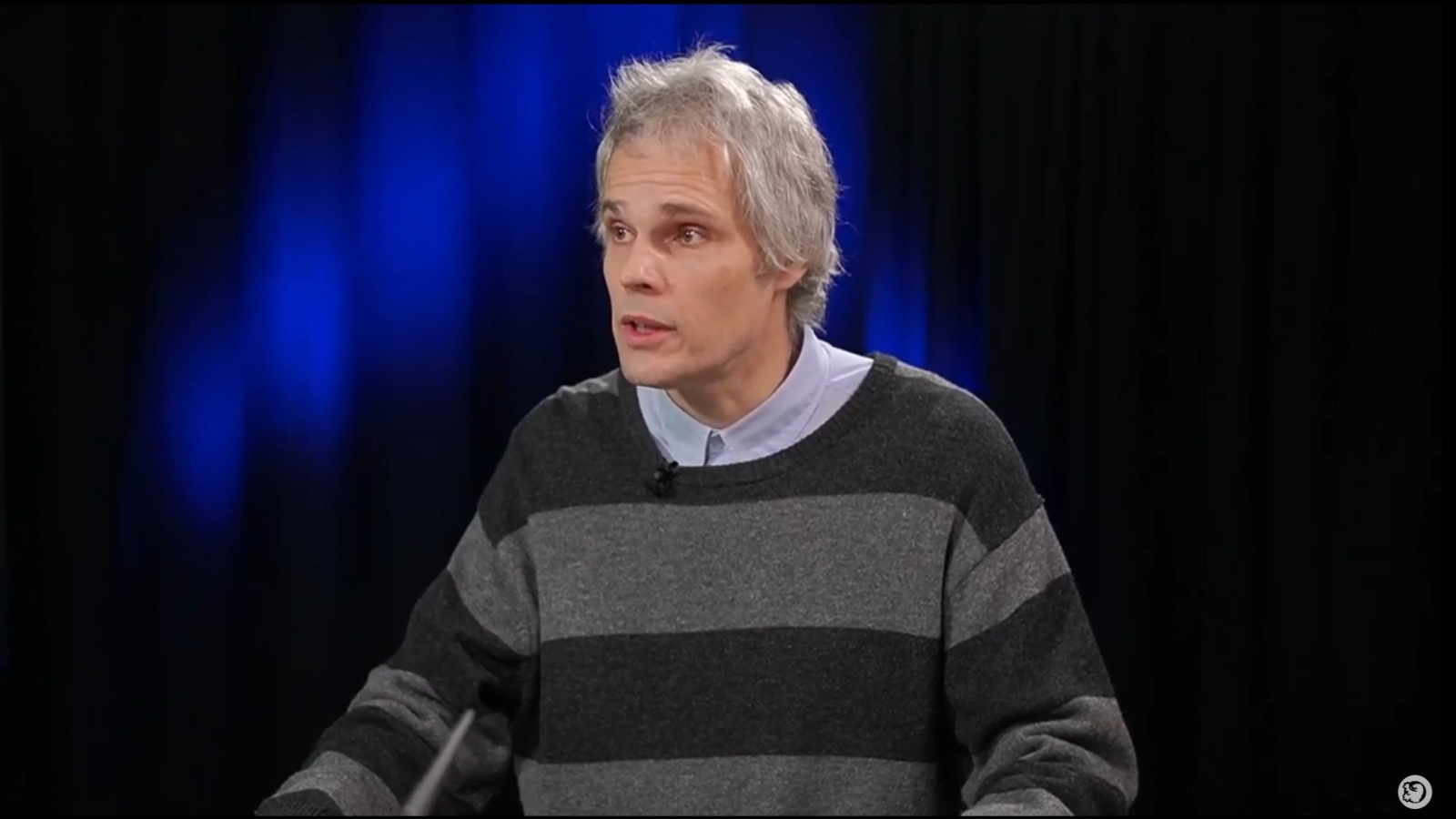
NAME: Tõnu Kalvet
COUNTRY: Estonia
What is your background?
I am a freelance journalist, translator, and editor. Apart from my mother tongue (Estonian), I have written articles in Hungarian, too. From 1990 to 1995, I studied journalism at the University of Tartu, Estonia. However, my university’s diploma thesis is still awaiting completion. I plan to complete it as soon as my professional time-schedule gets less intense than it has been so far. True, I wouldn’t say it makes too much difference because I have reached certain level of professional skills, and no one can take my masterfulness away from me.
Since January 2014, I’m an Editor-in-Chief of Estonia’s one and only chess newspaper, the Eesti Maleelu (in English: The Estonian Chess-life).
I prefer humanitarian topics, but my professional work has brought me into contact with technical topics, too. For example, from August 2004 till March 2005 I worked as an Estonian-Hungarian-Estonian translator at a plant of the Elcoteq in the city of Pécs, Hungary. (The Elcoteq had two plants in the mentioned city at that time.) For the last couple of years, I have made numerous podcasts on energy and – sometimes – on the Green Deal.
Since when and why are you interested in climate change and how did your views on climate change evolve?
I had a slight intellectual interest towards the topic in the time of the so-called ozone hole campaign (in 1990’s), but that was all. It started to interest me more when I noticed that the Green Deal propaganda resembles more and more a religious dogma and everybody is expected to have an implicit faith in it. I noticed that there was a clear correlation: the more one knew of climate change, the less one believed the Green Deal propaganda. That intrigued me, I started to gather information on it, especially the unsubstantiated kind, filled with absurd controversies. As a result, I’ve come to the conclusion that the climate change business is a criminal hoax and has to be terminated as soon as possible. Huge amounts of taxpayers’ money have been wasted on fighting the illusional hazards. By doing that, the corrupt politicians serve the interests of their sponsors, and the corrupt part of the so-called men of science are also involved.
Is climate change a big issue in your country and how do you notice this?
Yes and no. For now, I can name only one phenomenon that can truly be brought into connection with climate change: the invasion of certain alien species. All the rest of the ‘change’ in my home country is either a very strong exaggeration, or a deliberate deceit. In the last 15 years or so, the field of activity that climate change hysteria has affected most badly, is energy production. Estonia has vast oil shale reserves, and if operated sensibly, that would result in very low energy prices without having any bad effect on the environment. Low prices on energy would enable all the manufacturers to decrease their production expenses and as a result of that, set an affordable final price of the product, too. Instead of that, the fully ideology-based and highly remote from life, ‘green’ energy policy has brought along extremely high prices both in the energy production and all the other fields of production.
What would climate policy ideally look like in your view?
First of all, it should rely on expertise instead of ideology. Moreover, it sounds a very remote from life aspiration to me that a human being could ever be able to form the climate in the very sense of the word. True, I am aware of both chemtrails and the programs like HAARP, but neither of them has proven reliable so far. And they can influence only weather (for a limited time), not climate. On the contrary, they contain numerous hazards. That is why they have experienced several setbacks since being used. In my view, main attention should be paid to fighting pollution, especially the one with plastic nanoparticles. That is what counts for real.
What is your motivation to sign the CLINTEL World Climate Declaration?
My aim is to get in contact with high-skilled professionals in their field so I could learn from them before my public debates and other professional activity dealing with the matter. I’m fed up with typical ‘Green Deal debates’ that expect their participants to think and speak as if they were religious fanatics and had no common sense at all.
What question did we forget?
When will the hysteria of the Green Deal end? In my opinion, it will end by the year 2030 at the latest, because it has proven it is unnatural. Such ideologies are not viable, and therefore, they can’t be pressed upon the societies for a very long time.


more news
Met Office temperature measurements unreliable and systematically biased
The article below by Chris Morrison clearly demonstrates that the reliability of temperature measurements in the United Kingdom is seriously lacking. Based on detailed research, Dr Eric Huxter shows that a large share of recorded temperature spikes is not the result of natural variation, but of artificial influences at poorly located measurement stations. This raises fundamental questions about the quality of the underlying data used for climate reporting and policy decisions.
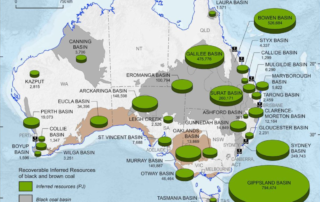
Australia wakes up to brown coal bonanza: 1,000 years of energy
Finally, we see a few key topics hitting the media in Australia, says Jo Nova. National Party leader Canavan even talks about the thousand-year supply of brown coal, and also about a method of turning coal to liquid fuel.
The Strait of Hormuz’s Bitter Lesson for the European Union
In May 2023, Ursula von der Leyen, President of the European Commission, declared that the fossil-fuel-based growth model is “simply obsolete.” The partial blockade of the Strait of Hormuz starkly exposes the irony of that statement, says Samuel Furfari.

