
The Frozen Climate Views of the IPCC by Clintel now also available in French
“This is undoubtedly an essential text that perfectly illustrates the perverse functioning of the IPCC: cherry picking, alarmist summaries betraying the uncertainties of scientists, the sidelining of critical studies, et cetera.”
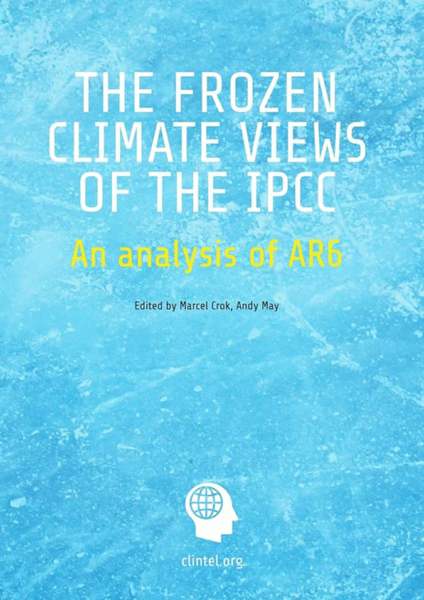
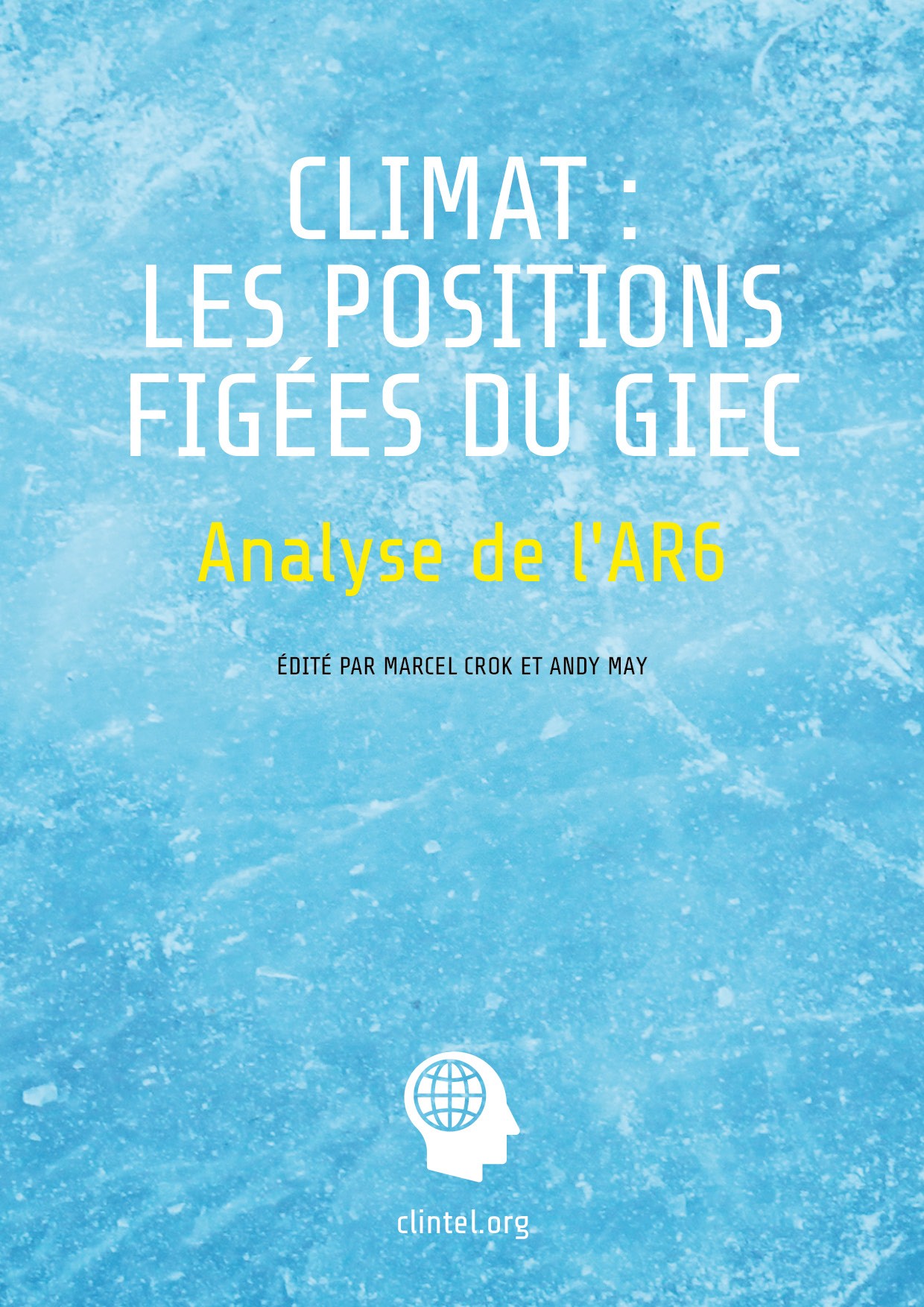
“This is undoubtedly an essential text that perfectly illustrates the perverse functioning of the IPCC: cherry picking, alarmist summaries betraying the uncertainties of scientists, the sidelining of critical studies, et cetera.” This is the opinion of Claude Duverney, one of the translators of The Frozen Climate Views of the IPCC by Clintel, into French. Climat: Les positions figées du GIEC is now available in our webshop.
“Translating into different languages and disseminating The Frozen Climate Views of the IPCC is of paramount importance”, says Duverney. Originally from the mountains of Valais (Switzerland), Duverney studied philosophy at the University of Geneva, culminating in a doctorate. He teaches philosophy and the history of science at Calvin College in Geneva. He is the author of a thesis on Kant and an introduction to his epistemology, and has also published translations of Karl Popper and Richard Dedekind. Finally, he is co-author of a volume on the history of science.
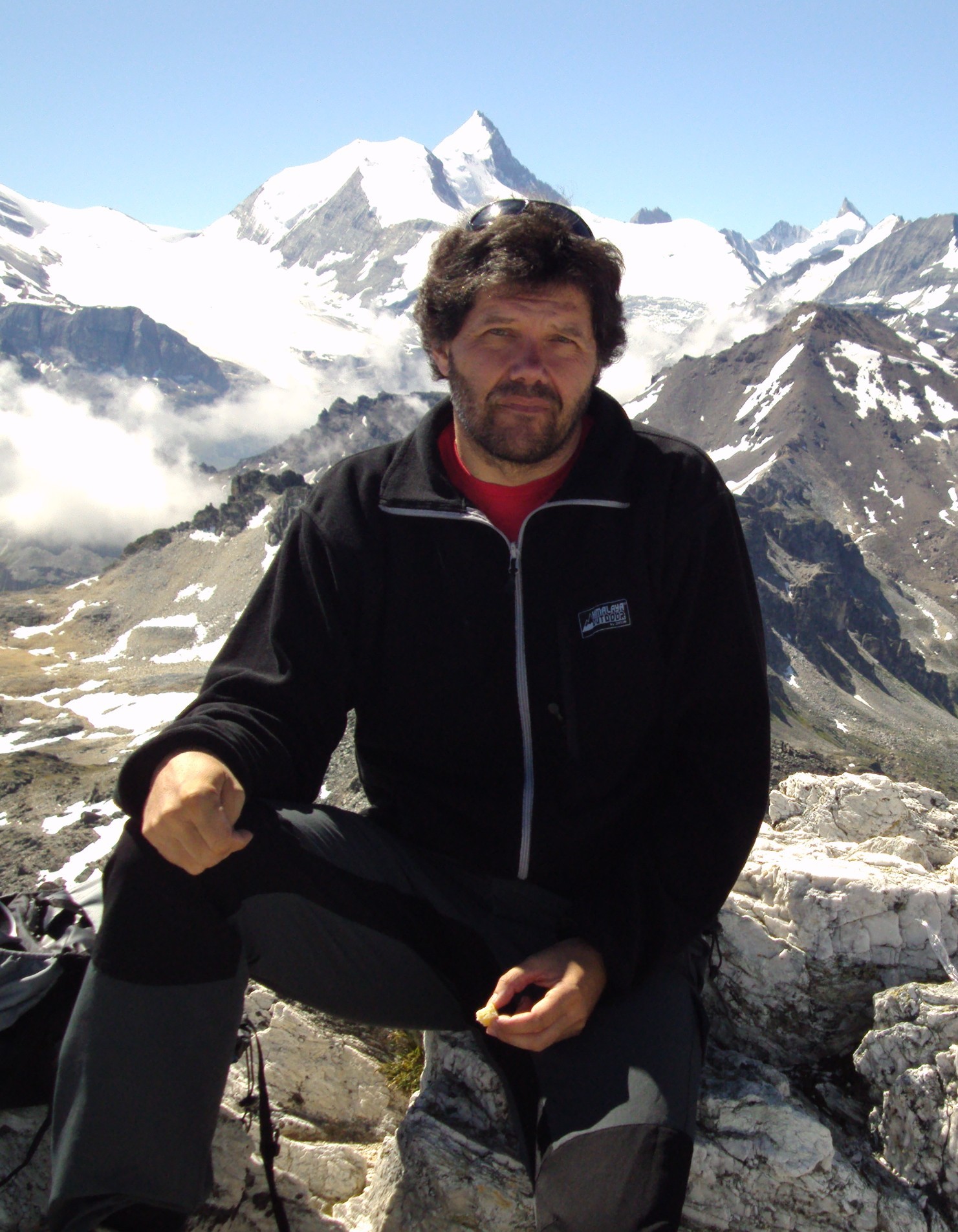
Claude Duverney
Why did you volunteer to edit and translate The Frozen Climate Views of the IPCC?
“Initially, I volunteered to translate Pope Francis’ Climate Crusade (see French Translation). That’s how I met Evert Doornhof, operational manager of Clintel. Evert contacted me again to ask if I would like to translate The Frozen Climate Views of the IPCC. This was a huge change in scale, from 15 to almost 200 pages! But I knew how important it was, having already read the introduction and a few chapters. Jean Marie Ravier (see the second part of this article) had already prepared a first draft of the translation, which made the task much easier. To produce the final version, I was able to draw on my knowledge of the topics covered in the various chapters from my reading—I read about 15,000 pages on the climate issue, including chapters from the six IPCC Assessment Reports.”
“This is undoubtedly an essential text which, on its own, perfectly illustrates the perverse functioning of the IPCC: cherry picking, alarmist summaries betraying the uncertainties of scientists, the sidelining of critical studies, etc. There is global misinformation about the climate issue, and any new critical book or article is welcome. For several years, I have been working to disseminate critical information around me, in collaboration with Professor Jean-Claude Pont (University of Geneva), signatory of Clintel’s World Climate Declaration and author of a climate book and of the Lettres d’information sur le Climat.”
Since when and why are you interested in climate change?
“I have been working on this issue for almost ten years. I started by archiving critical documents to contribute to the Letters on Climate published by Jean-Claude Pont. Then I was denounced by colleagues because, in response to questions from students, I had presented counterarguments to the IPCC’s theses (providing all my sources). I then wrote a few posts under a pseudonym on a writers’ blog. Finally, I decided to publish a book, which will appear when I retire in June 2026. As a teacher of the history of science, I never imagined I would witness a pseudo-scientific affair of this magnitude, let alone be one of the people who were ostracized, even to a very modest degree.”
How did your views on climate change evolve?
“It was my interest in the epistemology of science and my reading of critical works that made me aware of the issue. On an epistemological level, we can quickly discern the structure of the Lysenko affair under Stalin: the political imposition of a dogma by an authoritarian apparatus practicing censorship. Politically and economically speaking, it is also clear that making climate change an issue, is a powerful lever for supporting the Malthusian interests of the powerful and the move towards global governance. But awareness of the current lack of meaning and the decline of traditional religions leads us to see the climate issue as part of a grand neo-romantic mythical narrative, with Gaia, the Earth goddess, as the victim, mankind as the polluter, CO2 as the culprit, salvation through Sustainable Development, the Green Deal as a crusade, environmentalists acting as high priests, not to mention the seven plagues that are already afflicting us: extreme weather events, rising oceans, melting glaciers, rising temperatures, heat waves, droughts, and floods. My conclusion, in the face of this global mystification and after years of teaching philosophy, is that despite all the progress made in knowledge and technology, humans have a visceral need for beliefs and that, deep down, they are only asymptotically reasonable!”
Is climate change a big issue in your country and how do you notice this?
“As everywhere in the West, it is the media (‘lackeys of mainstream thinking’) and politicians who perpetuate the dogma, supported by activist scientists. The false claim of consensus is used to dismiss critical opinions, and unfortunately it is on this supposed consensus that my fellow scientists base their support for the prevailing orthodoxy, most often without having read anything on the subject. In everyday life, the measures taken become visible or noticeable, most often with negative or unfavourable consequences (energy costs and destruction of landscapes).”
What would climate policy ideally look like in your view?
“Convinced that the climate is changing as it always has (our Earth is recovering from the Little Ice Age), and that humans have little to do with it, I would not make it an issue and would advocate adaptation measures at most. Above all, I would combat misinformation, with its anxiety-inducing effects on our youth.”
Like Duverney stated, the crucial first draft of the French translation was made by Jean Marie Ravier. We asked him about his motivation to do this as well:
Ravier is an engineer from Ecole Centrale Paris, with a diploma from the Institut d’études Politiques de Paris (Sciences po). He spent ten years with Renault, five years at the financial direction then at the Le Mans plant; five years with the Armco group as plant manager and ten years in the Automaxi company as CEO. He then purchased Mecan Outil (special machines) which he sold seven years ago. To sum up, his background is finance management and mechanical engineering, with a focus on export.
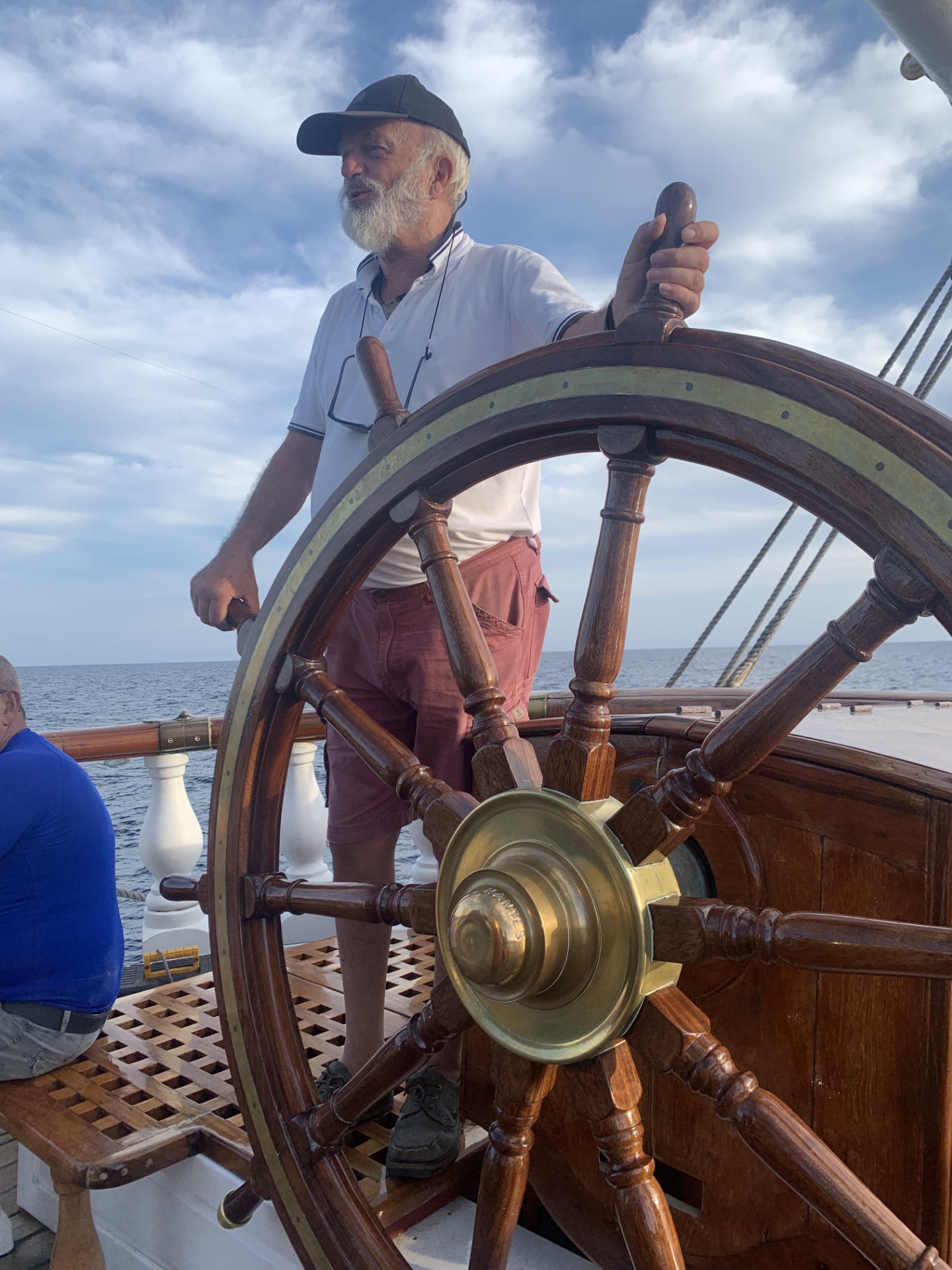
Jean Marie Ravier
Why did you volunteer to translate The Frozen Climate Views of the IPCC?
“I was immediately convinced that the French climato-réalistes required a French version of this outstanding work, and that I had the know-how and the passion to do it. It is an outstanding book in the way that it made an in-depth analysis of quite a lot of key chapters of the IPCC work and found lots of biases. Correcting these biases means totally different conclusions: there is NO climate emergency!”
You have also translated the book Unsettled by Steven Koonin. Why did you do that and what impact did the book have in France?
“I read about Unsettled in a climato-realist newsletter, and immediately ordered it. I was very quickly convinced that it needed a French edition. My sister is a professional translator and suggested it to Damien Serieyx (of Editions de l’Artilleur, which is quite focused on climato-realist literature, in particular books by Christian Gerondeau are very successful). Damien agreed very quickly…It had a significant impact: as far as I know, we are north of 30.000 prints! And as you probably know, climato-realist issues are prohibited on nearly all media. No radio, no television and most journalists signed a voluntary commitment to fight against climate sceptics. In spite of this, more than 30% of the French are not convinced of the climate emergency. Unsettled possibly had an impact…”
“Unsettled is quite different from the Clintel analysis. It is easy to read even for a non-qualified public. It was a pleasure to translate. I met Steve Koonin once and could see that he is an outstanding communicator.”
Since when and why are you interested in climate change?
“Quite a few years ago, somebody gave me access to the Pensée unique blog, created by Jacques Duran. That was really the beginning. Later a friend of mine (55 years of friendship) who lives in Chamonix, gave me some literature on the story of the glacier Mer de Glace, and the fact that it was a lot shorter in medieval or Roman times increased my interest, and I started purchasing some books in particular about paleo-climatology.”
How did your views on climate change evolve?
“It has been a continuous process, Pensée unique opened the way, translating Unsettled convinced me for 95%, and the finishing job was done by Clintel, who proved that the IPCC work is very much biased and its final report is manipulated by Greenpeace.”
Is climate change a big issue in your country and how do you notice this?
“It is not a big issue, it is HUGE. Media are totally devoted to prove that every event (fire, tornado, flood) is another manifestation of climate change. Quite a lot of people are really panicked by this, they stop flying, making babies, etc…Some of the climate policies are visibly stupid: why do the French continue to build wind mills offshore at huge cost, or photovoltaic panels when power prices are below zero for 450 hours in 2025?”
“The net zero European policy is just killing the European industry (in particular automotive). Power prices have gone through the roof in Germany and we ape their policy. For hydrogen, it is the same. It has been clear for specialists (like Samuel Furfari) that it was a hopeless strategy, but the Germans (advised by McKinsey) decided to invest 7 billion euro’s and again we aped them (McKinsey included).”
What would climate policy ideally look like in your view?
“Revise the Green Deal radically. In particular: stop all the subsidies for wind mills, photovoltaic panels and hydrogen. Revise the policy for each industry, knowing that CO2 is not an issue. Work more on agricultural issues, water, fertilizers, pesticides, hedges…Work more on fish stock management.”
more news

Wrong Again PBS, UN Is Pushing Another False Climate Crisis Report
Explore why this new climate report from the U.N., and its coverage by PBS, may not be telling the full story — and what that means for public understanding of climate science.

Norway Avoids ‘Green’ Energy Quicksand
While the rest of Europe shivers under the self-imposed austerity of net zero mandates, Norway in the frozen north is keeping the lights on and the bank vaults full as it avoids the “green” ideological quicksand that has defined the continent's energy policy.

Climate Cult’s Inevitable Dissolution
The collapse of the Paris Agreement and the unmasking of the net zero illusion were never hard to predict for anyone with a shred of intellectual honesty. It didn’t take a fancy research title or an advanced degree. The writing was carved deep into the stone of energy reality, which no press release, no activist lobby and no billionaire-backed foundation could erase.

