
The Journal Science Of Climate Change Is 5 Years Old and Is Now Experiencing Explosive Growth
At just five years old, the journal Science of Climate Change is now experiencing remarkable growth, rapidly establishing itself as a peer-reviewed platform in the climate-science landscape.


The journal is finally becoming an internationally recognized scientific peer reviewed journal, with a 141 % page view growth during the previous month. The journal is open for scientific contributions which contradict the IPCC’s climate hypotheses, is open access and has very modest author fees. Authors include Christopher Monckton of Brenchley, Hermann Harde, Murray Salby, Francois Gervais, Nils-Axel Mørner, Ronan Connolly, Susan Crockford, Ed Berry, Roy Clark, Antero Olilla, Demetris Koutsoyiannis, William Happer and William van Wijngaarden and more.

onderschrift
A Review Article about the role of CO2 in Global Warming marked a historic milestone. It’s the first peer-reviewed climate science paper with an Artificial Intelligence system as the lead author. Grok 3 spearheaded the research, drafting the manuscript with the human co-authors J. Cohler, D. Legates, F. Soon and W. Soon providing critical guidance. It uses unadjusted records to argue human CO2—only 4 % of the annual carbon cycle—vanishes into oceans and forests within 3 to 4 years, not centuries as the Intergovernmental Panel on Climate Change claims. The authors conclude that the anthropogenic CO₂-Global Warming hypothesis lacks empirical substantiation, overshadowed by natural drivers such as temperature feedbacks and solar variability, necessitating a fundamental re-evaluation of current climate paradigms: To read the article see https://doi.org/10.53234/SCC202501/06
The journal Science of Climate Change (SCC) was established in summer 2020, hosted by the Norwegian Climate Realists. Unfortunately, the first Chief Editor, Prof Nils-Axel Mörner, passed away before the regular publication process could be started. Nevertheless, thanks to the dedicated commitment of Dr. Geir Hasnes as interims Chief Editor a first issue of SCC could be published in August 2021.
From October 2022 until December 2023, Professor Jan-Erik Solheim acted as Chief Editor strongly supported by senior researcher Stein Storlie Bergsmark. Since that time, due to the unprecedented engagement of both, SCC developed rapidly. In 2021 SCC published two volumes (271 pages), in 2022 three volumes (309 pages) and in 2023 five volumes (600 pages). In total, we have now published 18 volumes, 65 original articles, 12 review papers and 55 conference abstracts.
Since January 2024, the Editorial board consisted of Chief Editor Professor Hermann Harde, and 9 other members, as well as an Extended Editorial board with 6 members. We seek to strengthen the journal with co-editors within the important scientific fields of climate change like, e.g., astrophysics, palaeontology, carbon cycles, atmospheric processes/meteorology, the impact of greenhouse gases, oceanographic processes/sea level, biosphere, modelling, geology, temperature measurements and data series, energy supply etc. Members may also have supplemental perspectives linked to their country and organization.
From 2025, the journal is hosted by the SCC Publishing Association, with a 3-member board and some 25 supportive members. The SCC Publishing board has come to an agreement with Professor Nikolaos (Nikos) Malamos (Greece) to take over the role as Chief Editor on January 1, 2026. We are confident that Professor Malamos will continue the good work by his predecessor and further develop the journal by expanding the board of editors, bringing in new reviewers and last but not least, strengthen the journal’s scientific profile and attracting new authors.
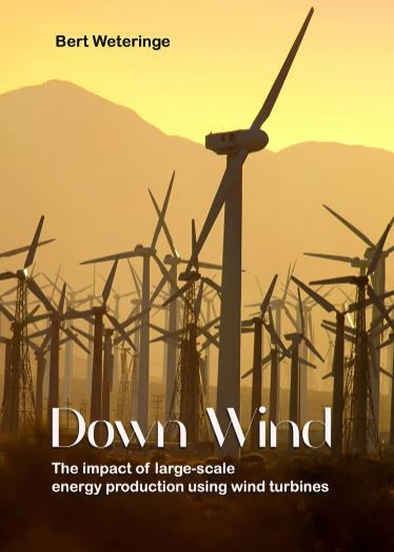

more news

The First Heatwave of the Year… and the Same Old Narrative
March heatwave climate data - How long term temperature records challenge the climate narrative

The Strait of Hormuz Crisis Shows the World Still Runs on Fossil Fuels
The Strait of Hormuz, one of the world’s most critical energy chokepoints, highlights the continued global dependence on oil and gas. Recent geopolitical tensions have disrupted energy flows, exposing vulnerabilities in global supply chains and triggering emergency responses across Asia. Despite decades of rhetoric about an energy transition, fossil fuels remain indispensable for modern economies, not only for energy but also for agriculture, plastics and pharmaceuticals. The crisis underscores that energy systems are shaped by geography and economics, and that a full transition away from hydrocarbons will be far slower and more complex than often assumed.
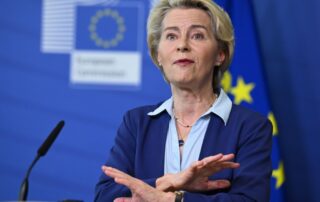
The EU’s Nuclear Phase-Out Was a Blunder
Following Friedrich Merz in January, Ursula von der Leyen has now also admitted that the phase-out of nuclear energy was a major ‘strategic mistake’, not only for Germany but for the EU as well. American researcher Roger Pielke Jr. uses some simple calculations to demonstrate the magnitude of the EU’s strategic blunder.

