
Trump withdraws from UN climate treaty: Why the UNFCCC no longer works
Energy expert Stephen Eule explains why President Trump’s withdrawal from the UNFCCC climate treaty is justified, and why the global climate process has fundamentally failed.

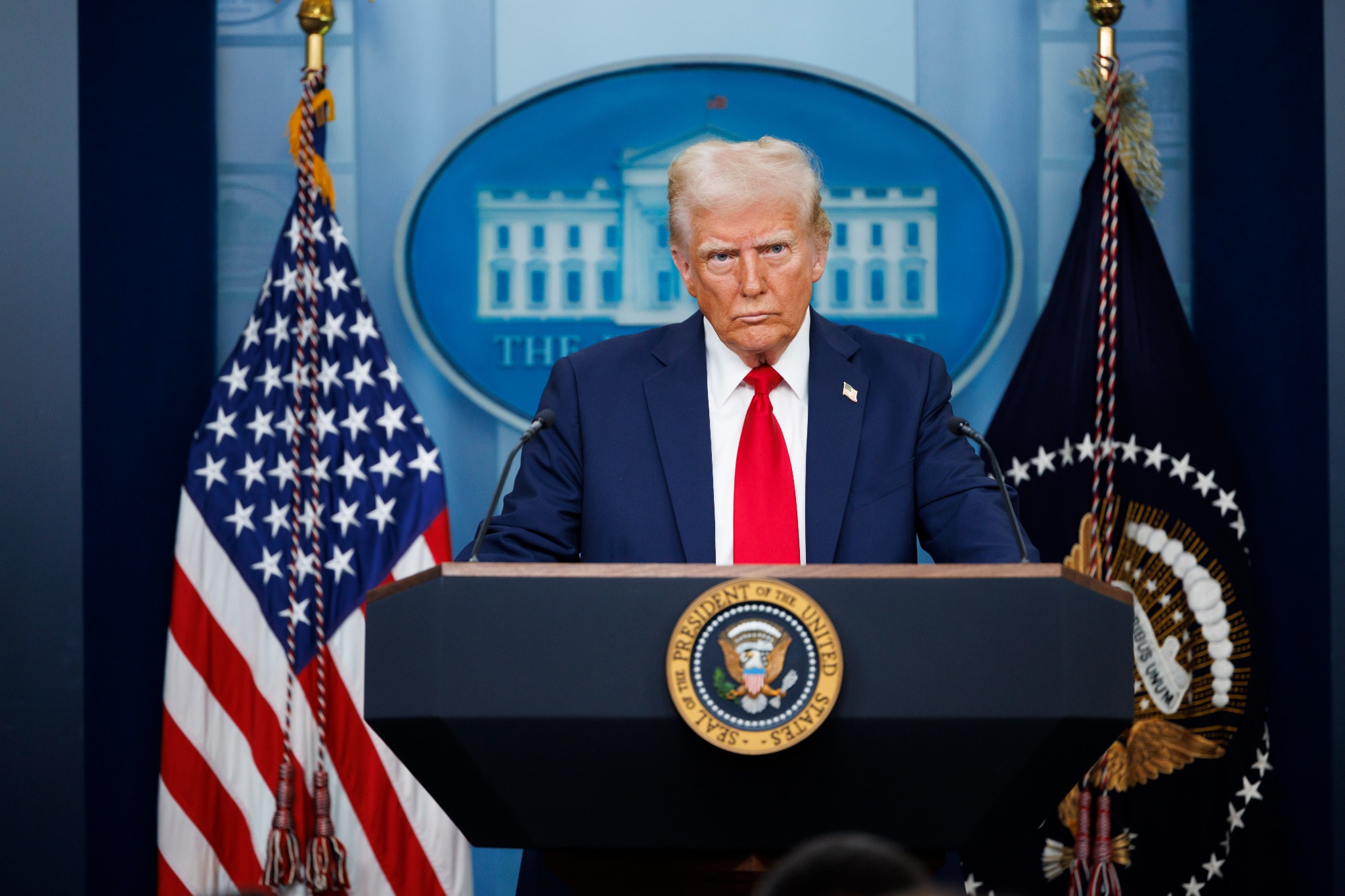
US President Donald Trump – Source: Shutterstock
Stephen Eule
Date: 21 January 2026
Withdrawing from a broken climate framework
President Trump’s decision to withdraw the U.S. from the UN Framework Convention on Climate Change (UNFCCC) was long overdue.
Signed by President George Bush and ratified by a unanimous Senate in October 1992, the treaty’s purpose is to avoid “dangerous human interference with the climate system” by restricting greenhouse gas emissions, most of which derive from energy.
The UNFCCC’s structural flaws from the start
From the very beginning, the UNFCCC has been an unmanageable mess. While the treaty’s offspring—the Kyoto Protocol, Copenhagen Accord, and Paris Agreement—have been the focus of much conservative ire, these agreements merely amplify the UNFCCC’s many flaws. It pits developing countries against developed countries, creates unrealistic expectations, promotes bureaucratic “solutions,” and is a money sink.
A treaty frozen in the politics of 1992
The UNFCCC provides clear and fixed divisions of labor between developed and developing countries based on the principles of “common but differentiated responsibilities” and “historical responsibility.” In practice, that means developing countries have few obligations, and their actions are largely contingent on financial support from developed countries.
The Convention, however, reflects the world as it was three decades ago, not as it is today. Its signatories failed to consider that developing countries wouldn’t stay poor forever.
Consider that since 1992, China’s economy has grown more than 1,000% and its emissions more than 250%. It’s now the world’s second largest economy and largest greenhouse gas emitter. Yet in the eyes of the UNFCCC, it’s still considered “developing.”
China isn’t alone. Singapore, South Korea, Saudi Arabia, and Qatar also are developing countries in the UNFCCC. There is no avenue to change their status under the treaty.
Why developing nations reject the energy transition
Poor countries are along for the ride. They have little interest in addressing climate change, justifiably prioritizing economic advancement and poverty eradication over climate. They are more than happy to power progress with hydrocarbon fuels.
Indeed, the vaunted energy “transition”–– the treaty’s promised outcome–– has turned out to be a mirage. Data from the International Energy Agency reveal that since 1992, global energy demand has jumped a whopping 76%. Over the same period, the amount of carbon emitted per unit of energy consumed has declined just 3%, leading to a 71% jump in CO2 emissions from energy.
Still, about three quarters of a billion people worldwide lack access to sufficient electricity, the single best indicator of a nation’s human welfare. Coal, especially in Asia and parts of Africa, will remain the fuel of choice for generating electric power for many years. Wealthy economies are clean economies.
Greenwashing and ambiguity in the Paris Agreement
Deception and greenwashing also pervade the UNFCCC. Take the Paris Agreement. It calls for limiting the increase in the global average temperature to “well below 2°C above pre-industrial levels and pursuing efforts to limit the temperature increase to 1.5°C.” Although the treaty does not define what these temperature targets mean for global emissions, the UN now says they mean, “emissions need to be reduced by 45% by 2030 and reach net zero by 2050,” something to which the Parties did not agree.
In fact, the Parties explicitly rejected draft proposals for specific emissions targets and timetables, including net zero emissions by 2050, because they knew full well such a goal was out of reach. The treaty’s temperature language is nothing more than a green Rorschach test.
Climate urgency rhetoric versus institutional paralysis
Inconsistent with the claims of a climate crisis, the UNFCCC works at a snail’s pace—not that the results are worth the wait. For example, it took nine years for the Parties to negotiate language implementing the Paris Agreement’s provisions on international carbon trading. Those same Parties also urge a 40 to 45% cut in global emissions in five years. Who is kidding whom?
COP summits: ideology, symbolism, and policy overreach
On top of all this, at each annual “COP” meeting the U.S. must resist extravagant financial demands, efforts to weaken intellectual property protections, demands for climate reparations, calls to end the consumption of meat, and other silly ideas.
An admission of political intent, not environmental necessity
But perhaps the most potent justification for bidding adieu to the UNFCCC was provided by
Christiana Figueres, the UNFCCC Executive Secretariat during the Paris talks, who in a candid moment said, “This the first time in the history of mankind that we are setting ourselves the task of intentionally . . . to change the economic development model that has been reigning for at least 150 years, since the Industrial Revolution.” This is not what President Bush signed onto or the Senate ratified.
Why leaving the UNFCCC serves America’s strategic interests
The U.S. has invested far too much political and financial capital into a process ill-suited to address the ostensible climate problem, a process that often works against American interests and values. Indeed, at a time when the U.S. is in an artificial intelligence race with China—competition shaped by access to affordable and reliable energy—the UNFCCC is an expensive distraction.
We are well out of it.

This opinion piece was previously published on realclearenergy.org.
Stephen Eule is a visiting fellow at the National Center for Energy Analytics. He’s an energy sector expert, known for his work at the intersection of energy security, climate change, and technological innovation.

more news

An engineer takes a sober look at the Net Zero 2050 project
“At first, I thought the Net Zero 2050 project was pointless, but after careful consideration, I think it’s insane.”
Orwellian Sacking of Editor for Allowing Debate Over Climate Change
An academic editor has been dismissed after publishing research that challenges mainstream climate discourse, raising serious questions about the state of open debate in science and media.

The ‘Climate Crisis’ of 1695
Centuries-old thermometer records show central England warmed 2°C in 40 years—twice the rate of modern warming.

