
US Energy Realism Pays Off in Iran Crisis
The stark contrast between American resilience and European collapse is a permanent lesson. National security should not be subject to the whims of the weather or the approval of climate activists in European capitals.

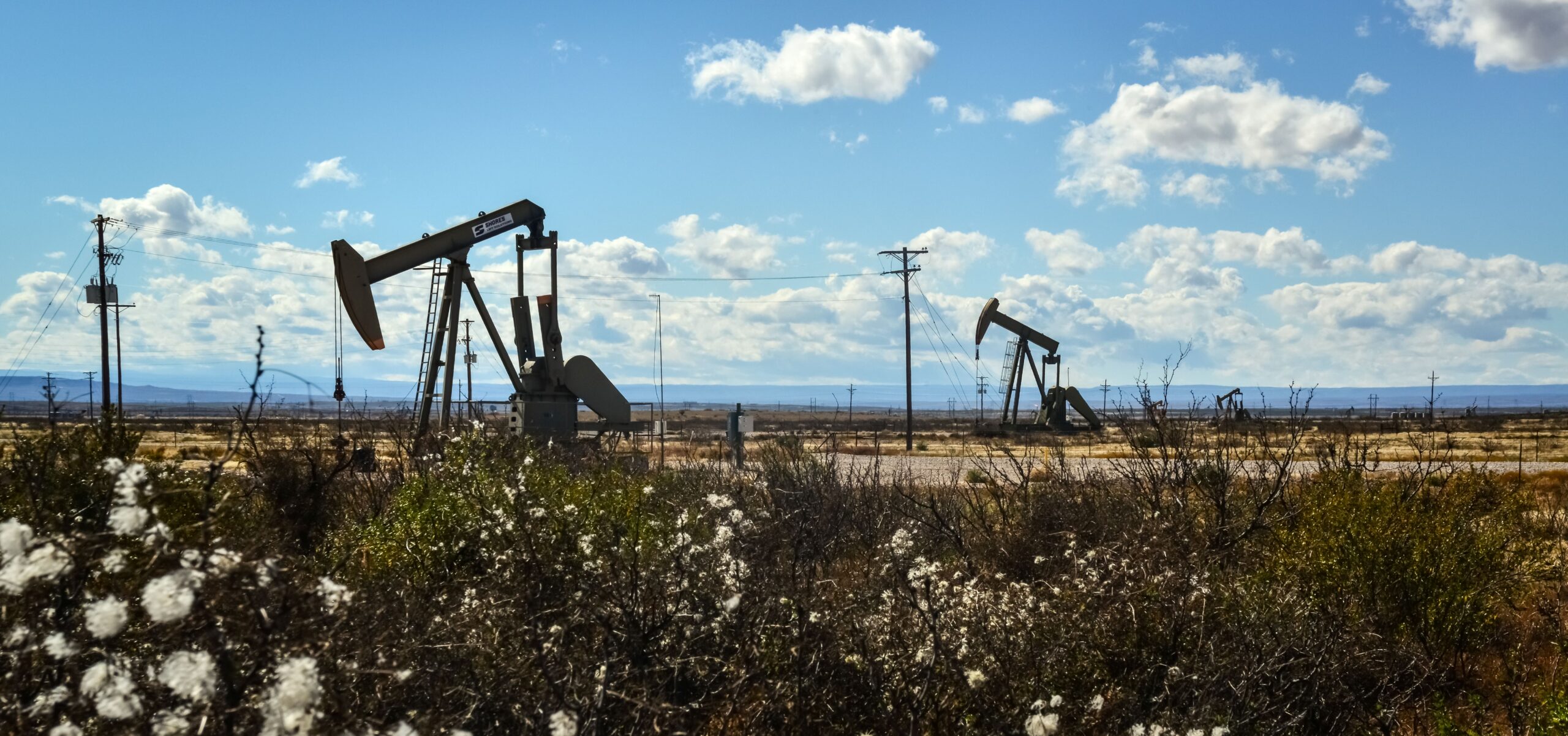
Oil production in New Mexico. Source: Shutterstock
Vijay Jayaraj
Date: 19 March 2026
The Iran war has exposed the fragility of much of the world’s energy system. Years of political theater disguised as climate policy – demonizing fossil fuels and glorifying unreliable wind and solar energy – dismantled a dependable energy infrastructure.
Europe is a cautionary tale of the “green” delusion. EU politicians ignored the physical reality that a steel mill cannot run on a cloudy, windless day with a press release about “net zero.” They underestimated the risk of tying economies to a small number of external suppliers, then compounded it by shutting their own coal mines, gas fields and nuclear power plants.
Germany shut down nuclear reactors and accelerated coal plant closures, as it deepened reliance on imported Russian gas and intermittent wind and solar. The United Kingdom decommissioned coal stations and scaled back dispatchable gas capacity, banking on imported liquified natural gas (LNG) and wind turbines that are responsive to the weather but not human need.
European gas storage entered 2026 well below the 10‑year seasonal average, with EU inventories less than 50% of capacity in January and now sliding toward 30% as winter ends, leaving little buffer against a sustained LNG disruption. European natural gas prices roughly doubled compared with late February. The result: Power prices spike, industrial users cut output, and households absorb higher heating and electricity bills, all in economies already strained by inflation.
Strategic Mistake
The irony is that the European Commission itself now admits what critics have said for years. In Paris, Commission President Ursula von der Leyen understated the decision to marginalize nuclear power as a “strategic mistake.”
Asia grapples with similar traps, where net zero pledges clash with surging demand. India and China, giants in population and ambition, squandered fortunes on solar panels and wind turbines that sit idle without sun or breeze. Imagine if those funds had been put to building fossil fuel stockpiles or expanding nuclear fleets.
Thailand, the Philippines and Vietnam embraced net zero rhetoric. Their leaders overlooked glaring energy gaps that have been revealed by the ongoing crisis. Many Southeast Asian countries have now implemented measures to curb oil and gas use, including a halt in export of petroleum products and work-from-home measures for citizens.
Reports describe Thailand’s state‑owned oil and gas company scrambling to secure supplies, while Bangladesh is forced to buy emergency shipments at prices more than double those paid in January. Indian and Vietnamese buyers have issued tenders for prompt deliveries that went unawarded.
Shortages of liquified petroleum gas (LPG) cylinders are surfacing across India. Hotels and restaurants are struggling to operate as the cylinder shortage cripples the hospitality sector. Rarely acknowledged is that energy scarcity has long been catastrophic for billions in Asia, Africa and Latin America.
When liquified petroleum gas cylinders become scarce and expensive, poor households revert to wood and dung for heating and cooking, which leads to smoky indoor air. When factories cannot secure reliable power, jobs disappear and poverty deepens.
US Exception: Standing Firm Amid Chaos
The one major economy that enters this crisis with a cushion is the United States. The U.S. possesses a massive foundation of domestic oil and gas production, a direct legacy of a 10-year record growth in domestic extraction that accelerated dramatically during the first Trump administration.
The U.S. Energy Information Administration’s (EIA’s) latest Short‑Term Energy Outlook projects U.S. crude oil production averaging around 13.5 million barrels per day in 2026, only slightly below the 2025 level after several years of growth to record output. For natural gas, the EIA expects production to climb from about 107–108 billion cubic feet per day (bcfd) in 2025 to 109–110 bcfd in 2026, which would be a new record.
By embracing fracking, horizontal drilling and regulatory sanity, the U.S. unleashed the power of the Permian Basin and other shale plays. They prioritized sensible energy economics over apocalyptic climate claims.
This stark contrast between American resilience and European collapse is a permanent lesson to be taken by the developing world. National security should not be subject to the whims of the weather or the approval of climate activists in European capitals.
What the current crisis proves is simple: Energy security resides in the ability to secure physical molecules – oil, gas, coal and uranium – when geopolitical storms hit. Europe, and much of Asia, chose to anchor their future to slogans instead.


Vijay Jayaraj
Vijay Jayaraj is a Science and Research Associate at the CO2 Coalition, Fairfax, Virginia. He holds an M.S. in environmental sciences from the University of East Anglia and a postgraduate degree in energy management from Robert Gordon University, both in the U.K., and a bachelor’s in engineering from Anna University, India. He served as a research associate with the Changing Oceans Research Unit at University of British Columbia, Canada.
This article by Vijay Jayaraj was first published on CO2 Coalition, March 16.

more news

Recent global warming spike solved
Recent global warming spike solved An Australian high school math teacher can’t understand why everyone is so perplexed about the recent temperature spike. He says that a very simple explanation exists, namely that it was merely the result of an exceptionally strong El Niño superimposed on a steadily rising background due to [...]
Another ‘scientific’ attack on the oil majors
Another ‘scientific’ attack on the oil majors According to ‘Carbon Majors and the Scientific Case for Climate Liability‘, a paper published in Nature last month, it is now possible to quantify the climate damages caused by each of the world’s biggest oil and gas companies. By Tilak Doshi, published originally at Dailysceptic.org [...]

In 100 days, Trump rewrote the global energy map
In 100 days, Trump rewrote the global energy map Donald Trump promised to end the war in Ukraine in a single day, but he has failed to do so; he has also failed with his tariff policy. It is therefore easy for his many opponents in Europe to ridicule him. But they [...]

