Should We – and Eventually Can We – Do Anything about Climate?
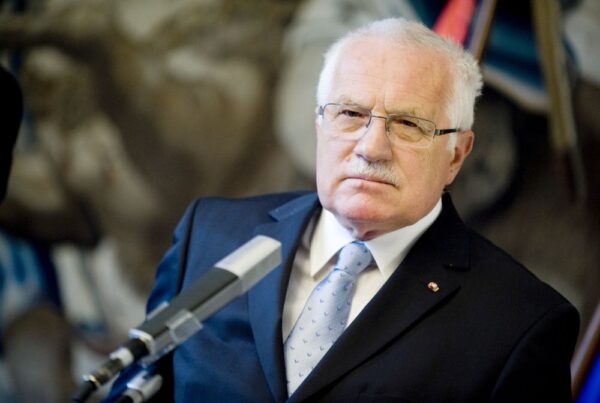
Václav Klaus, former president of the Czech Republic, and a prominent signatory of the Clintel World Climate Declaration, recently gave a talk at the 34th Economic Forum Karpacz in Poland in a session titled “Climate Change– a Shared Responsibility”. Klaus said: “The title of the session, “Climate Change – a Shared Responsibility”, is based on an idea I fundamentally disagree with. Climate change – in both directions – is a permanent characteristic of the world climate. There is no need to stop it. And, more importantly, it is not possible to stop it. Trying to stop it can’t be, therefore, our “shared responsibility”.”
With his permission we republish his speech here. It was originally published on the website of his institute.
Clintel Foundation
Date: 13 September 2025
I have been engaged in the climate debate already for at least two decades. I belong among the veterans of this debate. I have written dozens of articles, made speeches all over the world (on all continents) and published three books on this topic. One of them has been translated into 18 languages. Rather than summarizing their main message myself, let me use a formulation made by the highly esteemed British author Paul Johnson, who famously said that the belief in man-made global warming (now euphemistically called climate change) is “a creed, a faith, a dogma that has little to do with science”.
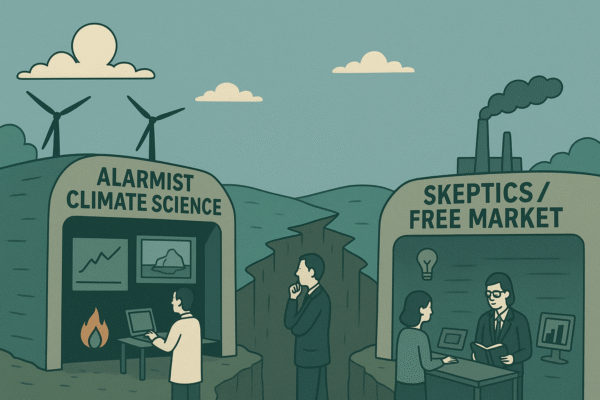
Year after year we have seen that no argument can make a change. The other side doesn’t want to listen. They believe in their “truth”. I agree with the late, distinguished Australian climatologist Robert Carter, who observed that “the protagonists in the debate remain in the same bunkers they occupied already in the early 1990s” (in his The Futile Quest for Climate Control). He put it resolutely: the ambition to stop climate change “is an extravagant and costly exercise of utter futility” (p. 32).
Both those who have been trying for years to oppose the irrational, populist, and evidently non-scientific climate alarmism and those who advocate this alarmist’s doctrine have remained “in the same bunkers” for decades. There are, however, many significant differences between the two sides. We are ready to engage in discussion, whereas the other side is not. They believe that
– their alarmist views are based on science;
– the science is settled;
– the entire debate is in its substance strictly about climate and temperature.
I disagree. The debate is not about science but about ideology. Science is not – and never can be – settled. “The dispute is about radical changes of human society, of our way of life and of our freedom which this alarmist’s doctrine asks for” (see my Climate Alarmists´ Offensive is Exclusively Politically Driven, Seminar on Planetary Emergencies, World Federation of Scientists, Erice, Italy, 2019).
The general public, the ordinary people, should be informed that the hypothesis that human carbon dioxide emissions are causing dangerous global warming has not been scientifically proven. Definitely not by reality, by the two recent warm decades. No proof comes also from unrealistic projections based on very problematic mathematical models developed by climatologists. The extra atmospheric carbon dioxide causes mild and temporary warming at most, not a climate catastrophe.
The title of the session, “Climate Change – a Shared Responsibility”, is based on an idea I fundamentally disagree with. Climate change – in both directions – is a permanent characteristic of the world climate. There is no need to stop it. And, more importantly, it is not possible to stop it. Trying to stop it can’t be, therefore, our “shared responsibility”. I agree with the German scientist Bernd Fleischmann that “the climate hysteria is the biggest scientific scandal in modern times” (see his Fakten zu Klimawandel und Energiewende, 2023, Info@klima-wahrheiten.de).
This brings me to the highly questionable issue of the so called “Energy Transition”. I agree with David King (Economic Euthanasia, Quadrant, November, 2023) that “the Energy Transition from fossil fuels to renewables will inevitably lead to higher energy costs, to massive job losses in manufacturing and other industries, to inevitable and uncheckable inflation and to social disorder”. It is our shared responsibility to prevent such a fate.
It is evident that the energy efficiency of renewables – and I apologise for using this problematic term – is vastly inferior to energy efficiency derived from fossil fuels. Wind and solar energy is also not cheaper than conventional fuels. On the contrary – especially when we take into consideration full costs. The only result of the planned and already partially realized energy transition will be higher and higher energy prices and, what is even more important, these economic costs will be mostly paid by ordinary people, not by coal barons or Arab oil producers.
The only responsibility of mankind is to avoid such a future. This requires abandoning the dreams of never-ending subsidizing of inefficient renewables. We must return to an energy policy which is economically efficient. Let the market decide which technologies are used, not the green activists. When I say “market”, I mean market without huge government subsidies to inefficient sources of energy.
We don’t need an “energy transition”. It will come naturally in due time, as a result of better and more advanced technology. What we do need is a return to economic rationality based on free markets. What we do need is to forget green day-dreaming and economic irrationality.
Václav Klaus, 34th Economic Forum Karpacz, Session “Climate Change – a Shared Responsibility”, Karpacz, September 4, 2025.
more news
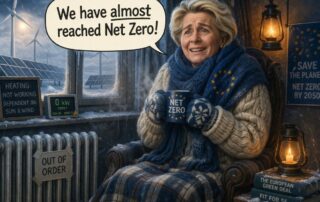
The Strait of Hormuz’s Bitter Lesson for the European Union
In May 2023, Ursula von der Leyen, President of the European Commission, declared that the fossil-fuel-based growth model is “simply obsolete.” The partial blockade of the Strait of Hormuz starkly exposes the irony of that statement, says Samuel Furfari.
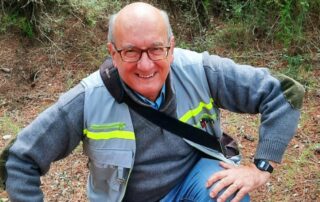
“Climate Policy Ignores Nature” – Interview with New WCD Signatory Enrique Ortega
Spanish geologist and new World Climate Declaration signatory Enrique Ortega brings decades of experience in earth sciences to the climate debate, emphasizing the importance of geological history in understanding present-day climate change.
In a Warming World, Rising Cold Deaths Outnumber Heat Deaths 12 to 1
A new paper shows that in the USA, cold weather is a much larger contributor to mortality than heat, and that social vulnerability plays a major role in determining outcomes.