
Why the CO₂ theory can’t be allowed to fall down
Director Martin Durkin and producer and podcaster Tom Nelson, both known for the award-winning documentary “Climate: The Movie“, launched the initiative GorillaScience last year. On their YouTube channel, they expose the many lies being told about the climate.

Clintel Foundation
Date: 2 July 2025
In their latest video, “3 Cheers for CO₂!”, they discuss what may be the biggest climate lie of all: the role of CO₂. The main points made by the creators are:
-
CO₂ is wrongly labeled as a problem
It is a natural and essential gas for plant growth, unjustly portrayed as a “polluting enemy” misunderstood by alarmists. -
Carbon dioxide promotes plant growth and food production
Increased CO₂ levels lead to better crop growth and higher food production — a positive effect that, according to the video, receives little attention in the public climate debate. -
Climate policy is ideologically driven
The demonization of CO₂ is not based on scientific consensus but motivated by political and anti-capitalist beliefs. -
Overestimation of risks and underestimation of benefits
The creators argue that climate scientists and policymakers catastrophically exaggerate the negative impact of CO₂, while the agricultural and ecological benefits (such as “CO₂ fertilization”) are hardly acknowledged. -
A call to revalue CO₂ in policy
The central argument is for a reassessment of climate policy. CO₂ should not be penalized or restricted but rather appreciated for its role in sustaining the planet and agriculture.
As Martin Durkin states in this short clip:
“This is a theory too much depends on. It must not be allowed to fall.”
You can watch the Complete Guide to CO₂ by GorillaSchience here.


more news
A review of The Frozen Climate Views of the IPCC, part 2
Clintel has analyzed IPCC’s Assessment Report 6 (AR6) and has published an important report on it, entitled: The Frozen Climate Views of the IPCC. It’s a report that provides many serious criticisms of the work carried out by the IPCC. Here you find the second and last part of a review of this important work by Clintel, recently published by the French website Climat et Vérité.
Javier Vinós on the Hunga Tonga Eruption and its extraordinary Climate Effects
In a recent ICSF/Clintel lecture, Dr. Javier Vinós argued that the January 15, 2022 Hunga Tonga eruption was the main cause of the extraordinary global climate anomalies of 2023–2024. He describes them as the first genuine multi-year global climate event in roughly 80 years, widely misinterpreted by mainstream analyses.
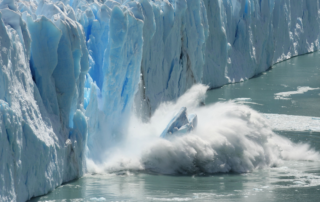
Swiss television tries to refute climate sceptics and fails
The editorial team of the Swiss weather program SRF Meteo has attempted to expose ‘arguments of climate sceptics’ as false. However, what they present as the alleged ‘state of science’ does not stand up to fact-checking.

