Great Barrier Reef doing fine, but now has the “wrong coral”
In a recent interview with Tom Nelson, Australian coral reef researcher Peter Ridd once again showed that the Great Barrier Reef is doing fine. But alarmist scientists have now adopted a new strategy. Corals that should have disappeared but have instead become abundant are now being presented as the “wrong coral”.
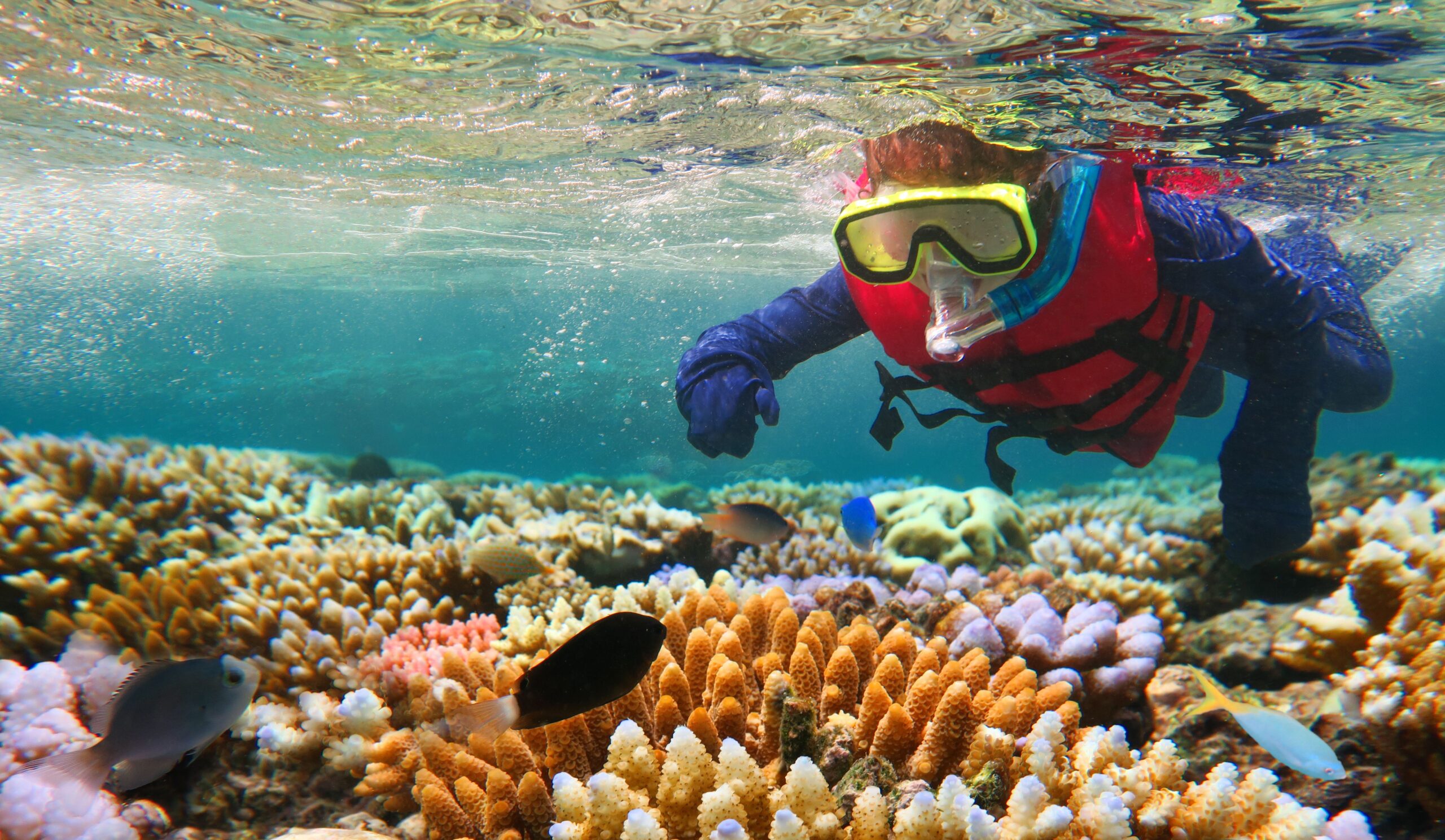
Great Barrier Reef. (Source: Shutterstock)
Clintel Foundation
Date: 20 November 2026
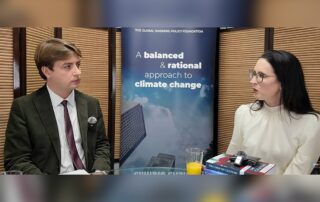
Peter Ridd, who has worked on coral reefs since 1984, again argued that the reef is an exceptionally dynamic ecosystem and that recent evidence does not support claims that climate change is driving it towards irreversible decline. He also questioned the reliability and presentation of some coral datasets and argued that the scientific community should subject important environmental records to independent audits.
You can see the entire interview below:
The Great Barrier Reef stretches for roughly 2,000 kilometres along Australia’s northeast coast and consists of about 3,000 individual reefs. Much of it lies well offshore and is rarely visited. Ridd stressed this scale because he believes it is often missing from public discussions of the reef’s condition. Most of the reef is also protected as part of a national park, while tourist activity is concentrated in relatively small areas.
According to Ridd, coral cover has always fluctuated substantially. Cyclones can destroy large quantities of coral in a matter of hours, while outbreaks of crown-of-thorns starfish can cause further dramatic reductions. Individual reefs can consequently move from very low coral cover to extremely high levels and back again over relatively short periods. He argues that such natural variability makes it dangerous to interpret every decline as evidence of a long-term climate trend.
He pointed to data from the Australian Institute of Marine Science (AIMS), which he has compiled himself since AIMS stopped publishing the particular long-term summary in its previous form. The record shows a pronounced decline in coral cover towards 2012, followed by a strong recovery. Ridd said that, depending on how uncertainty is treated, coral cover reached record or near-record levels in 2022–2024. This recovery occurred despite several widely reported coral bleaching episodes.
That, Ridd argues, raises questions about the way bleaching is portrayed. Coral bleaching occurs when corals expel the symbiotic algae living within their tissues, causing them to turn white. Bleaching can kill coral, but it does not necessarily do so. Ridd highlighted the apparent contradiction between reports of repeated “mass bleaching” and the simultaneous increase in overall coral cover. In his view, bleaching events are therefore not automatically evidence of ecological collapse.
“Wrong coral”
Rather than acknowledging that earlier predictions may have been wrong, Ridd said, some researchers have shifted the argument. The reef may have more coral than before, he noted, but supposedly it now contains too much of the “wrong” type. In particular, the abundance of Acropora corals has been cited as a potential problem because these fast-growing corals are considered more vulnerable to bleaching. Ridd regards this as a moving target: corals that earlier predictions suggested should have disappeared have instead become abundant, yet their presence is now presented as evidence of future vulnerability.
He contrasted this interpretation with statements made following the major 2016 bleaching event. Ridd cited a 2018 letter in Nature that described the event as triggering a transition that would change part of the reef “forever,” and another statement warning of catastrophic transformation involving Acropora corals. Yet subsequent measurements showed substantial recovery. For Ridd, the discrepancy illustrates a wider problem in environmental science: dramatic predictions can remain influential even when subsequent observations fail to match them.
The discussion then turned to global coral statistics. Ridd was particularly critical of a worldwide coral-monitoring dataset, arguing that it is assembled from observations collected using inconsistent methods and therefore lacks the reliability of the long-running AIMS record. He also questioned changes made to historical data in successive reports. In his view, earlier versions showed little or no statistically significant change in global coral abundance, whereas later versions appeared to show a clearer decline.
Ridd stopped short of claiming that coral decline cannot occur. He explicitly acknowledged that reefs in some parts of the world may have deteriorated because of pollution, overfishing or other local pressures. His concern, he said, is that historical adjustments and changes in presentation can transform an ambiguous dataset into a much more dramatic-looking trend. He therefore called for independent “science audits” in which important datasets could be reproduced, challenged and checked by researchers outside the institutions that originally produced them.
This issue of trust was central to the interview. Because the Great Barrier Reef is underwater and enormous, ordinary observers cannot simply verify claims for themselves in the way they could observe a large-scale change in a forest. Ridd argued that this creates an unusual dependence on scientific institutions and their data. He told Nelson that this makes transparency and independent verification particularly important.
Ridd also placed today’s reef changes in a much longer geological perspective. Sea levels have repeatedly risen and fallen, reefs have been submerged and exposed, and coastal environments have undergone enormous transformations over thousands and millions of years. He argued that geologists are generally more accustomed to seeing dramatic natural change than biologists studying present-day ecosystems. In his view, this difference in perspective can lead marine biologists to attribute changes too readily to human activity.
Ocean acidification
In the final section, Ridd challenged another major climate-related concern: ocean acidification. He said that when he wrote his book on the Great Barrier Reef several years ago, he was uncertain about the significance of acidification. After examining the chemistry in greater detail, however, he said his view had changed dramatically. “I am completely unperturbed by this ocean acidification thing,” he told Nelson.
Ridd’s argument centres on the distinction between carbonate and bicarbonate. Increasing atmospheric CO2 reduces the concentration of carbonate ions in seawater, which might appear problematic because coral skeletons consist of calcium carbonate. But Ridd argues that corals primarily obtain bicarbonate from seawater and that bicarbonate concentrations increase as CO2 rises. The coral can then convert bicarbonate internally into the carbonate needed to build its skeleton.
He further argued that corals are capable of actively controlling their internal pH. According to Ridd, the pH immediately around the coral’s symbiotic algae can be much lower than the pH of surrounding seawater, demonstrating that corals already operate across a wide chemical range. He therefore considers projected future changes in average ocean pH relatively benign for corals.
Ridd also criticized laboratory experiments in which seawater chemistry is changed abruptly, arguing that such experiments do not necessarily reproduce the gradual changes that occur in nature. Reef environments themselves experience substantial daily fluctuations in pH, he noted. The broader lesson, in his view, is that coral biology and natural variability need to be considered before translating laboratory results into predictions of global catastrophe.
The interview ended with a broader appeal for skepticism—not necessarily about every scientific measurement, but about the confidence with which environmental claims are communicated. Ridd acknowledged that some temperature records, particularly satellite measurements, appear robust. But repeated examples of what he regards as questionable data handling have made him reluctant to accept institutional datasets without scrutiny. “I just don’t know what to trust anymore,” he said.
For Ridd, the Great Barrier Reef therefore represents a broader lesson in interpreting environmental change. Its history is one of continual disturbance and recovery, while recent coral-cover data, in his reading, show resilience rather than imminent collapse. His central demand is not that researchers stop monitoring the reef, but that the underlying data, assumptions and predictions be subjected to much more rigorous independent scrutiny.
The article you have just read was made possible by our donors.
Every day, Clintel publishes articles on climate, energy and science. We also translate and share international analyses in multiple languages, produce videos, publish reports and organize conferences and events around the world.
We receive no government funding and rely entirely on the support of our donors. Your support helps us promote independent research and contribute to a more open and balanced debate on climate and energy issues.
Would you like to support our work? Choose the option that suits you best:
• Become a Friend of Clintel – support us with an annual contribution
• Make a recurring donation – provide ongoing support and help us plan ahead
• Make a one-time donation – every contribution helps
Thank you for your support.

more news
Kathryn Porter: Iberian blackout was a warning
Britain’s energy system is becoming increasingly expensive and difficult to keep stable, according to energy analyst Kathryn Porter. In an interview with GWPF’s Harry Wilkinson, Porter also discussed the Iberian blackout of 2025. “It was completely because of renewables”.

Lomborg: Enormous Costs for Minimal Climate Benefit
Bjorn Lomborg recently discussed (the results of) his new website netzerocostbenefit.com. On The Andrew Neil Report, the Danish political scientist gave Britain as an example: it would have to spend £695 billion to get to net zero in 2050, which would result in a global temperature reduction of 0.00376°C (also see this Clintel article).

Clintel President Václav Klaus speaks in Paris on freedom and climate
The French Association des climato-réalistes is organising a conference on Thursday 3 December featuring Václav Klaus, former President of the Czech Republic and current President of Clintel (see the bottom of the article for registration details). Our esteemed colleagues at the Association des climato-réalistes and at climategate.nl recalled the following prescient commentary by Klaus from 2007 in connection with this event.