
Canada Returns to Energy Reality as Pipeline Deal Exposes Net Zero Illusion
Canada’s energy policy is colliding with economic reality, as a new pipeline agreement exposes the limits of net zero ideology. Oil, gas and energy abundance remain indispensable to the Canadian economy and its future prosperity.


Alberta Premier Danielle Smith and Canadian Prime Minister Mark Carney (Image created with ChatGPT)
Vijay Jayaraj
Date: 20 January 2026
A recent memorandum of understanding between Canadian Prime Minister Mark Carney and Alberta Premier Danielle Smith represents the inevitable reassertion of economic necessity over the fantasy of “decarbonization” that has gripped Ottawa for the past decade.
Allowing for the construction of a pipeline to transport Albertan oil to a Pacific export terminal, the agreement prompted the resignation of one liberal member of parliament and celebration from the province’s leader. “This is a great day for Alberta,” declared Smith.
The Economic Reality of Canada’s Energy Sector
Alberta is a major vessel in Canada’s economic bloodstream. The province’s energy sector generates $88 billion in annual gross domestic product (GDP), which is 25% of the Alberta’s total economic output. This revenue flows east to the national capital to fund federal transfers that support public finances of other provinces, some of which oppose the oil production that provides them cash.
Atlantic Canada, parts of Quebec and even Ontario benefit from royalties and tax revenues generated by hydrocarbons extracted thousands of miles away. So-called moral objections to oil sands development are often voiced by inhabitants of Halifax or Montreal, but rarely heard is a willingness to forgo the western revenue that keeps hospitals open and public payrolls funded.
Net Zero Policy Versus Governing Reality
So, it was financial reality that drove Carney to upend expectations established by countless government documents, climate pledges, and regulatory frameworks the previous government put in place to “save the planet” by discouraging the use of fossil fuels.
Canada’s climate industrial complex had predicted that pipelines would become stranded assets and that Alberta would fade into irrelevance as net zero became federal policy. However, the deal signed by Carney moves in the opposite direction, making provisions for new infrastructure and signaling that even Canada’s most climate-obsessed federal leadership cannot govern without fossil fuels.
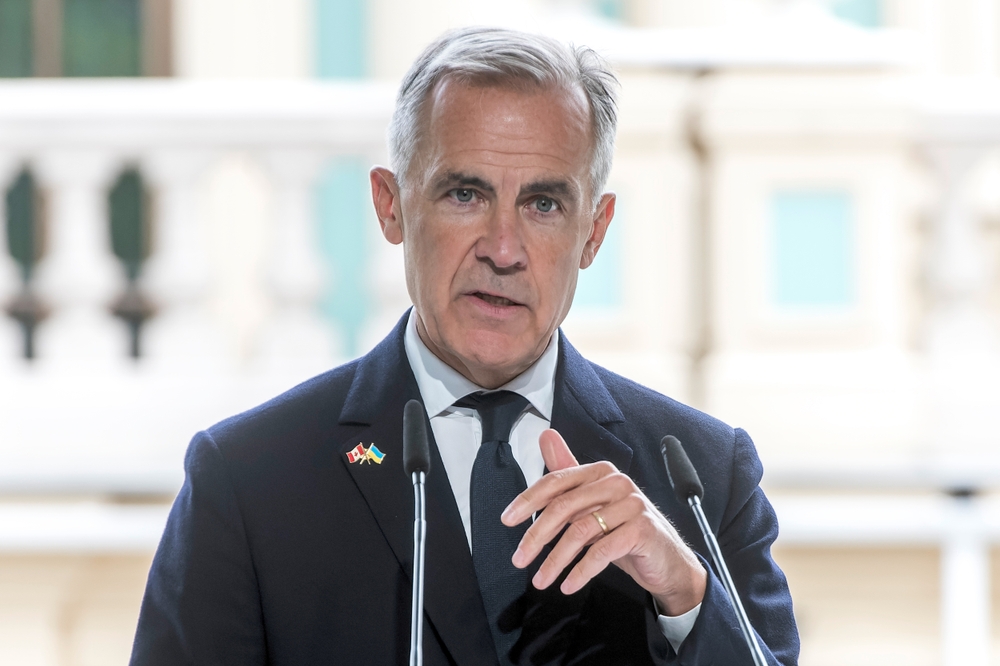
Canadian Prime Minister Mark Carney – Source: Shutterstock
In technical terms, the federal cap on oil and gas emissions has been suspended. The Clean Electricity Regulation – a proposed constraint on Alberta’s ability to generate affordable power – has been loosened. Timelines for reducing methane emissions have been extended beyond 2030. Yes, there are caveats that appear to impose a soft form of anti-carbon sentiment, but the overall picture has changed.
Media Narratives and the Demonization of Fossil Fuels
The Canadian Broadcasting Corporation, a publicly funded institution, has consistently parroted environmental advocates who treat fossil fuels as abominations rather than economic necessities. This messaging has convinced many Canadians that their government is committing a terrible sin by producing energy the world demands. Lost on them is the fact that Canadian oil and natural gas are produced under far more stringent standards than exist in the Middle East, Russia or other regions.
Energy abundance underpins prosperity. Nations that constrain their energy supply impoverish themselves. Nations that produce reliable, affordable energy benefit their populations and the broader world. Canada should produce the energy for itself and export the surplus to global markets.
Climate Change and Canada’s Agricultural Productivity
Beyond energy economics, there is another dimension to Canada’s economic future that the legacy climate orthodoxy dismisses: agriculture. Canada’s warming climate has extended growing seasons across the prairies and opened new agricultural possibilities.
According to official data, “total wheat production rose 11.2% year over year to a record 40 million (metric tons) in 2025, surpassing the previous record set in 2013.” Canola production rose 13%, surpassing a record set in 2017. Barley and oat production rose 19% and 17%, respectively.
In all, the output for all principal field crops increased by 4% year-over-year. For the next crop year (2025-2026), total production is projected to reach near record levels, up 3% year-over-year and 8% above the previous five-year average.
Historical analysis demonstrates that climate conditions across Canadian agricultural regions have shifted toward longer growing seasons, with more frost-free days and expanded viable crop zones.
Fear, Ideology and the Cost of Energy Scarcity
Critics will claim that allowing a new pipeline is a betrayal of future generations. But what truly endangers posterity? A fraction of a degree of warming that extends growing seasons? Or a future of energy scarcity, deindustrialization and economic stagnation?
Fearmongering about a “climate emergency” served only to empower a bureaucratic class intent on controlling consumption and taxing lifestyles. It did nothing to change atmospheric physics or the needs of people who rely on affordable energy to survive.

This commentary was first published at American Thinker January 16. Clintel has added subheadings for readability.

Vijay Jayaraj
Vijay Jayaraj is a Science and Research Associate at the CO2 Coalition, Fairfax, Virginia. He holds an M.S. in environmental sciences from the University of East Anglia and a postgraduate degree in energy management from Robert Gordon University, both in the U.K., and a bachelor’s in engineering from Anna University, India. He served as a research associate with the Changing Oceans Research Unit at University of British Columbia, Canada.

more news
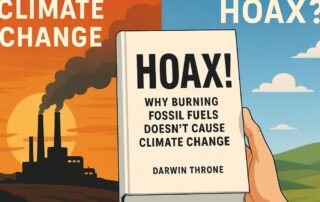
New book on the status of the climate issue – the world’s biggest problem or just a hoax?
Review of the book "Hoax! Why burning fossil fuels doesn't cause climate change" by physicist Darwin Throne. The book summarizes new developments in climate science in recent years, including results from satellite monitoring since 2000 (NASA CERES), and a new thermodynamic climate paradigm that matches reality, in contrast to the theories and models of the UN climate panel IPCC.
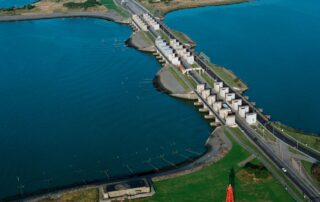
Breaking: no acceleration in sea level rise detected worldwide
A new peer-reviewed study published in the Journal of Marine Science and Engineering challenges a key claim of climate science: that global sea level rise is accelerating. An analysis of more than 200 long-term tide gauge records shows no evidence of such acceleration, while IPCC models systematically overestimate local sea level rise.

Commentary Samuel Furfari – ‘Green’ Europe’s Industrial Masochism
Does Europe's vaunted green leadership lead anywhere—or merely accelerate its own economic undoing?

